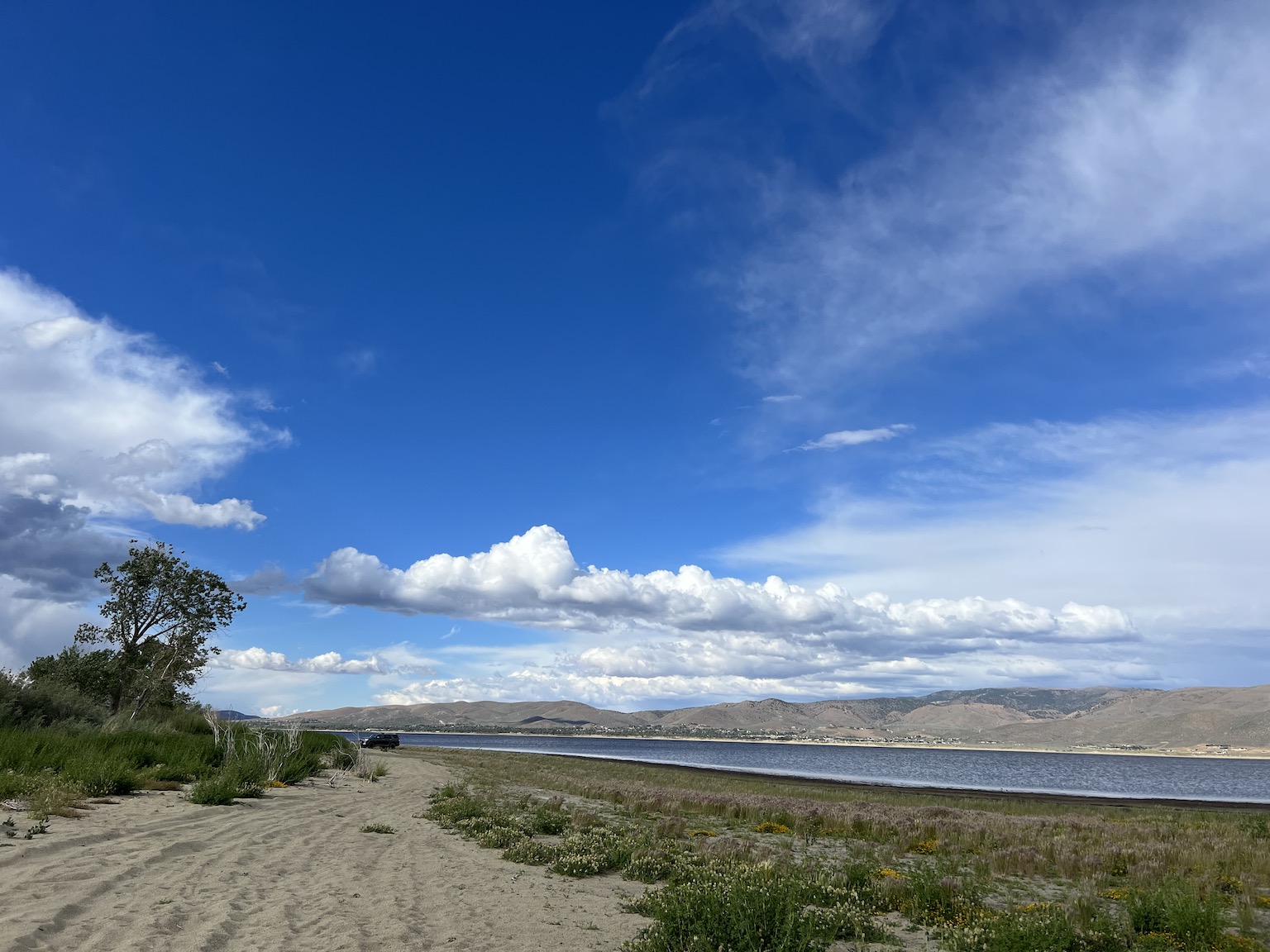
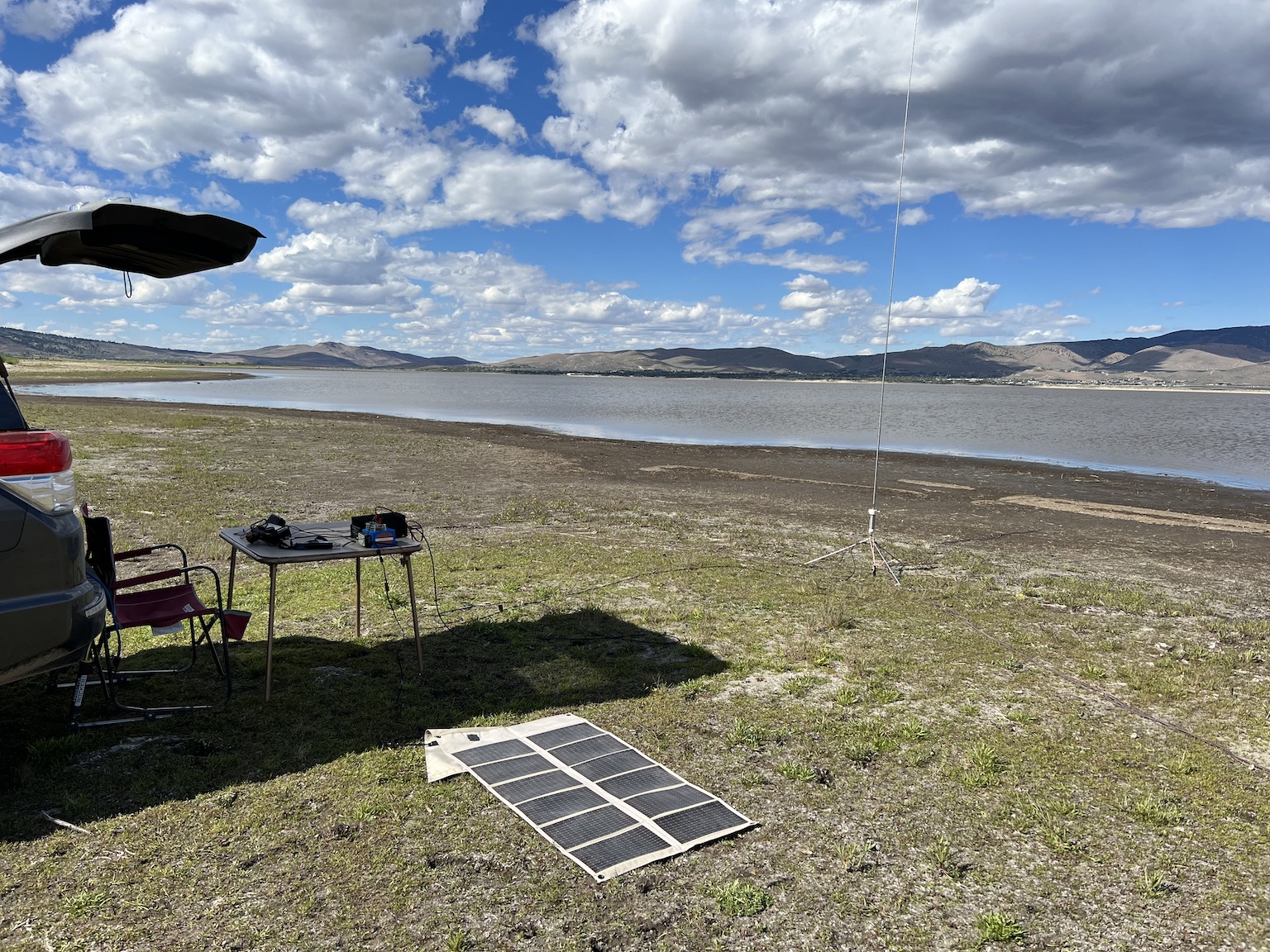
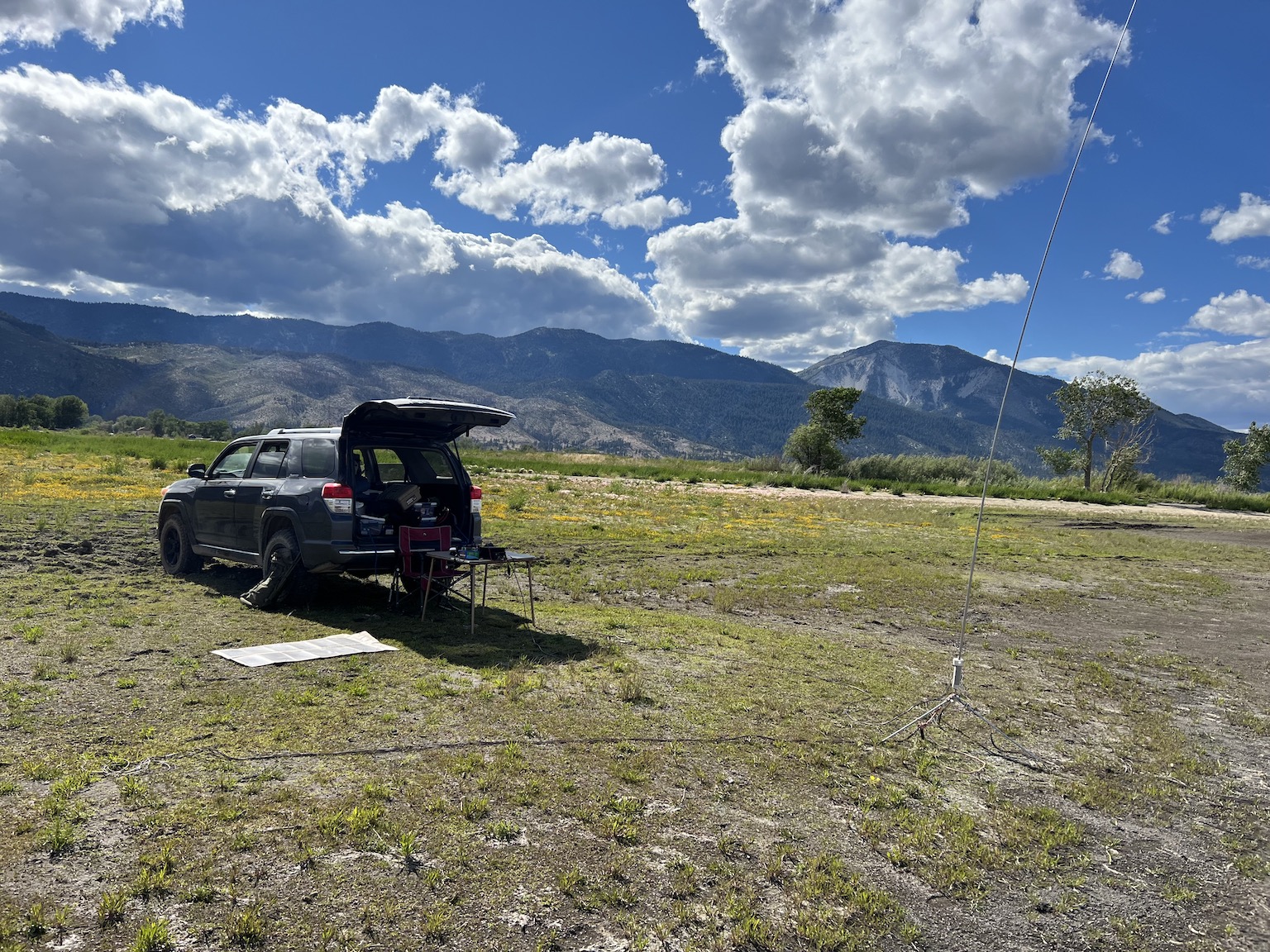
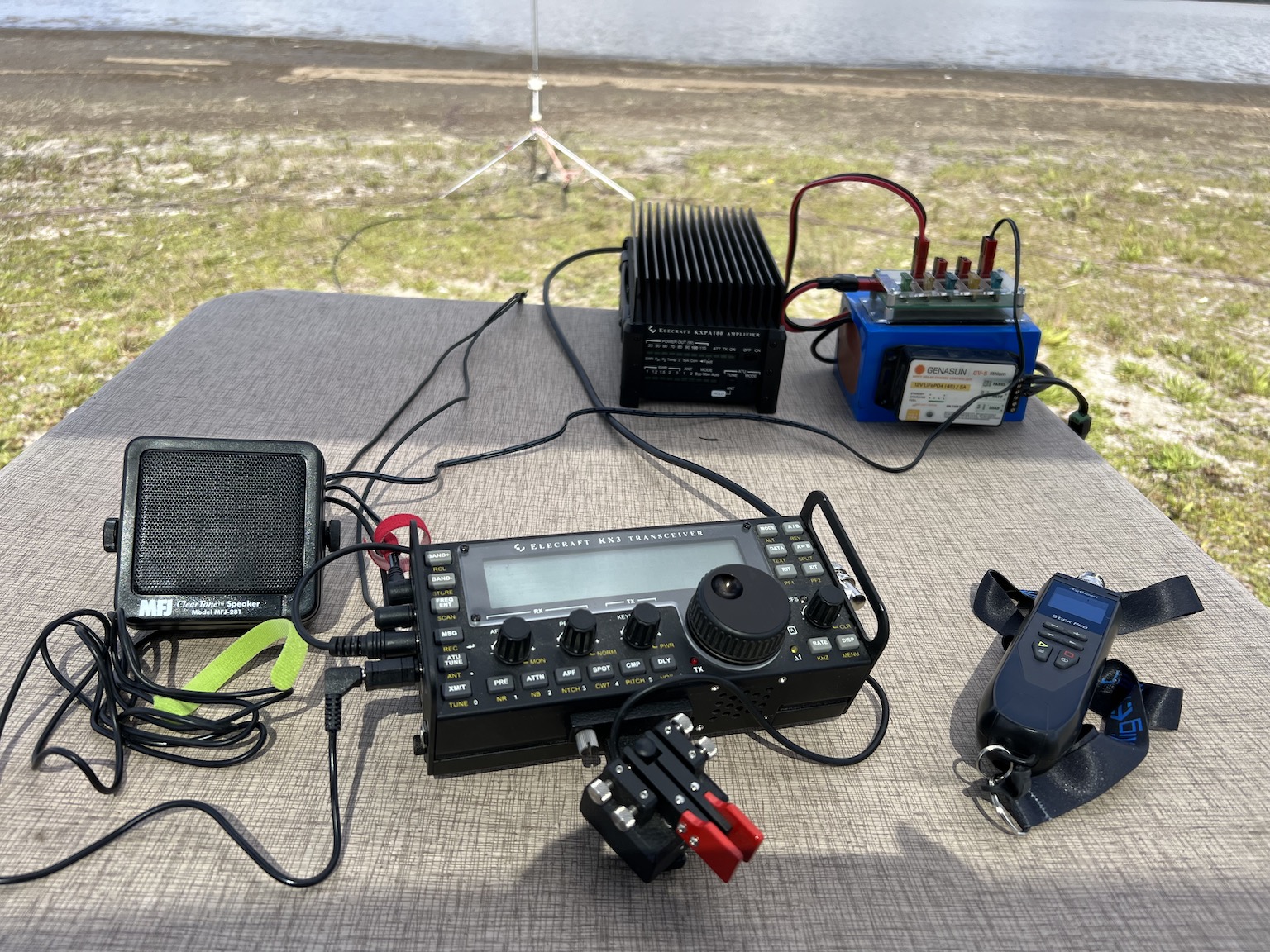
The Girl and I stopped briefly at the south side of Mono Lake for a short break. There is still a lot of snow in the Sierra Nevada.
This week I was tasked with travel to Southern California for a field walk. The project is just getting started and doing a site visit is a critical part of forensic engineering.
I activated Manzanar National Historic Site for Parks on the Air. The place is a testimony to the mistreatment of Japanese-American citizens about 80-years ago.On the way down, I stopped at K-0845, Manzanar National Historic Site. In 2014, Ki and I visited Manzanar on our way back from Ash Meadows National Wildlife Refuge, where I had a project. It was in January, so the weather was good for a visit to Death Valley, which we did. On the way north we spent an hour or so at Manzanar, walking the site and taking in what we, as a country, did to our Japanese-American fellow citizens. It was wrong. The site feels wrong.
Be that as it may, Manzanar is also a designated Parks on the Air park. I wanted to activate it. And time spent outside the rig for a few minutes is always good on a long trip. Sera got out of the rig for a run around while I got out the station. It was hot enough and there was enough traffic that I put her back in the rig.
I setup my folding table and chair under the rear hatch. Sera found a spot in the back out of the sun. It did not take long to put out an antenna and get the station on the air. In less than an hour I made my activation running 15 watts. I put everything away, gave Sera a drink, got one myself, and we got back on the road.
We spent the night at a Best Western in Sherman Oaks. It was noisy with city energy and the neighbors had a small dog that barked. This irritated Sera… she growled and grumbled several times that night. I rested some, enough to be up early to deal with accumulated email and the market.
There is a Denny’s in the facility, so I got some coffee and breakfast. Of course, I took The Girl some of my bacon and sausage, plus a couple of scrambled eggs for her breakfast.
It took about 45 minutes to get to the site and a couple of hours to see what I needed to see. I visited with my clients a bit, then headed back home.
Wisely, I had a reservation for a hotel in Lone Pine, California. This is about halfway between the site and home. I knew I would not want to drive all the way home after spending the morning on the site. So I did the easy thing and stayed over.
The Girl and I had a nice visit of the Alabama Hills National Scenic Area in Lone Pine, California. I also activated the park.I checked out early Friday morning, got Sera out for a little constitutional, and then bought a biscuit and a coffee from McD’s. I shared my biscuit with Sera and drove over to K-8300, Alabama Hills National Scenic Area, another designated park. I found a spot to setup the station and got Sera out for a bit. She hunted lizards in the willow brush while I got out my radio station and setup the antenna. Again, there was a little too much traffic so she had to stay in the rig. But it was cool in the morning so it was not too bad.
I had my quota after about 45 minutes. The 20-meter band was the go to band for this activation. I worked an Indonesian station and that surprised me. But DX is always welcome.
I put away the station and was able to make a meeting (virtual) using my iPhone at 1100h local. That did not last long, so Sera and I puttered a bit before heading north towards home.
At the north end of Independence, California (I think) is a BBQ place called the Copper Top. It was lunch time as we passed, so I turned back and bought a tri-tip sandwich. With pickles, onion (red onion), and a few jalapeños (and some sauce) it was good. But it was not as good as smoked Texas brisket. I shared a bite of sandwich with Sera, of course.
Then it was time to slug out the home stretch. I was tired, of course. I stopped a few times to stretch, give Sera some water, and get her out of the rig. Still, it was a tough slog.
I learned a few things, of course.
I need to either add another set of blue Voile straps, or add a longer set of Voile straps to the antenna kit. The blue straps were not long enough to go around the 4×4 or 6×6 posts at the Alabama Hills site. I had to double the blue straps and then find a rock to keep the mast in place.
I really think it would be better to log on the computer than my iPhone, particularly for POTA activations. The larger screen of the computer is simply easier to see.
In addition, I was checking the Reverse Beacon Network for my spots. RBN is a great way for CW and digital operators to determine whether their signal is getting out to the spotter stations. The spotter stations decode the signals they hear and post the calling stations callsign, mode, signal strength, and speed to the webpage. If I am spotted, then I know the station is working because other stations are receiving my transmissions. It would be a lot easier to have multiple browser tabs open on the computer than it is to flip back and forth between tabs on my iPhone.
I prefer a more leisurely activation, one where I have (and take) time to operate multiple modes and work through all the open bands to take the calls of the park hunters.
But, when traveling, it is also a good break to stop for an hour, make at least ten contacts, be out of the rig for awhile, and get Sera out too. This type of activation has a place as well as the more deliberate, longer activation.
In all, the radio play was a nice break from the drive. I gave a few hunters an opportunity to chase a couple more parks. And Sera got a chance to be out of the rig for a while too. It was good. Life is good.
This was a lovely find for supper. I am glad the other place ignored me.
I am on my way home from a site walk in Topanga, California. The site walk was a long time coming. I suppose it was because there are so many parties involved in the case. But it was good to get to see it.
I knew it would be too long of a trip to drive all the way back home after walking the site all morning. There was a lot of Los Angeles to traverse and traffic is always bad. So I planned on stopping midway and that turned out to be Lone Pine, California.
The hotel is decent enough if expensive. But it is the Fourth of July weekend and it also seems that since The Shutdown hotels are a lot more expensive than they were pre-virus. Nonetheless, I have a room.
The clerk gave me a heads-up that there are four restaurants in Lone Pine with outdoor seating that will accommodate my companion. I initially chose the Mt. Whitney cafe. But they ignored me.
I traveled a couple of blocks south and stopped in to The Grill. I was greeted as Sera and I approached the pavilion. The server greeted Sera, asked to pet, and brought water.
The proprietor came out, asked about Sera, and told me about his dogs.
I thought “this is the right place. I’m glad I was ignored at the other!”
So I ordered a Cobb salad and a Corona with lime. He brought me a beer glass, but I am old school and just dropped the lime in the bottle like I would at home.
Yes, you really cannot take me nice places.
In the end, the food was good, the treatment was stellar, and Sera met new friends.
It was a good day, a good evening, and life is good.
A grab shot from a morning walk at Silver Saddle Ranch.
Yesterday morning, after waking early and morning coffee, The Girl and I got out for a nice walk at Silver Saddle Ranch. We walked our usual loop, starting at the upper staging area on the access road, north to the Mexican Ditch trail, then south through the ranch compound and back to the Mexican Ditch, then up the hill to the trail and back to the rig.
The loop is about a mile and three-quarters and takes something between 45 minutes and an hour to walk. It all depends on how long we linger along the way.
I knew I wanted to make an image for the day. The thistles are in bloom and provide a ready subject. I have used them before.
They still look good, though. So I paused while Sera hunted lizards and framed a couple of shots. The camera was the Fuji X-T1 and the Fujinon 35mm f/2. Sera chased of a bee that would have added interest. Oh well, next time.
Just as I looked up from the camera, I saw another walker and two dogs leaving the compound.
“Here!”” I called to Sera. She came in, I grabbed her collar, and attached her lead. Her energy level was still pretty high and I did not want her to run over to engage the other dogs.
The other handler leashed up her dogs as well. I appreciate that.
Dogs are dogs. That is OK. But a lot of handlers do not understand their animals.
The Girl (Sera) and walk past this freezeproof hydrant nearly every day. It is part of the stock watering system at Silver Saddle Ranch. Today it called to me. The light was flat but that is pretty easy to fix in post-processing. So I paused, checked for traffic, and made the capture.
The Girl and I then continued our walk and I made a few more images. In then end, though, when I reviewed my captures after we got home, I picked this one.
It was made with the Fuji X-T1 and an adapted Nikkor 135/3.5 telephoto. I like many of the Nikkor lenses nearly as much as the Fujinon glass.
The Girl and I walked Silver Saddle Ranch again this morning. We stopped at the Mexican Ditch so she could swim a little. Happy Summer Solstice!
Today is the Summer Solstice of 2023. That means summer begins today. However, the weather certainly does not feel it. As I write this (about noon), the temperature is 65ºF.
As is our usual routine, The Girl and I walked Silver Saddle Ranch this morning. We like to start at the upper staging area (away from the ranch compound) and walk in the sagebrush. There are a number of unmarked trails that are readily visible. We pick one of them.
This morning we walked our usual route, mostly. It was fairly cool, so Sera did not jump into the ditch when we first reached it. If it is warm, she will usually get wet before we move on.
We paused at the ranch compound so she could get a drink. Someone has graciously put a bucket under a freeze-proof hydrant and there is water there year round.
We walked on south along the trail and bypassed our usual turn west to continue to the ditch. I knew she was warm and wanted to get wet. She did.
There I paused for a minute and made today’s capture. I liked the contrast of bright green and sage gray. I did use the Velvia film simulation in camera. But the image is unadjusted — straight out of camera.
While on walkies with The Girl this morning, I found this chunk of wood and liked the light. Fuji X-T1, Fujinon 35/2.
I call myself a “racoon photographer.” That is, I will eat about anything.
While reading David du Chemin’s weblog early this morning, I started thinking about my lifetime as a photographer. I commented on one of his recent posts, “I’ll never be a great photographer, one who garners a lot of attention. It is not my gift.” And I believe that. For one thing, I am not willing to spend hours working on a single image trying to perfect it.
But I am reminded that Wife said to me, more than once “You have a different way of looking at things.” She meant that I see things as I walk through life. And when I do, it nourishes me somehow to pause and make a photograph.
So, here I am… posting another image made in the field without a lot of post-processing. I made a few adjustments, but it took me only a few minutes.
The Girl and I walked this morning. It was a little late for good light, but I carried the little Fujifilm X-T1 with its compact normal lens. Of the subjects that caught my eye (so to speak), I like this capture the best. The play of light on the wood pleases me.
Fuji X-T1 and Fujinon 35/2 with in-camera conversion. Daily capture from morning walkies with The Girl.
We had a nice morning walk out at Silver Saddle Ranch this morning. It will be windy this afternoon. I know this partly because that is the forecast. However, the wind was already up at 0900h local, which is early. Also, the lenticular clouds foreshadow the coming of more wind.
It is a bit early for us to have Zephyr winds. But this is an unusual weather year. I think El Niño is strong this year. Now I wonder what the coming winter will bring. Will it be more heavy snow?
The Girl and I enjoyed the morning walk. I might even get out to play some radio this afternoon. We will see.
From walkies a couple of days ago, I made this capture with the Fuji X-H1 and the Fujinon 35/1.4. The clouds have moved on for now, so I lost that lovely sky contrast.
Over the last month or so, I have been asking myself “What can I do that will nourish my soul?” I go through these reflective periods now and again. I think it is a healthy thing to do.
Well, one of my answers was to get out my camera, charge the battery, and carry it along with me when out and about. The Fujifilm X-H1 was an acquisition I bought for the larger Fujinon lenses. Some of them just do not balance well on the smaller Fujifilm X-T1 body. I have not had this camera out in a long time. So, I thought it time to charge its battery, mount an appropriate lens, and carry it.
The main reason I have not flown my drone or carried a camera is because Sera requires a lot of attention in the field. We are now in snake season (again). She appears to be wary of snakes, particularly if they buzz and do not run away. But the risk of a bite is too great for me to ignore. So I am very careful in the field with her when the weather is warm.
That does not leave a lot of attention for the camera or a drone. At least, it did not until this season.
I plan on carrying a camera (other than my iPhone — long story there) for now. I really like carrying the X-T1 better, particularly with the lovely Fujinon 35/2.0 (35mm f/2.0) small lens. It is in the Fujinon compact lens series. It is very good (as are the others). It is very small and light. It makes great images.
However, on this day I carried the larger X-H1 body and the larger (and faster) 35/1.4 (35mm/f1.4) lens. I suspect that the image quality from both camera and lens is superior to the X-T1/35/2.0 combination… but not observable for a web image.
But the day I made this capture I carried the X-H1 and made some images with it. Silver Saddle Ranch provides lots of subjects.
The vehicle is my 4Runner positioned to get a little shelter from the wind on a cold Saturday afternoon.
After returning from a fast trip to Summit Lake for field work, I wanted some recreational outdoor time for the weekend. The Girl and I like Washoe Lake State Park, in particular the west side that is undeveloped and less used. There is a great place to setup a radio station and activate the park for Parks on the Air. Plus we can walk the west shoreline without encountering a lot of other people.
Saturday was cold and cloudy for the middle of June. Nonplussed, after working a good part of the morning, I put a few things into the rig and The Girl and I headed north for some outdoor time. On the way out of town, I stopped at McDonald’s for a fish sandwich and then at C-A-L Ranch to pick up a few tent stakes. I am moving away from the plastic stakes, which break easily in the desert, to the aluminum stakes that are more hardy.
It is a short trip to the lake and we were there in short order. I parked the rig in the lee of a sand dune on the west side. The Girl and I got out and went for a 20-minute walk. That allows her to burn off some energy and provides me the opportunity to move my blood around.
On return to the rig, I affixed a new antenna to the 7m SOTAbeams mast and then deployed the guy lines for the mast. I would normally strap the mast to a support, but at the lake site none was available.
The new antenna is a 40m off-center fed dipole. I checked it with the antenna analyzer at is is resonant on 40m, 20m, 15m, and 10m. So it is a four-band antenna and those are four useful bands. And, for those bands, no additional matching transformation is needed.
I used the Discovery TX-500 and the PA-500 radio and amplifier for the activation. There was no heard activity on 40m and 10m was not open, so I tried 15m. After spotting myself and calling for five minutes, nothing was heard. So I re-spotted myself on 20m and started calling.
That resulted in a number of calling stations. I worked them as they came in, sometimes singletons and sometimes in groups of two or three. I had my activation by about 1630h local time and took more calls until about 1645h, logging 16 stations. The 20m band was quite noisy, popping and sizzling with sunspot activity. QSB (fading) was moderate with some of the weaker stations requiring a few repetitions to make the exchange.
When I quit, I was cold. The wind had stolen my heat. I retrieved the packable anorak from the rig and put it over my hoodie. I then tore down the station and stowed everything. Then I got The Girl out for another walk and we called it a day.
On the way home I stopped at Francisco’s Mexican Restaurant, a favorite place, and bought Tacos de Asada. It was a lovely, spicy meal, and the hot chow did me good.
This was my station for the Sunday afternoon activation of Washoe Lake SP.
Sunday morning I had in mind to return to Washoe Lake SP and do some testing of another old antenna, the Wolf River Coils vertical. Because of the way I operate, it does not get a lot of use. I typically change frequencies often, hunting other stations. But for running a frequency, the use of a resonant antenna is more efficient. Plus the antenna is simply and quickly setup and tuned. And, because I intended to activate the park, a single band would be fine for this mode of operation.
So, again we drove up to the park and to the operating point. There I found a man, Nelton, who had bogged his pickup truck in a mud hole. It was not buried, but he could not get enough traction to roll out. We attempted to pull it out with what he had for a tow strap (not much), but it was not strong enough for even the slightest pressure. As I prepared to help dig him out his son arrived in his pickup with a tow strap. So, off The Girl and I went to continue our day.
I picked my spot, on a mudflat where I expected good ground conductivity (but did not get stuck). I parked the rig, got The Girl out, and we walked. She played, threatened to run out into the lake (too muddy), and then threatened to roll in a dead carp (no go). On the way back she chased me and we played a little.
This perspective provides a little better view of the WRC antenna as deployed Sunday afternoon. I stake it down to keep it from tipping over in the wind. It is also set for the 20m band and no coil is needed. The coil is bypassed and the whip shortened a couple of feet for resonance on 20m.Back at the rig, I let her lay out in the sun while I setup my table and chair, then got out the equipment. The antenna came first and took only a few minutes to assemble. Then came the power supply — a Bioenno battery, Genasun charge controller, and 30w PowerFilm solar panel. With the battery charging, I assembled the station. I used the Elecraft KX3 transceiver with the Elecraft KXPA100 amplifier. I then adjusted the antenna for resonance on the 40m band and returned to the operating position.
I turned on the radio and listened on 7.2835MHz for the 40m Noontime Net. It was not quite 1300h local and I heard nothing. I checked the Internet for solar conditions and it looked like we had a bit of X-ray influx that disturbed the Ionosphere and frequencies below 14MHz were blacked out. So I returned to the antenna and adjusted it for the 20m band. I got a good match on 20m.
The Elecraft KX3 station setup to activate Washoe Lake SP Sunday afternoon. The antenna in the background is the Wolf River Coils vertical.Back to radio (only 15ft away from the antenna) I turned it on, switched to the 20m band, and listened. I saw a station spotted activating phone on 20m, so I found the frequency and listened for an opportunity to call. I made my first park-to-park contact.
I chased a few more activators and then decided I was having no fun with phone. So I found an unused frequency in the CW portion of the band and spotted myself on the POTA website. I adjusted my logging software (HAMRS on my iPhone) for the new frequency and started calling.
Again I worked a steady stream of stations who returned my general call. A few were calling pretty slowly (10-12wpm), so I slowed down. The lazy way is to keep the keyer set at your speed and add spacing between characters. The good operator approach is to turn down the keyer speed to match the other station. With the Elecraft radios, that is easy to do. So, that is what I did.
After fishing the 20m hole dry, I switched to the 17m band. That required a trip to the antenna, with the analyzer, and an adjustment of the radiator length (a telescoping stainless steel whip). That took only a few minutes and then I was back at the station.
The 17m band generated quite a few calls in response to my general call and spot. I worked those stations one by one.
Once I start working a station, particularly one that is weak to me, I ignore other callers as I send the part of the call I heard and request a fill. It usually does not take long for the other caller(s) to figure out I will work the current station before I accept another call and they shut up. After I work the station and send TU (thank you) and 73 (best wishes), I send “DE AG7TX POTA AR” (which means AG7TX is calling POTA and standing by) and wait. If I hear nothing, then I start the general call again, “CQ CQ CQ POTA DE AG7TX AG7TX POTA AR” and listen for a few seconds.
When 17m went dry, I switched to 15m after seeing a couple of spots for the 12m band on the POTA website. Again I adjusted the antenna and returned to my station to call. After a few attempts, I heard nothing. About that time a text message from my buddy Dick came in that he had not noticed me on the park. I responded that I would return to 20m to take his call.
Which I then did.
After I re-spotted myself on the POTA website and started calling, Dick came in LOUD. I worked him and put him in my log. I then worked several more stations, including several in California.
I almost never hear California station on 20m. I think those I worked were far enough south that I was in the first “skip” zone for the 20m band. In any event, I was happy to work them.
When no more calls came, I signed off “QRT DE AG7TX SK” and listened for a moment. I often pick up a straggler or two after signing off. If I am called, I answer. But, hearing nothing, I turned off the radio and put away the station.
I got The Girl out and we went for another walk. She was very playful, attacking my boots and zooming around. She again threatened to run into the muddy water and roll on the dead fish. I laughed and called her in, which resulted in more attacks on my (new) boots.
Back at the rig, we hopped inside and warmed up a bit. It was a cool June day in western Nevada. As we headed home, I reflected on my weekend. I was satisfied that I made progress on several tasks, including some work. I decided to order a pizza for supper (and several more meals). It was a good day and a good weekend. I am grateful.
Again, I learned things over the weekend.
Always take an extra cover in the rig. I do get cold.
Put the makings for a hot drink (coffee, tea, cocoa) in the rig and the material to heat water and make a hot drink.
Put a couple of dehydrated meals in the rig and the material to make hot water to rehydrate the food. Hot chow is a good thing when cold.
I am not certain that a band-limited antenna is right for me. It probably depends on the particular operation and whether (or not) there is a contest ongoing.
In light of the above, it makes sense to have access to a couple of antennas in the rig. This is not generally an issue for me.
I need to study the tools available for measuring and predicting propagation. I am learning, but I think there is more to learn and some additional tools that will inform when a particular band (or bands) is open.
There is no reason to waste time calling on a closed band. Over the last few outings, I tried 15m several times without success. Although I was experimenting (testing), my time would be better spent working bands where I can make contacts.
The WRC antenna is a solid performer when running a frequency. It is not band agile and is not appropriate for that application. But for a POTA (or SOTA) activator who will run a frequency, it is easily tunable to the desired band/frequency and is reasonably efficient.
I want to experiment with the WRC antenna some more. It would be very interesting to take it to the coast and operate from the beach. Hmmm… a camping trip???
My Morse Code skills are improving.
I am easily frustrated operating phone, particularly when trying to call an activator.
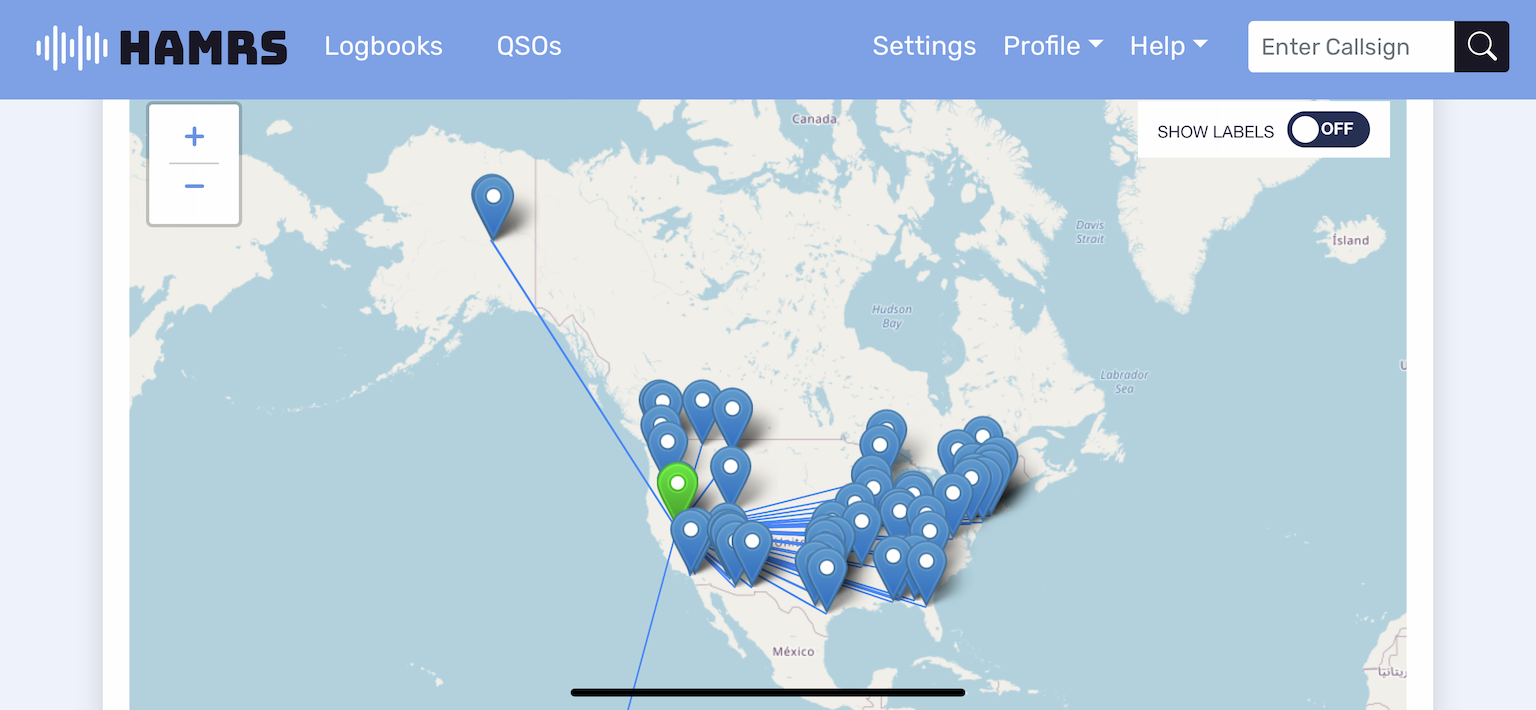
Over the weekend, I logged 62 contacts at Washoe Lake State Park. Again, it was a good weekend.
This is a map of the contacts made for the weekend activation of Washoe Lake SP.
My friend emailed early yesterday (Saturday) indicating they were headed out to Nightingale to ride the desert race trail and spend some time outdoors. He invited us along.
The Girl and I had a recheck appointment at her vet about 1100h, so I knew I would be late getting out there. On the way down to the vet, I decided it would be a good day to get out and get away from the house. I figured I could stop at the Maverick on the way back towards Carson City, pick up a snack, and then head out towards Lovelock and the Nightingale exit.
The Girl was more interested in hunting for critters. It was windy.The vet check went well — Sera’s toe is healing well and the infection is under control. Her nail is growing out and the new tissue is healthy.
That out of the way, we headed north from the vet. I stopped at the Minden Maverick, picked up a wrap and some chips, and we headed north. On the way, I called for my friend on the SNARS Mount Rose repeater. After a couple of calls, another friend answered and we chatted a couple minutes. They were tied up with chores and could not join us. That was too bad as they are both fun.
I made one wrong turn on the way north on the trail from the Nightingale exit but that was quickly rectified and I arrived at camp. I had a nice visit with the female half of my friends and soon the male half arrived. We chatted and shared a meal and then headed northwest from the staging area to a site they wanted to show me.
One of my friends riding to the next hilltop to check the view.
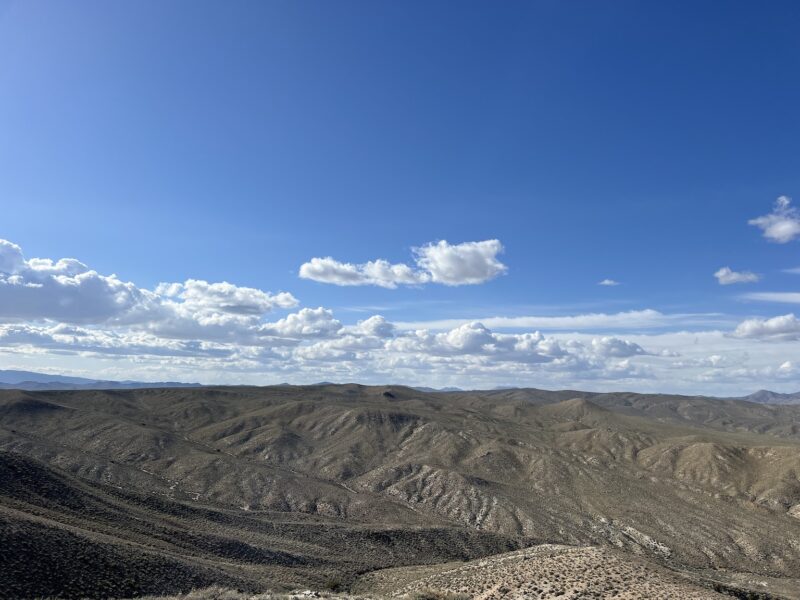
It was not a long trail drive and the trails are in excellent shape. We arrived at the hill top and my friend asked if I was going to run the radio. The wind was already up and I was cold, even with the moderate temperature (70F). I hunted around from a windbreak, but the shape of the hilltop was such that there was no wind break.
I decided to get out the triple mag-mount and try a hamstick. They headed off to ride and said “We’ll meet you at camp in a bit.” That was good enough for me.
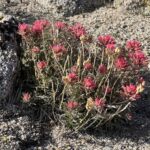
Is this Indian Paintbrush? I don’t know, but they were very pretty on the hillside.After setting up the antenna, I got the Elecraft KX2 out of its bag and also one of my American Morse Equipment keys. There were a few Parks on the Air (POTA) activators working 20m so I thought I might be able to work them. I could hear a couple of them, but they were not very strong. I checked the solar weather conditions, but there was not a lot of geomagnetic activity and the sun was not producing a lot of X-rays. The base noise level was a little elevated, but that did not explain why the stations were weak.
I was probably in the wrong location for skip to be working for me. So, after calling a few minutes, I decided to just enjoy the day, get out with The Girl, and move around a little.
I put away the radio and antenna (that did not take long), then started my tracker and we walked around the hilltop. She bounced from bush to bush, looking for critters. (It was too cold for them.) The wind was blowing pretty strongly. NOAA Weather Radio reported sustained winds of 20–25mph with gusts to 30mph in Carson City. Along the ridge I suspect it was greater. (That’s why my hat is blown back in the selfie above.)
We still had a good walk around the hill. I had worked my way downhill a ways so I would have a climb back to the rig. That was good for me. We clambered back into the rig and headed back down the trail to camp.
When we arrived, they were just about ready to go. We headed out and stopped in the Red’s Grill in Fernley for a bite of supper. The Girl and I then blasted on home, tired by satisfied.
It was a good day.
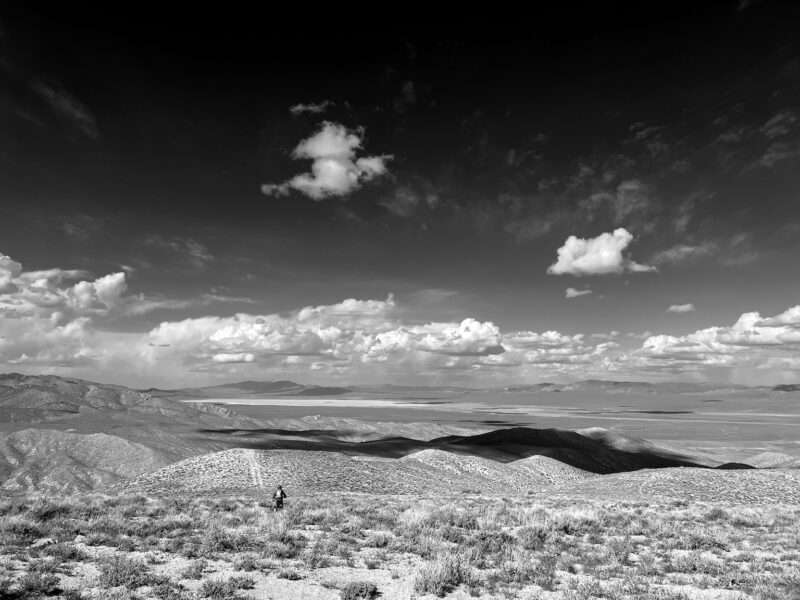
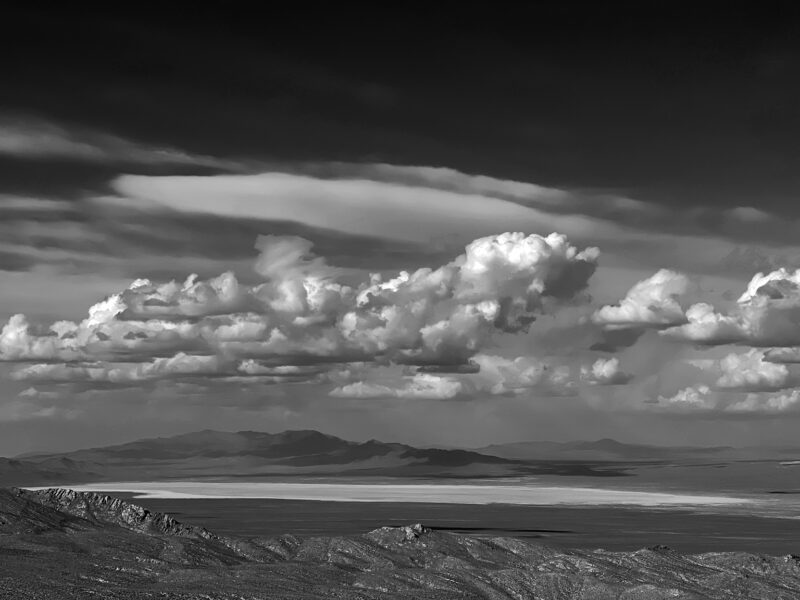
Another Nevada playa lake that might make a good campsite and operating point.