Fujifilm Cameras and Lenses

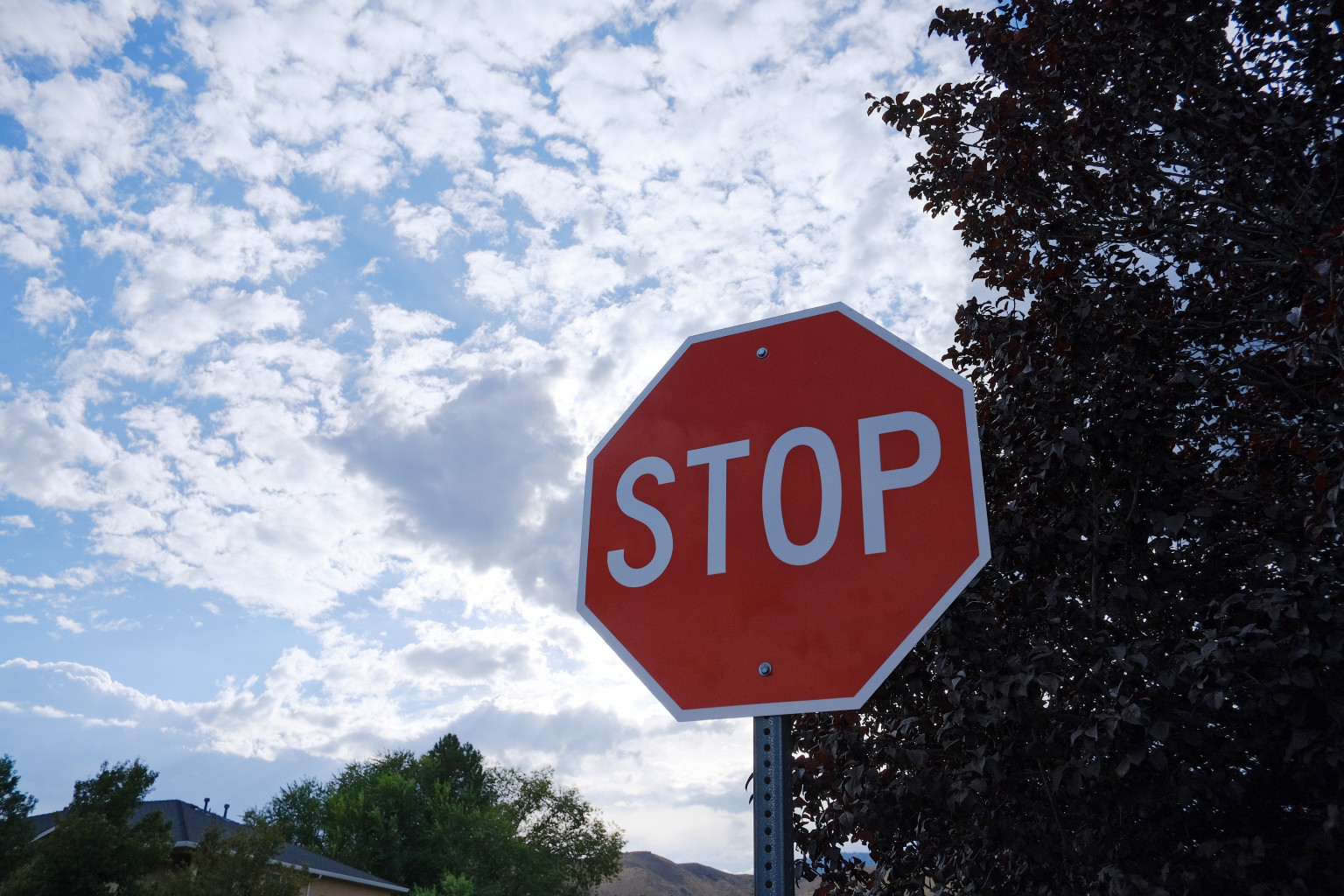
I should probably have put the background out of focus for this capture. I might also experiment with a black and white version. But this will do for the day. Captured with X-Pro3, 2026-09-21 16:55:26, Voigtlander 18mm, 1/2400sec, f/5.6, ISO-400, light editing.

A favorite content creator, Dan Bailey, is a long-time Fujifilm user, professional photographer, and teacher. I think I started following him about 10-years ago.

He recently resent one of his blog posts about his favorite Fujinon lenses and I reviewed his site. He has some good picks on the list that reflect his approach to photograph and his style. Even if my style is somewhat different, there is knowledge to be gained from reviewing his reasons why he chooses what he does.

I have three Fujifilm cameras in my inventory that see significant use. They are 1) X-Pro3, 2) X100vi, and 3) X-T5. The latter two have the 40MP IBIS sensors that are fifth generation. They are exceptionally capable cameras with different use-cases. The X-Pro3 was a curiosity purchase because I am interested in the rangefinder mystique. I have never owned a rangefinder camera1 that received significant use. In particular, Leica rangefinders have an almost cult following. So, I rented one and then kept it.

X-Pro3: The X-Pro3 is getting a lot of carry time. I have a small kit of prime lenses that match the form factor. This makes for a small kit that is readily carried. That is the primary advantage. The secondary advantage is that the camera is less obvious when out and about. It is small, black, and the lenses are also small and unobtrusive. It is a capable camera even if it has a known flaw, which is the ribbon cable that connects to the swing out rear screen2. But perhaps my favorite part of the camera is its size and tendency to be overlooked when I am out and about.

A part of this is use of the smaller lenses. That currently limits me to a longest focal length of 50mm (the Fujinon 50mm f/2 XF WR). That gives me a 35mm equivalent focal length3 of 75mm and I think that the maximum focal length used on classic 35mm rangefinder cameras is in the 90mm range. Beyond that, the frame lines in the viewfinder are just too small to be useful.

I have a Fujinon 90mm f/2 in my inventory and it is a great lens! It is nearly the perfect short-mid telephoto lens I have that fits my Fujifilm cameras. But it is fairly large and heavier than the remainder of the kit.

X-T5: The X-T5 is the goto camera whenever I am using what I call the Big Glass. That would all of the fast zoom lenses (the 100–400mm in particular), and whenever I want more grip than the X-Pro3 provides. My X-T5 is equipped with the Smallrig grip and base and that provides a lot of hand purchase on the camera and a Arca Swiss tripod compatible base on the bottom.

It is a different camera for a different use case than the X-Pro3. It fits into my use whenever I need the longer reach or the in-body stabilization. I put together a small X-T5 kit last year when I travelled east for one of my grandson’s weddings. I took the 16-55mm zoom, the 35mm f/1.4, and the 70-300mm zoom. I used the fast 16-55mm zoom the most because of what I was doing (spending time with my kids). But, the 35mm provides wonderful portraits and the long zoom has a lot reach for wildlife or telephoto landscapes. It has a lot more reach when mated with the XF TC1.4 teleconverter.

X100vi: Last is the X100vi. Many denigrate the camera as an influencer point-and-shoot for the follower crowd. I suppose that it is, but that is not the point. This is a grab-and-go camera that is quite capable with an excellent lens, solid feature set, and that 40MP IBIS sensor and processor. If I do not want to think about kit, I take this camera. It is a solid general purpose camera that produces wonderful images if I do my job.

Now I have to laugh at myself! What started as a rumination on Fujinon lenses turned into said on Fujifilm cameras! I think that I will revisit the topic again, later, and talk about the lenses I specifically carry in my kit that are actually used.

The X-Pro3 and X100vi get a lot of carry time. I will sling the Domke bag with the X-Pro3 and a few lenses over my should or put the X100vi strap over my neck every time I head out the door. I almost always carry a camera along. It is part of how I look at the world. The X-T5 comes along when I have an objective to accomplish — a specific photo shoot that I am working on.

Of course, if I travel, then the X-T5 kit I mentioned above, or a variation thereof, goes with me.

I am grateful. Life is good.
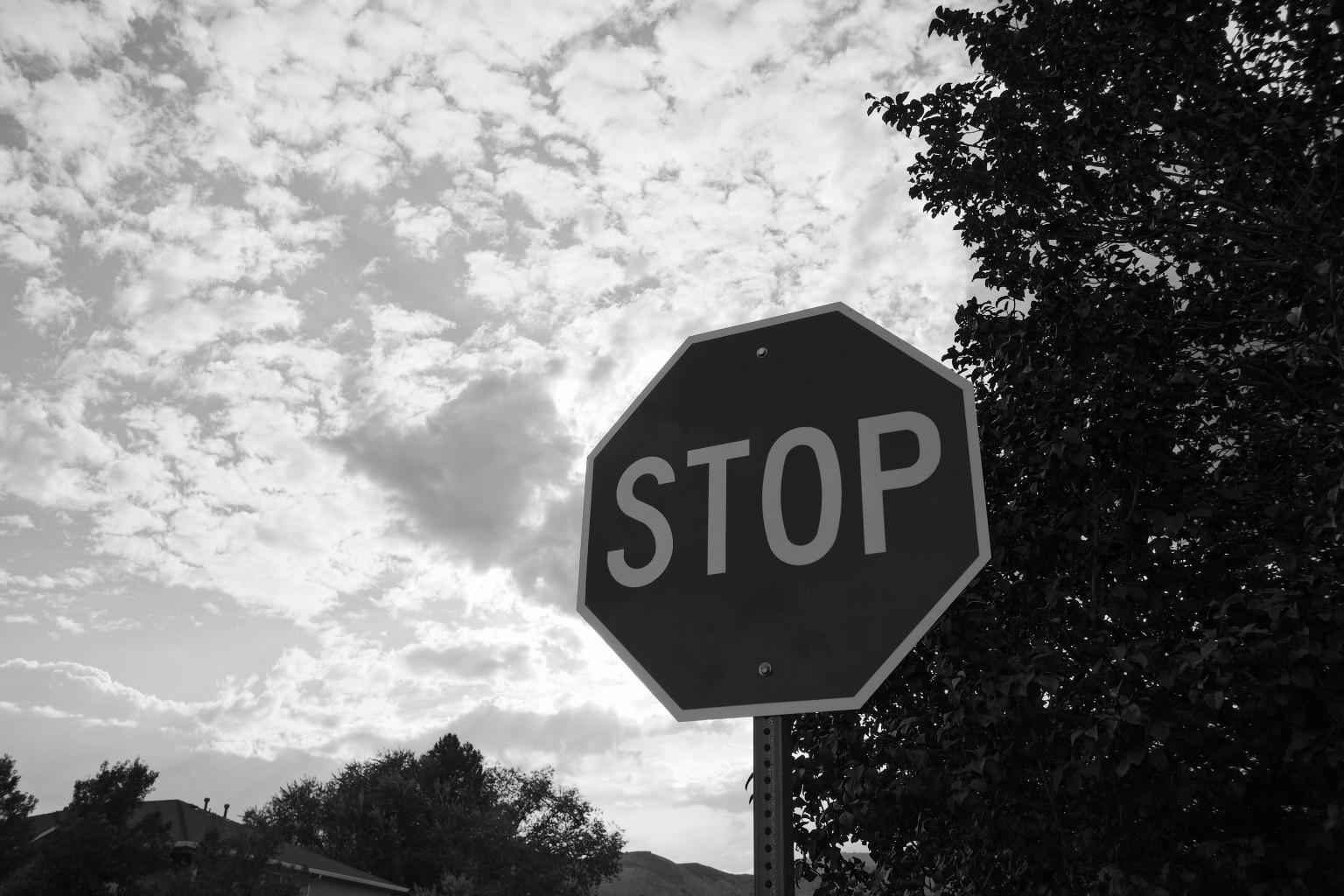
This is a second instance of the capture at top, rendered in black and white. The background is a bit blinding and might need some burning in. Captured with X-Pro3, 2026-09-21 16:55:26, Voigtlander 18mm, 1/2400sec, f/5.6, ISO-400, light editing.

The Great Egret

This beautiful bird, the Great Egret (Ardea alba), is one of the birds I see regularly on my walks along the Carson River. I was able to capture this wonderful photograph one day.

Early this year, while Older Son was visiting and helping me around the house, we took The Girl out for a long walk along the Carson River. We staged from Riverview Park, which is at the end of Fifth Street on the east side of Carson City. The weather was a beautiful winter day. There was plenty of water in the river, although nowhere near flood stage. That meant all the wetlands were, well, wet. The wetland wildlife were out and active on that beautiful winter day.

We came across this beautiful Great Egret, (Ardea alba) working the ponds in one of the wetland areas. I had only my Olympus OM-D M10 and a Wollensak cine lens with me. The lens was long enough, but I couldn’t get the capture I wanted. I was left with, well, only feathers.

The Girl waited patiently while Older Son and I made our captures. When she detected that we were done, she started toward the water, accelerating as she got closer. The egret watched her from his watery perch. (I knew she wouldn’t get into the water.) When she got close to the water’s edge, she bounced and uttered a single “Woof!” The Egret calmly flew off a few yards, settled back down, ruffled his feathers, and continued fishing.

Since that time The Girl and I have seen this bird, or another like it, several times on the river, fishing. If I’m in a blind, then the bird goes on without noticing me. They have very sharp eyes, however, and will spot me (or The Girl).

A couple of weeks ago I had the Fuji X-H1 and the Fuji 100-400mm super telephoto zoom with me. The Egret was perched on Mexican Dam. The Great Blue Heron flew away as I approached the dam. The Egret watched me for a bit, permitted me to make a few captures, and then flew a few yards away to a sandbar. There it continued watching me. I made a few more captures but didn’t really like any of them.

I like birds quite a lot. They fascinate me. I like being along the river, too. The new equipment provides me some capability I did not have. It has opened some of the world for me to capture, like this Egret and the Heron.

The Joy of It

I often see one of these beautiful raptors working the sage and wetland area of Riverview Park in Carson City.

Over the last couple of years, I have watched these beautiful Northern Harriers work the sageland and wetland areas of Riverview Park in Carson City. It took me a couple of attempts to identify the raptor, but I finally got a view of the bird’s head and with the aid of the Merlin application from the Cornell School of Ornithology I made the identification.

They are now easy for me to identify — that big white patch on the rump is one giveaway. The second is their mode of hunting is to soar about ten feet over the surface listening for mice.

With the acquisition of the red-badge Fujifilm 100-400mm super zoom lens, I now have the capability to capture an image of these birds. They generally do not allow me to get too close, although they will sometimes glide just overhead, teasing me.

On this particular morning, I saw the harrier glide over the field. I made a couple of attempts to capture an image but was not satisfied with my attempts.

However, the bird soon began a climb, having caught a thermal. I watch it rise up and up until it was a couple hundred feet overhead. It soared in large circles, overwatching its hunting grounds.

I stood there a few minutes, knowing that the bird was not hunting but simply flying.

Many of the animals encountered during my life have shown an intelligence that is impressive. They do not simply eat, sleep, and procreate. They interact socially among their species and sometimes others. They play. They do things that please them. Otherwise, why would they waste the energy to move from place to place?

The best teacher of all is The Girl. She showed me there is intelligence without language. She often talks to me, speaking volumes without making a sound. I get it.

As I stood there on the trail, watching the harrier soaring far above me, I got it. This was not about a hunt, or about turf protection; the soaring was simply for the joy of it.