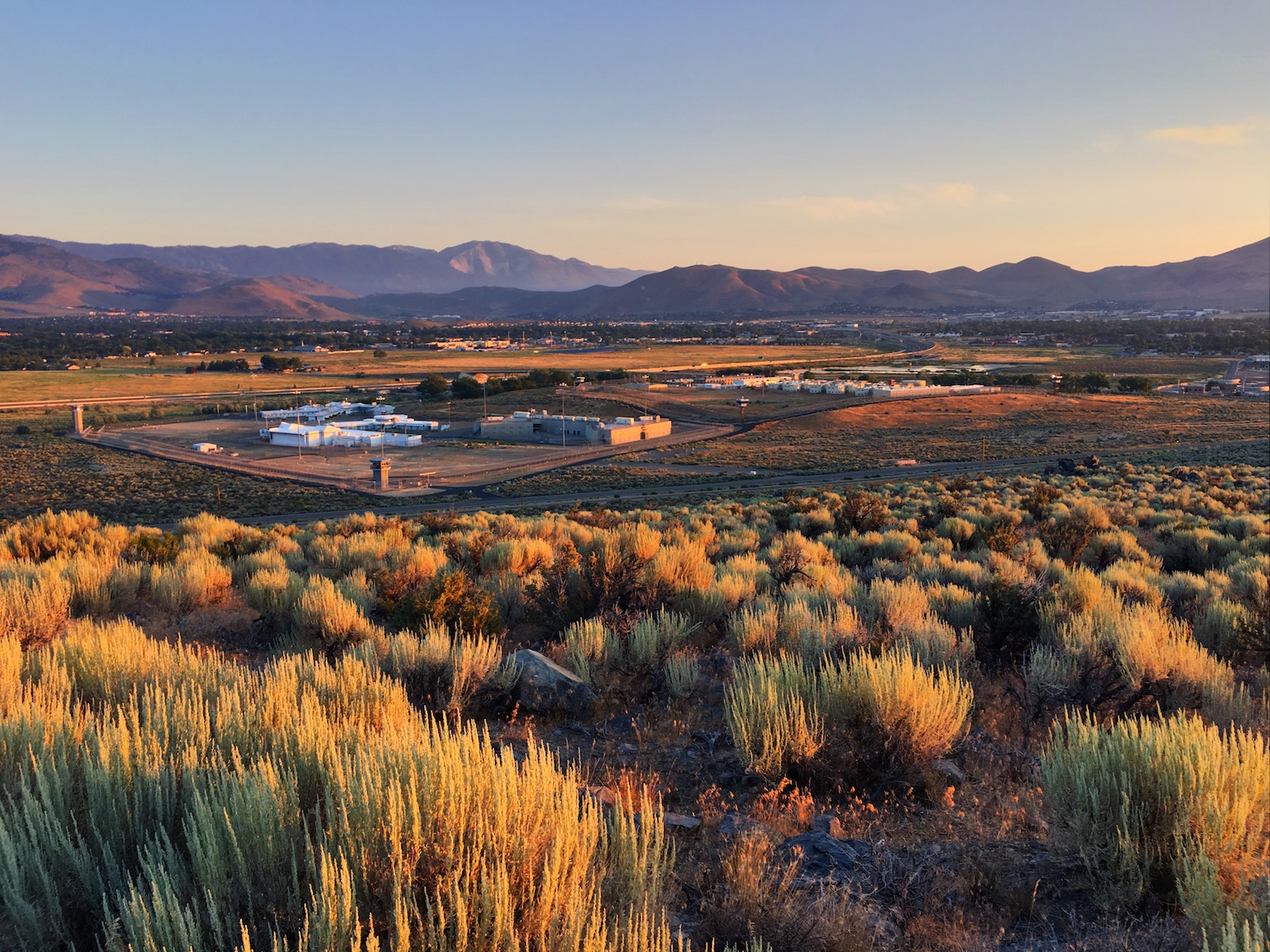
The Girl and I rolled out (real) early Saturday for a long hike and some geocaching. We parked the rig at the north end of the Prison Hill Range and humped it up the trails from the parking area. Near the top we were greeted with Father Sun and this staggering view of Carson City.
Saturday morning, the Girl and I rose really early to get a headstart on the day. I wanted to hike the northern part of the Prison Hill range, get some good exercise, and find a few geocaches. We were at the parking area before sunrise. (N.B. One used to be able to drive some of these trails — a year ago — but now the area is fenced off.) I donned my pack, initialized the GPSr, and we were off.
We humped it up the north end of the hills and were greeted with a wonderful view and wonderful light. I stopped for a few minutes to make a few captures. Then we were off again.
The initial climb was moderately challenging. But once up on the high ground, the trails were not bad at all. We hiked about halfway down the range before turning east to get the trail on the east slope and find a couple more geocaches.
By the time we got back to the rig, we were both done. I was ready for food, coffee, and a break. The Girl laid in the shade by the rig and waited for me to provide water. She settled with paws on both sides of her bowl, reclining while she drank her water. Then she was up in the rig and we were off to Grandma Hattie’s for breakfast.
It was a great morning. I’m stiff, which is also good. We also found a few geocaches to add to my list. Saturday was a good day.
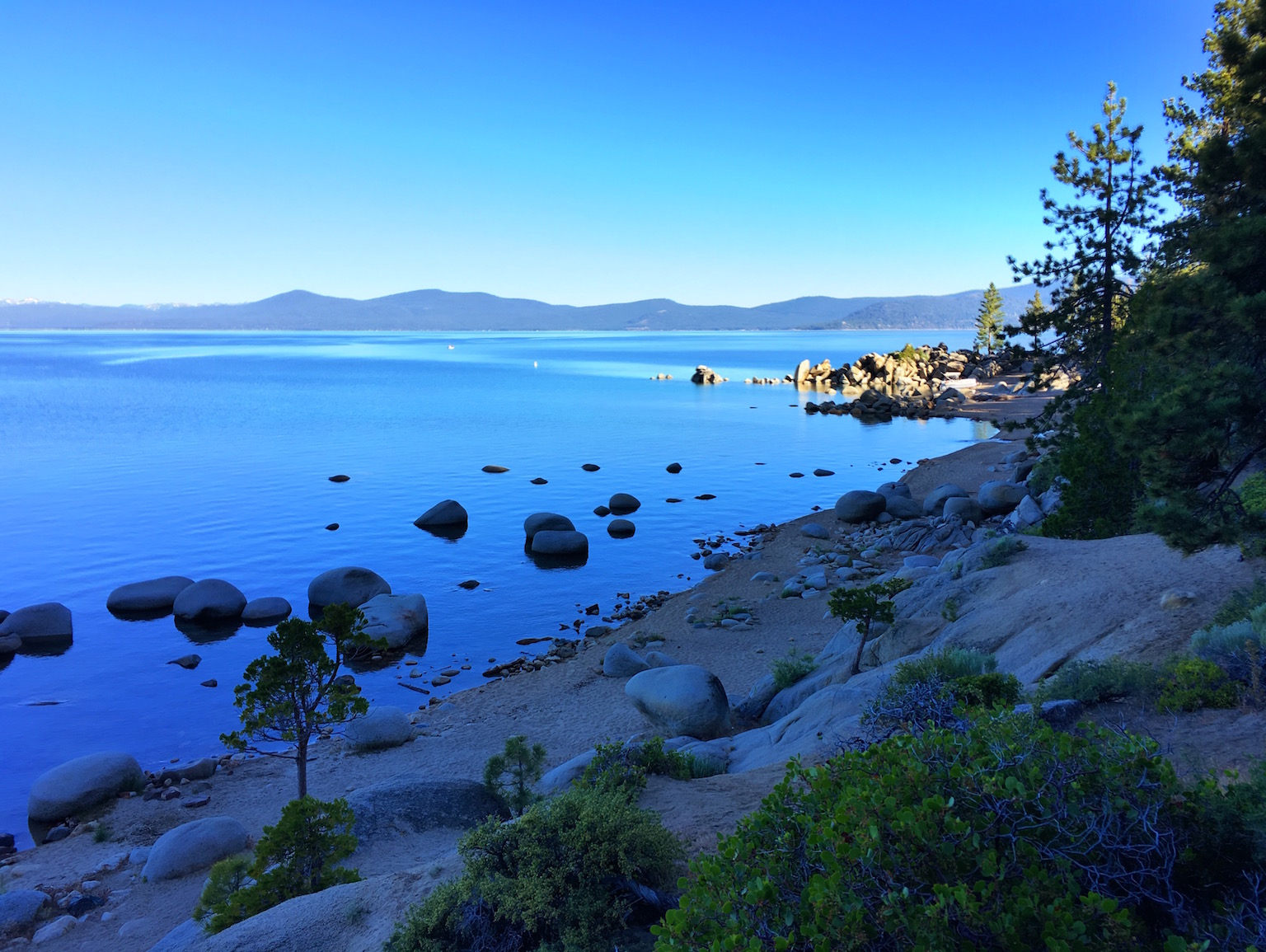
While hiking last Sunday with a friend (and the Girl), we were presented with this gorgeous view of an early-morning Lake Tahoe, with the sun just peaking over the edge of the rim crest to illuminate the point at Chimney Beach.
Here is a capture from my hike with a friend last weekend. The view was just stunning.
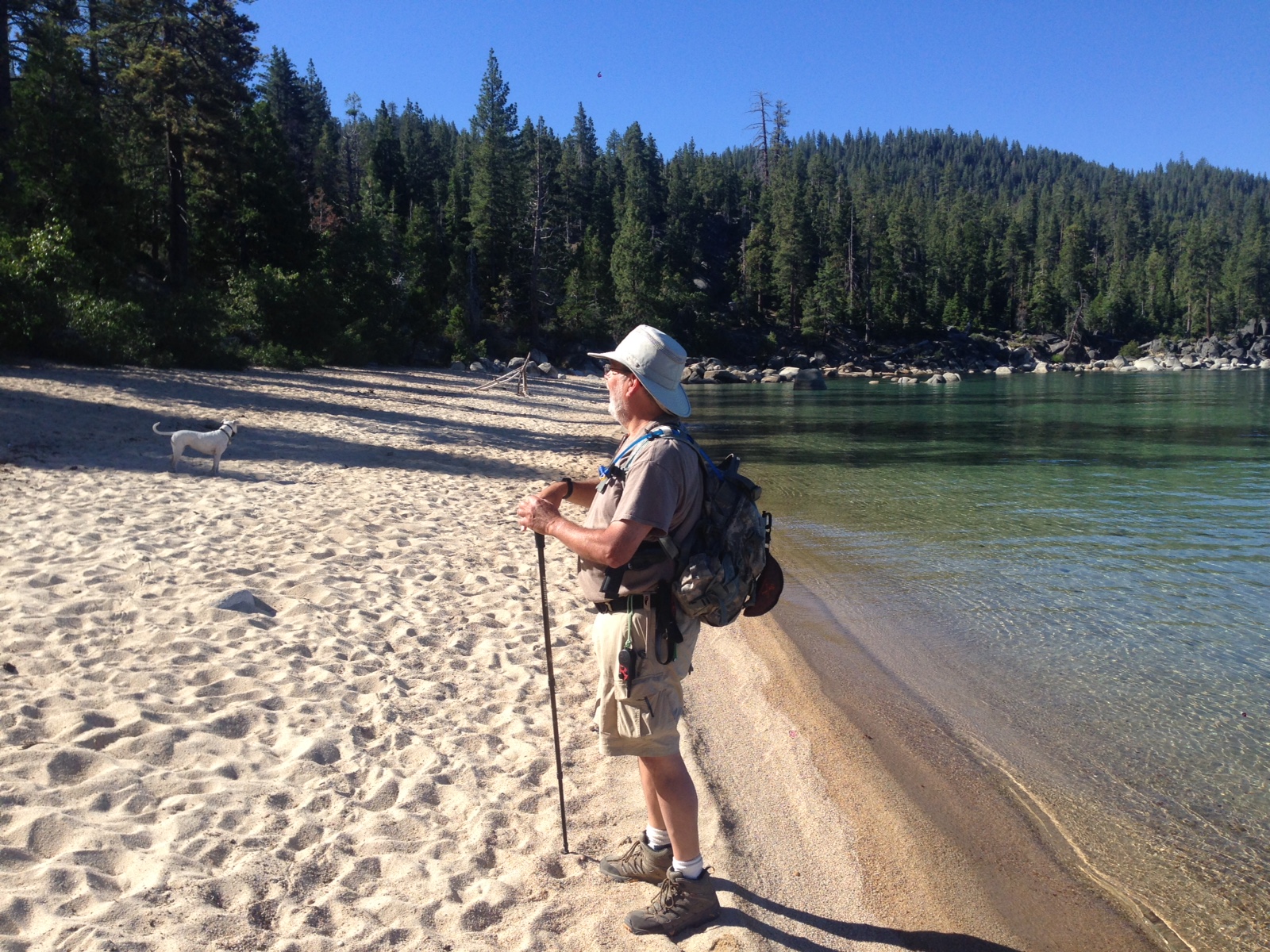
Last weekend, the Girl, a friend, and I hiked from NV 28 down to Chimney Cove and Secret Cove. This was captured by my friend.
Last Sunday (yep, already nearly a week passed), the Girl, a friend, and I drove up to the parking area for a trail that drops from the highway down to Chimney Cove, Secret Cove, and beyond. We hiked down the trail, encountering a few sleepy campers and some not so sleepy early-risers like ourselves.
It was a gorgeous summer morning at Lake Tahoe, just cool enough to make me want a sweatshirt part of the way. When it warmed, I stuffed the sweatshirt into my pack. The Girl didn’t need water (plenty in Lake Tahoe), but I used my hydration bladder a bit to stay hydrated. The loop was about three and a half miles, which is nearly perfect for me.
Yesterday morning, the Girl and I rose very early to get out for morning walkies before the summer heat. It’s been warming quite early the last few days and the heat is really hard on the Girl. So, I set an alarm, rolled out, roller her out, and off we went.
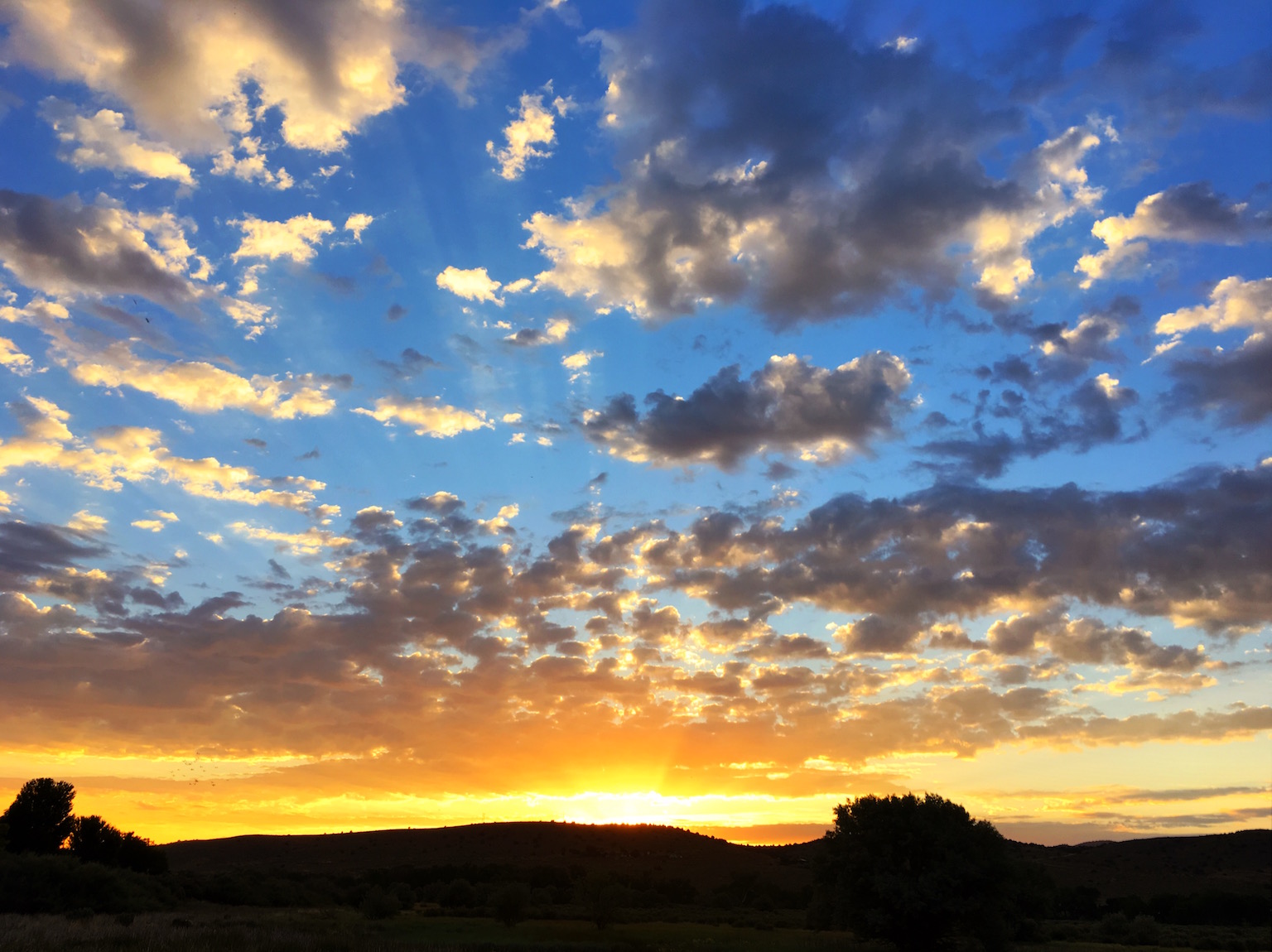
I could tell the sunrise was going to be gorgeous. As we started our walk, we passed the wetland area in Riverview Park on the Carson River. The blackbirds were jabbering quite a lot. I was so struck with the sight and sound, that I paused to make a short video of the event.
I was quite thankful for the show and expressed those thanks to God, the giver of good gifts.
We left the hotel for an early walk this morning. We were greeted with a beautiful sunrise.
The Girl and I rose quite early this morning to walk before the heat. When we arrived at Riverview Park, we were greeted with a beautiful sunrise and a cool walk.
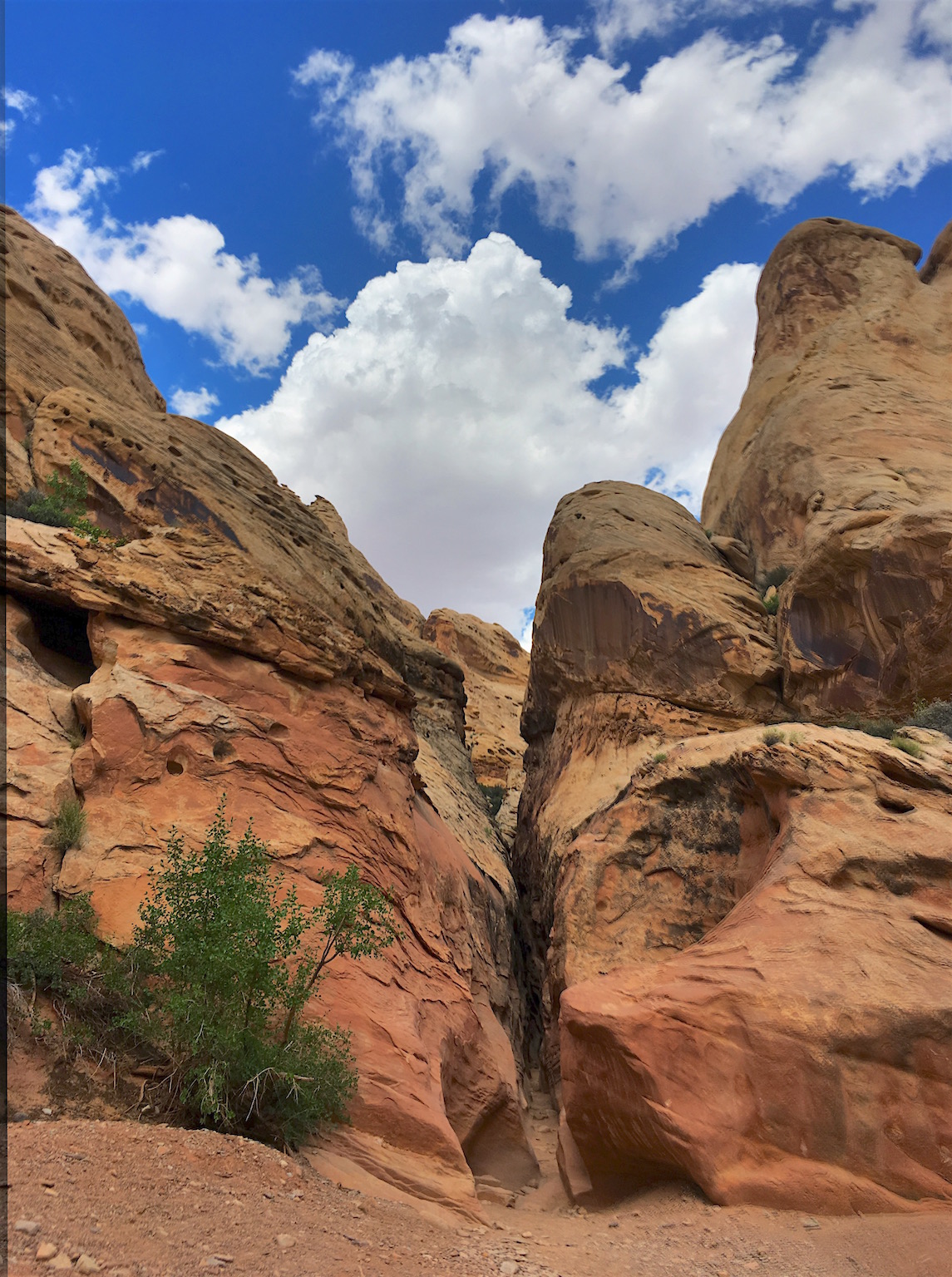
The Girl and I hike partway up Little Wildhorse Canyon. it was my first slot canyon and I hope it will not be the last.
A few days ago, the Girl and I hiked up Little Wildhorse Canyon. We didn’t go quite all the way, but far enough to get the geocache up there and to get a taste of hiking slot canyons. Both are addictive, I think.
There were a couple of spots where the Girl needed a hand. Mostly she’s independent, but this was a five foot jump and I don’t think she can do that without hurting herself. So, I lifted her up until she got purchase and she was off and running, literally.
On the way down we had a navigate the spot again, but this time I found a way she could do herself. Just like a two-year old, “she’d rather do it herself.”
By the time we got back to the car, she was done. It’s not often she’s trailing behind me. This time I ran away from her.
While geocaching on Tuesday afternoon, the Girl and I hiked up Black Dragon Canyon to the petroglyph site (and geocache). It was a great hike and the views were stupefying.
The Girl and I started early Tuesday morning with a long walk about the circuit I chose that takes us along the railroad tracks, the golf course, and back down Main Street to the hotel. We were up and walking before most folks were out and about. It isn’t that there are that many folks here out and about. Green River is pretty quiet.
We bought a bite of breakfast and then stopped at the park for a few minutes for me to spend some time in my journal and think about the day. Then we drove out to see the new diversion dam that was recently updated to keep the irrigation canals operational. As part of the upgrades, fish and boat passages were added to the structure. However, the river is high enough that there wasn’t very much to see.
We visited the Powell Museum and watched the movie of Powell’s exploration of the Green River and Colorado River. The movie was excellent and worth the price of entry into the museum. The Girl didn’t like the thunderstorm sequences much, but settled back down when the thunder ceased.
After a bite of lunch, we drove over to public library where there I could get a desk and Internet connection. It’s a nice little library and seemed to be busy enough. I chose a few geocaches and loaded my GPSr for an afternoon run.
After waffling a little about the heat, the Girl and I headed west to the San Rafael Uplift area. I’ve driven through it a dozen times or more, but never gotten off the road to explore. The geocaches on my list took us to some fine sights and I’m glad I made that trip.
The afternoon brought some thundershowers and some cooler air. I’m fine at 90F outdoors so long as I have water. The breeze and break in the bright sun made the afternoon excursion much more fun.
I came away with a few captures that I really like. One of them is attached.
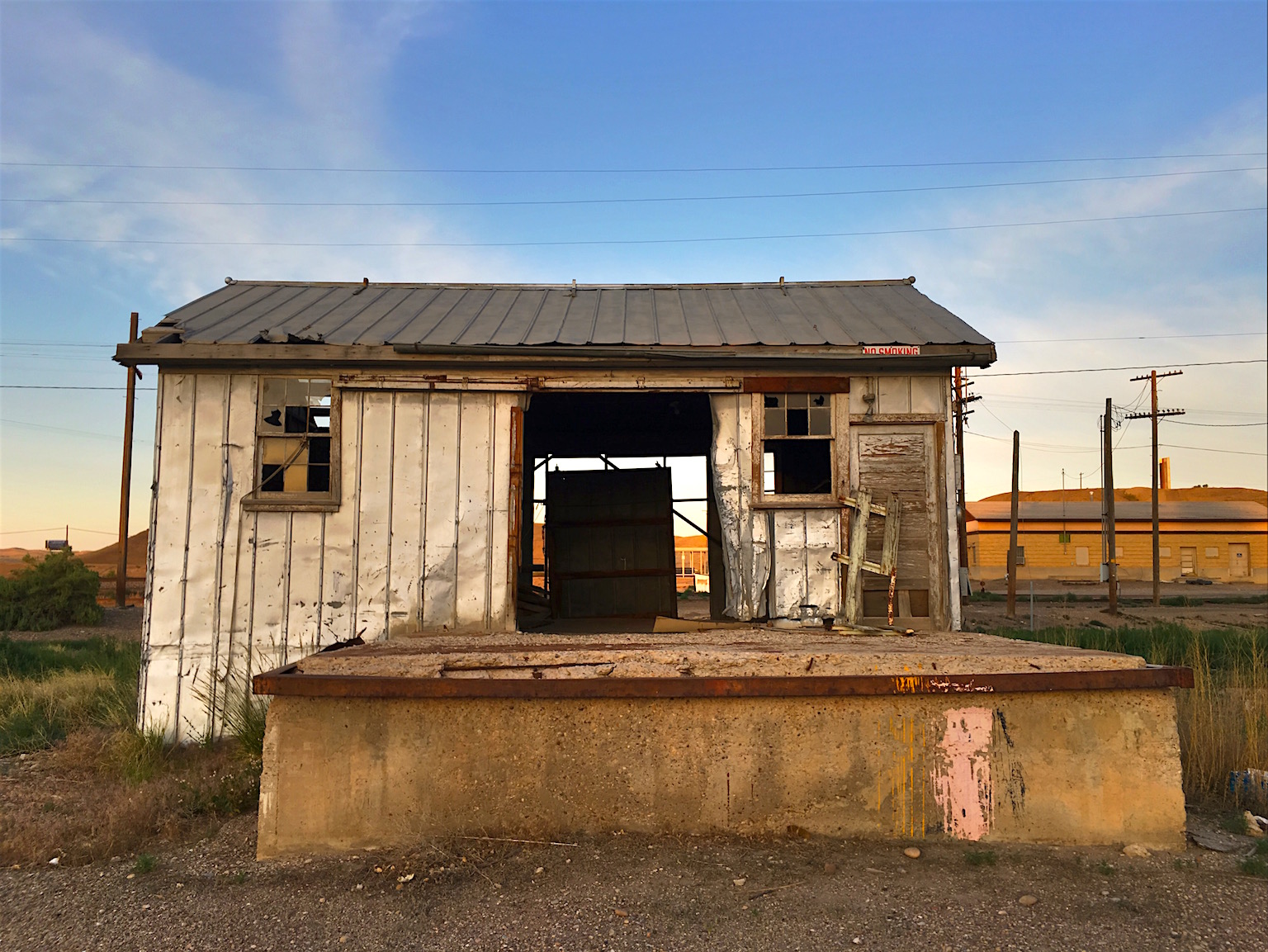
On morning Walkies, the Girl and I came across this dilapidated old building along the railroad tracks.
The Girl and I got out early for morning Walkies. It’s hot — damned hot — here in central Utah right now. On the way here yesterday, I spent a lot of time hunting geocaches in 100F weather. The Girl mostly elected to stay in the rig. She was hot.
So, this morning we got out early before the heat. It was a wonderful, if uneventful walk. I made a few captures around town on the way. This is one of them.
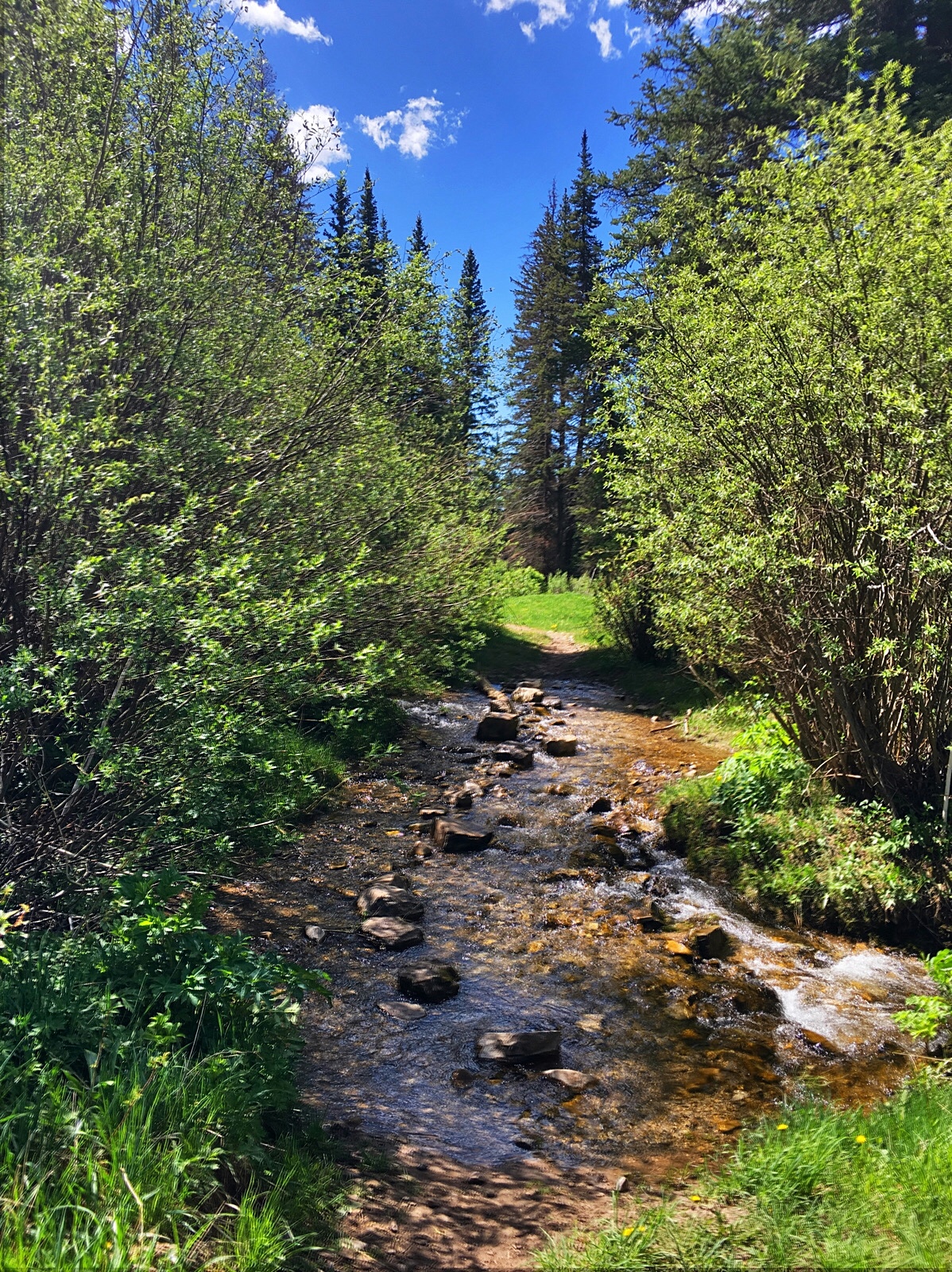
After finding our first geocache Sunday morning, we continued hiking up the trail along Rifle Creek. This tributary had to be crossed. Someone conveniently placed stepping stones across the water for those of us who don’t like wet feet.
Yesterday’s outing to Rifle Creek and the Three Forks trail was very good for me. I decided to go find a geocache located a quarter-mile from the trailhead, loaded that location (and a few others) into my GPSr, and we headed out. The drive out was healing, moving at a modest velocity so the windows could be down and we could take in the glorious morning air.
We drove up to the trailhead, past many rock climbers. There were so many rock climbers out there that there was no parking. I would have stopped to make some images of them working (and find a geocache) had I found a place to park.
We got out of the rig and the Girl started sniffing about, as usual. I met another old guy who was perched on top of his RV. We chatted a few minutes and I gather that he works on telecommunications. My gut feeling is that he’s a network engineer of some kind, but I never got clarity on that.
Saying goodbye, the Girl and I headed upstream. The water in Rifle Creek burbles along its path here. The water sound was musical and refreshing. The sound of the wind in the fir and spruce trees sussurated comfortingly. I listened for critters as we walked. The Girl stayed fairly close after so many days on lead.
I found the geocache without too much trouble, pawed through the contents in case there was a travel bug or other trackable (no joy), signed the log, and buttoned up the container. Instead of turning around, we continued our path upstream. It was simply too beautiful to return to the motel room without more time in the field.
So we hiked another half-hour, me mistakenly thinking I needed to be out of the park by noon. (I had a day pass from the State Park that expired at noon. We were on Forest Service land; not State.) On the back, I picked a nice shady spot to rest and did my meditation regimen. The Girl stayed pretty close, there being many things to sniff. Being outdoors for a meditation was very nice and is something I should do more often.
We turned around and headed back downstream toward the rig. The sky had a few puffy clouds and we had intermittent periods of sun and shade. It was warm, but not hot. It was nearly a perfect day.
I paused at the stepping stones on the way back. The life metaphor of the stones in the clear, talkative water struck me as I stood there, listening to the water, listening to the Girl being a dog, and listening to the winds speak in the evergreens.
I appreciate those stones, literally and metaphorically, even if I sometimes slip and get my feet wet anyway. (I did.) Although we humans like to think we know where we are going in this thread of time called life, we don’t really know. Life changes, sometimes drastically over a short period of time. The plans we make often do not work out, sometimes because the plans were faulty (unforeseens) and sometimes because we change and the plans are no longer appropriate. It doesn’t really matter, I think.
Don’t get me wrong; plans are important. It’s good to have goals and measure progress toward those goals. However, life is more than plans and goals. It’s a journey I’m on and a part of that journey is to touch the lives of those people I encounter as well as have my own life touched by others I encounter along the way. There is learning and ministry that is part of this process. That’s important.
So, with that reflection, I’m going to ready myself for some travel today. The Girl and I are going to make an easy day of it, geocaching and playing outdoors along the way to Green River, Utah. We’ll spend a night there, or maybe two if there are interesting things to see there. Then we’ll move on towards western Nevada.
This time I’m going to stop at the Great Basin National Park. I’ve meant to stop there a number of times and never have. This time I’m going to.
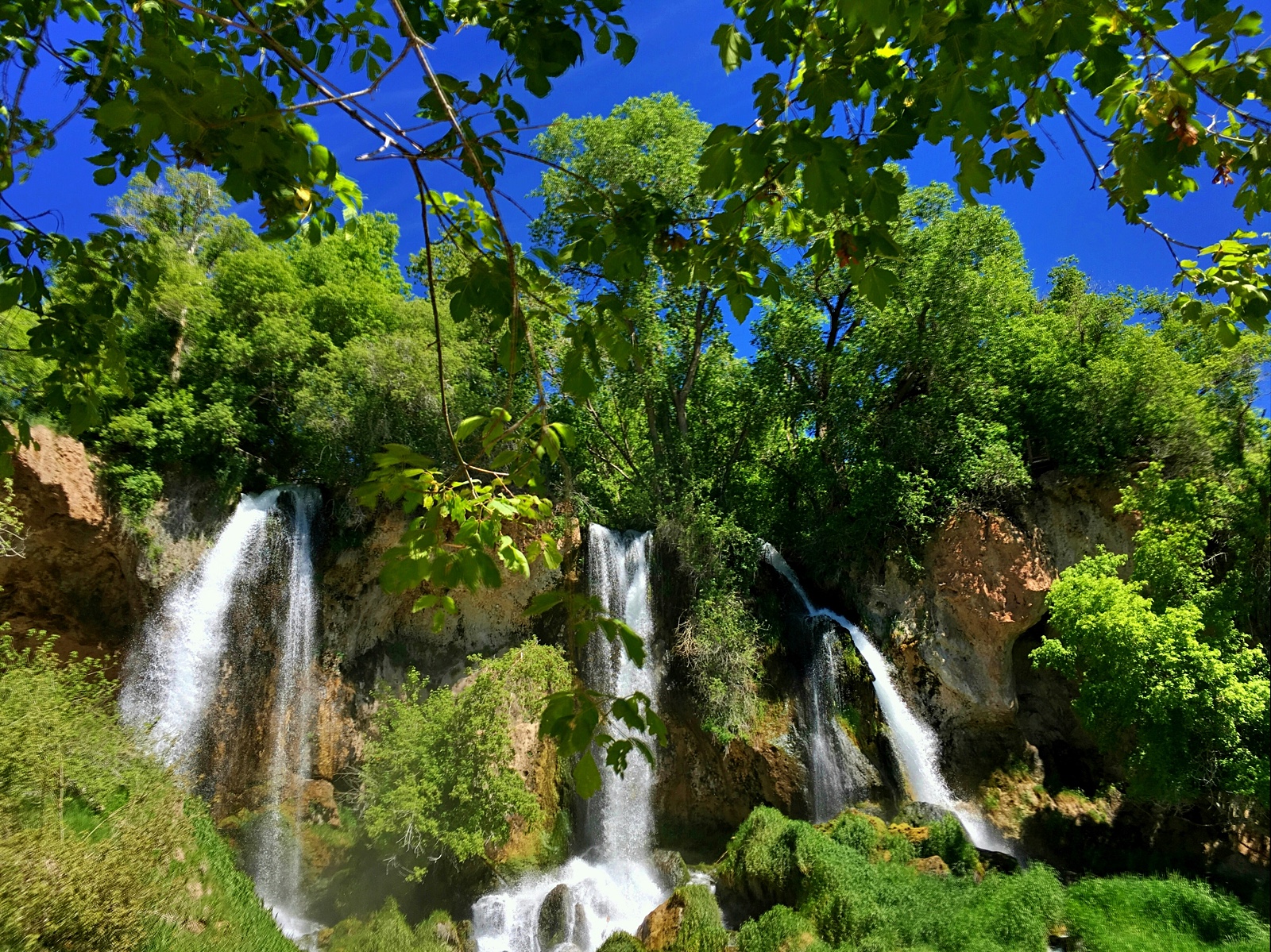
The Girl and I went out exploring yesterday and really enjoyed the stop at Rifle Falls.
The trip yesterday to Rifle Falls was well worth the stay in Rifle, Colorado. The Girl and I had a blast exploring. We even found a few geocaches while we were out and about.