Here’s another image of Prospector Pete. I think I like the other I posted better, but this is still fun. It was shot with the D300 and Nikkor 28mm f/2.8 AIS lens at ISO 400, f/16, and about 1/320th of a second.
Here’s another image of Prospector Pete. I think I like the other I posted better, but this is still fun. It was shot with the D300 and Nikkor 28mm f/2.8 AIS lens at ISO 400, f/16, and about 1/320th of a second.
It took me several tries to get the exposure right. But, I finally did. Nikon D300, some lens, some exposure…

Same bird, same camera, same lens, different position.

Heh. This was a fun shot with the Nikon D300 and the Tamron 80–200/3.8.
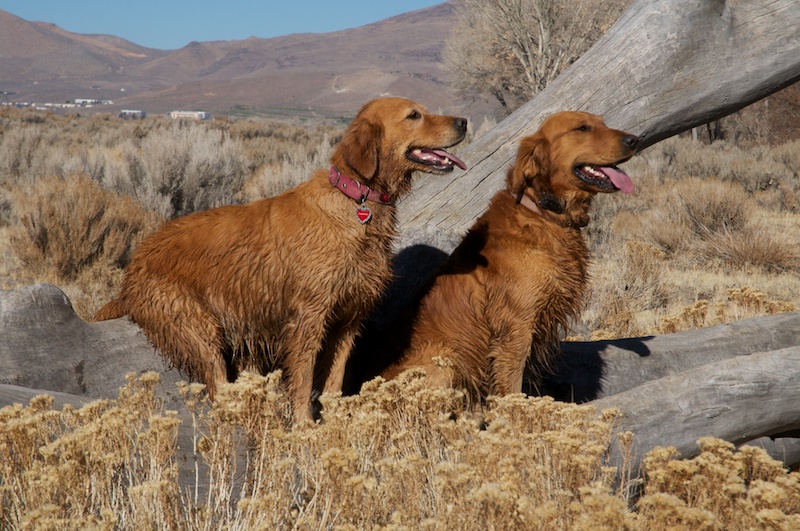
A couple of weekends ago I attended one of our Sit Means Sit outings. Of course, I carried a camera along with me. In this case, I took the D300 along. At one point down near the river, these guys decided to take a swim. No matter how cold it is, water dogs will get into the water. I kept Ki out of the water because it was cold and she has little fur. I didn’t want her to get cold.
Right after the swim, they posed. I made the capture.
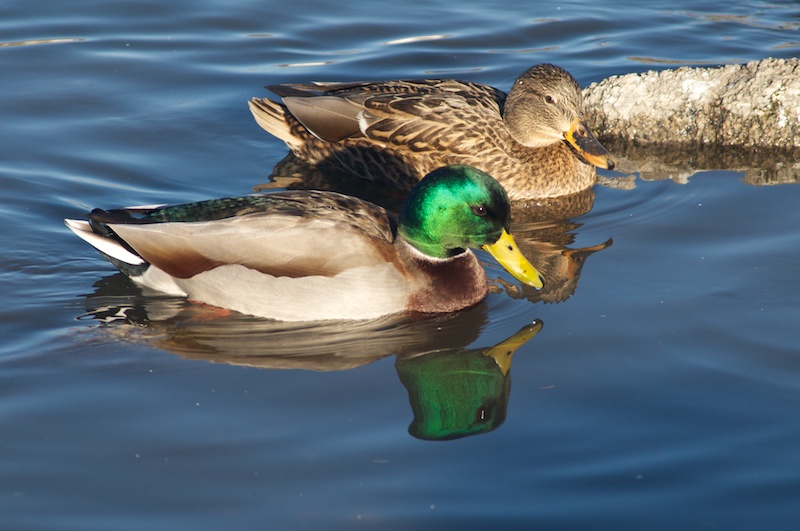
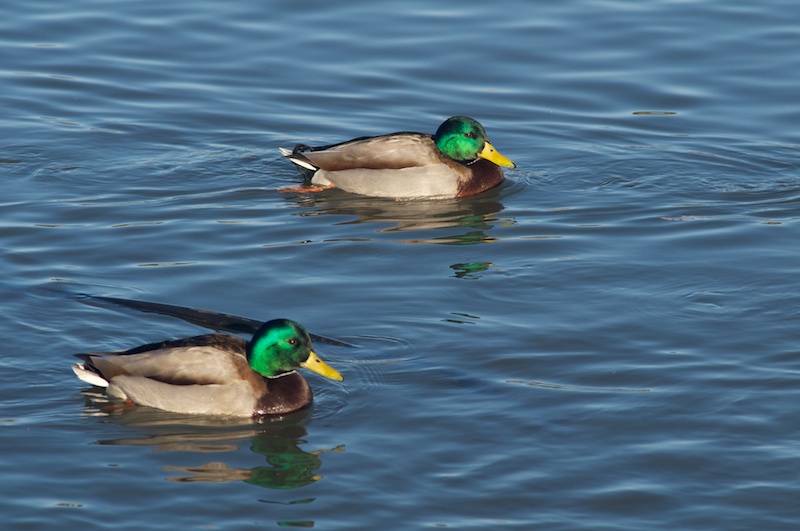
A couple weeks ago I made a number of captures at Virginia Lake. All were shot with my Nikon D300 and a Tamron 80–210/3.8 BBAR zoom. Most of the captures were shot at f/8 or f/11, although there were a few exceptions. This pair of ducks was shot at 210mm and f/8, I believe. Enjoy.
After the unsatisfactory experience of test shooting the Vivitar 400mm f/5.6 manual focus telephoto lens in Nikon mount, I decided that the reputation of the lens was not illuminated (heh) with the particular sample I used. I happen to have a second sample in my stable, but in Olympus OM mount. That’s OK, because I have an Olympus adapter for my Sony NEX-5N handy.
So, I mounted the lens on the tripod and waited for the birds to appear one morning. Of course, with the lens mounted and ready, there were no birds for several days. I finally gave up and shot the empty tree. The first image is the lens shot wide open, f/5.6. (Excuse the beschwitz in the upper right of the images — there was a bit of dust on the sensor.) Although not tack sharp, it’s definitely useable at the aperture.
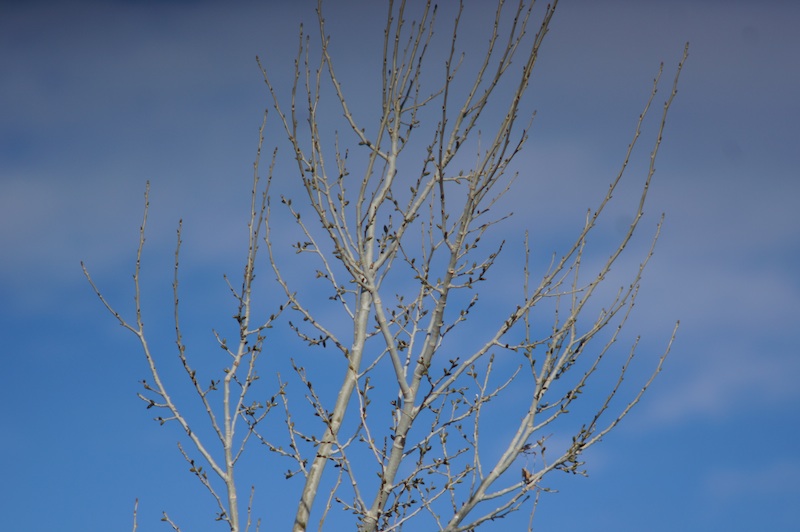
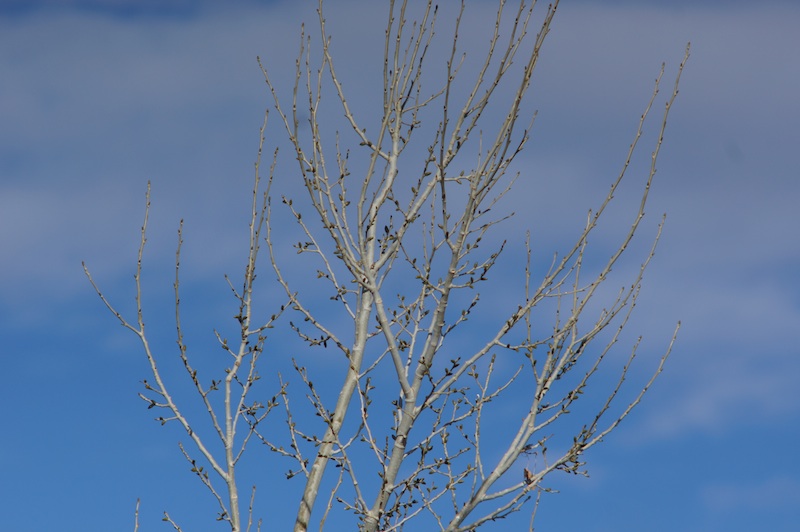
The second image is at f/8. It’s much better than wide open. I would not call this tack sharp (again), but it’s quite useable.
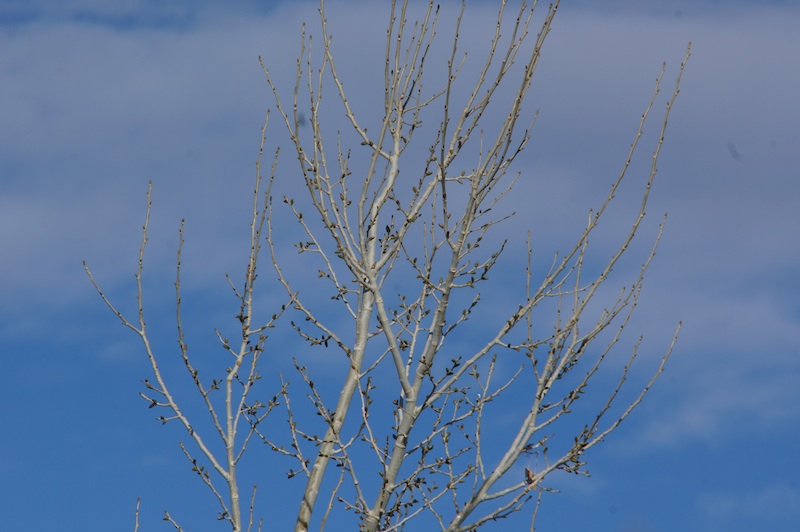
Although I shot all of the apertures down to f/22, I think one more at f/11 will suffice. Again, it’s a bit sharper than f/8 (not a lot) and completely useable.
So, my sample of the Vivitar 400mm f/5.6 in Nikon mount is going to the shop for a check-up. I think it’s a little sick. The Vivitar 400mm f/5.6 is capable of producing solid images and is a bargain at its price point.
My friend Jimmy told me he produced good images from the lens and was surprised by its poor performance. I’d like a 400mm telephoto in my Nikon kit because I like to shoot wildlife and sometimes the 500mm and 800mm lenses are just a bit too much.
While walking around Virginia Lake in Reno last Saturday, a number of the waterfowl appeared to pose for me. Of course, they’ve figured out that they can get freebies by playing to the crowd, so they do.
The shot was captured with my Nikon D300 and the Tamron 80-200/3.8 at about 200mm and most likely about f/8.
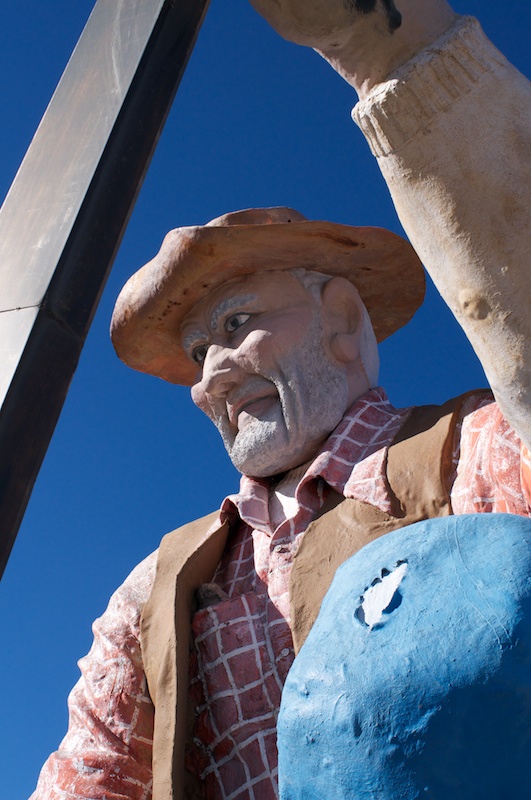
On my way to Reno Saturday, I elected to take the old U.S. 395 through Washoe City. There, next to the Chocolate Nugget (sounds nasty, doesn’t it?), resides Prospector Pete. He’s a very patient model and quietly posed for me while I worked the light.
The Nikkor 28mm f/2.8 AIS is a great lens. It’s sharp and contrasty throughout its aperture range.
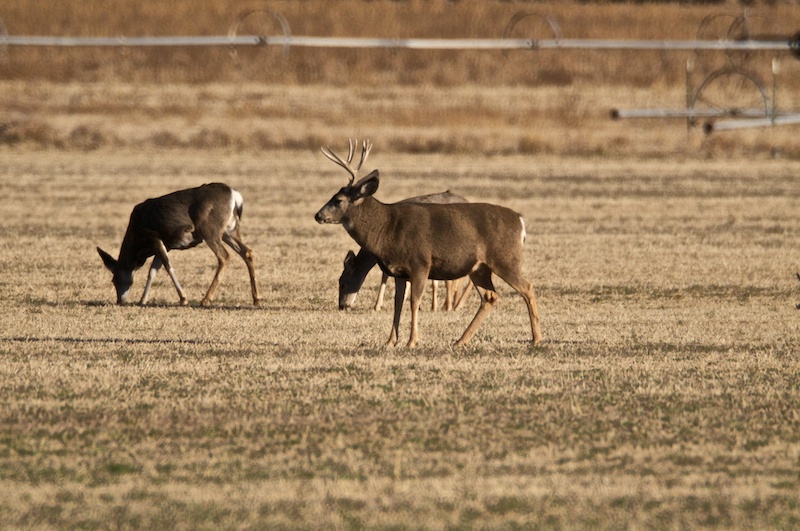
I don’t have a lot of use for an 800mm lens. But, now and again, it’s a useful tool to have when shooting wildlife, especially from long distances. It’s a catadioptric lens, meaning it’s a mirror lens. It’s an unusual piece in that the glass is one solid part. It was unusual and expensive when it was made, so not very many were sold. It’s also a decent piece of glass and can get the job done.
On my crop-sensor Nikon D300, it’s the equivalent of a 1,200mm lens. That’s a lot of reach. I have a Nikon 1.4x extender that I can use (and lose a stop), but there’s not much out there that needs to be shot that can’t be reached with an 1,800mm lens.
I made some minor adjustments to the image, mostly exposure and contrast, and added a bit of sharpening as a final step. Enjoy.