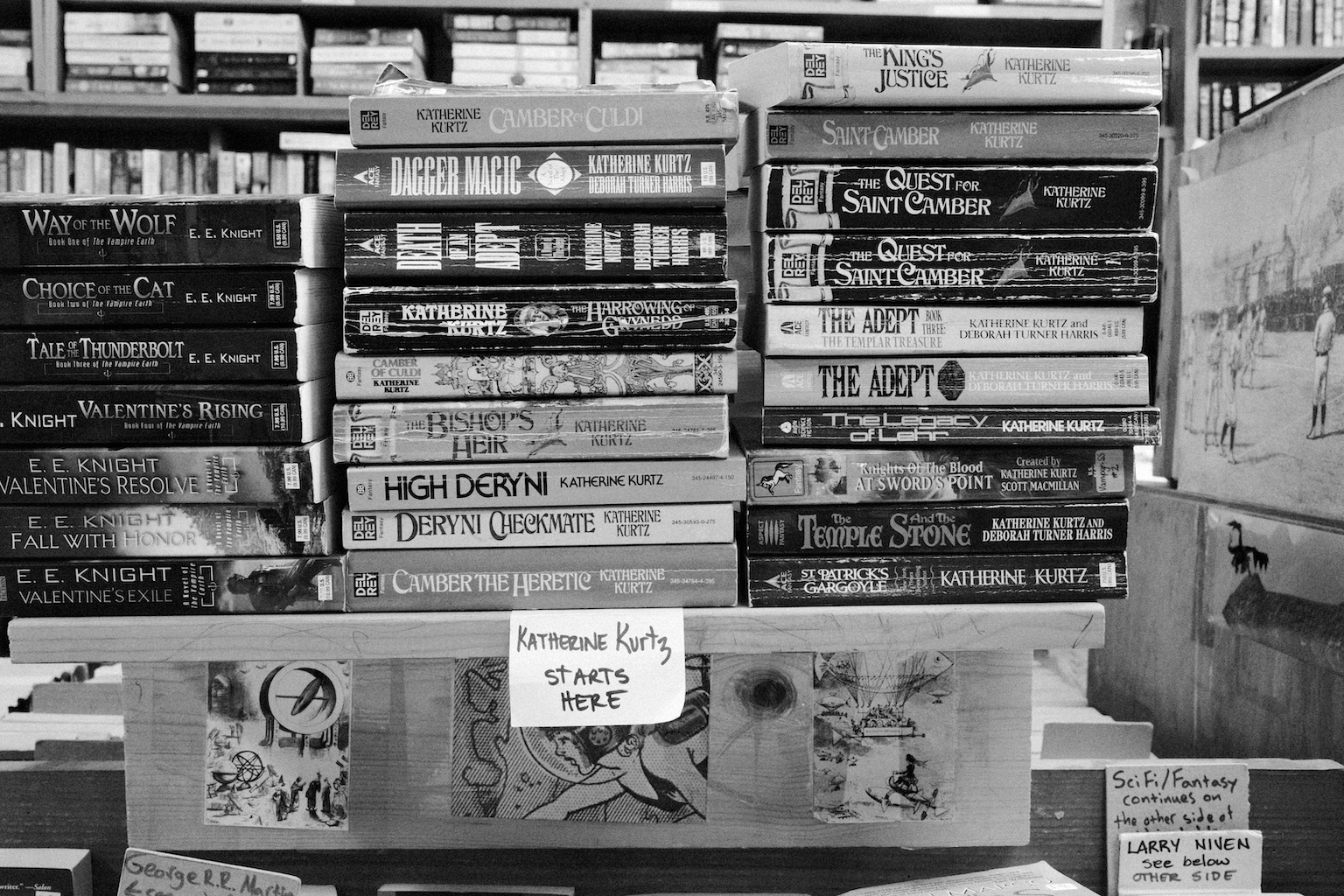
One of the stacks at Dixon Books in Fayetteville, AR. Shot with Fujifilm X100V 23mm f/2 at f/2.8 using the Tri-X film simulation.
My kids and I took a day trip down to Rogers and Fayetteville, Arkansas on Sunday. Despite the cold, winter day (but not as cold as it has been), we had a blast. We visited a Duluth Trading Company bricks and mortar store. There I bought The Girl a jacket for our cold outings (and to keep some of the rain off). I bought myself some gloves as those I have are insufficient when it gets this cold.
We drove into Fayetteville for a Mediterranean meal and the headed downtown to Dixon Books. I love used book stores and carried a camera inside with me.
Dixon Books is one of those rabbit-warren bookstores that has lots (and lots) of bookshelves and stacks of books with small aisles to traverse the stacks. I love it.
I carried the Fujifilm X100V in my hand and made many captures surreptitiously of other wanderers of the stacks. A couple of those might be worth sharing. I also carried the Nikon F2AS, but decided that it is a bit noisy for that environment. A quiet rangefinder was just the trick. (The X100V is nearly silent.)
I did not buy any new books, not having a list with me. But, I hope there will be another (perhaps many) trips back to Fayetteville and the next visit I will have a list with me.
After the bookstore, there was coffee at Doomsday Coffee, just a couple of blocks away.
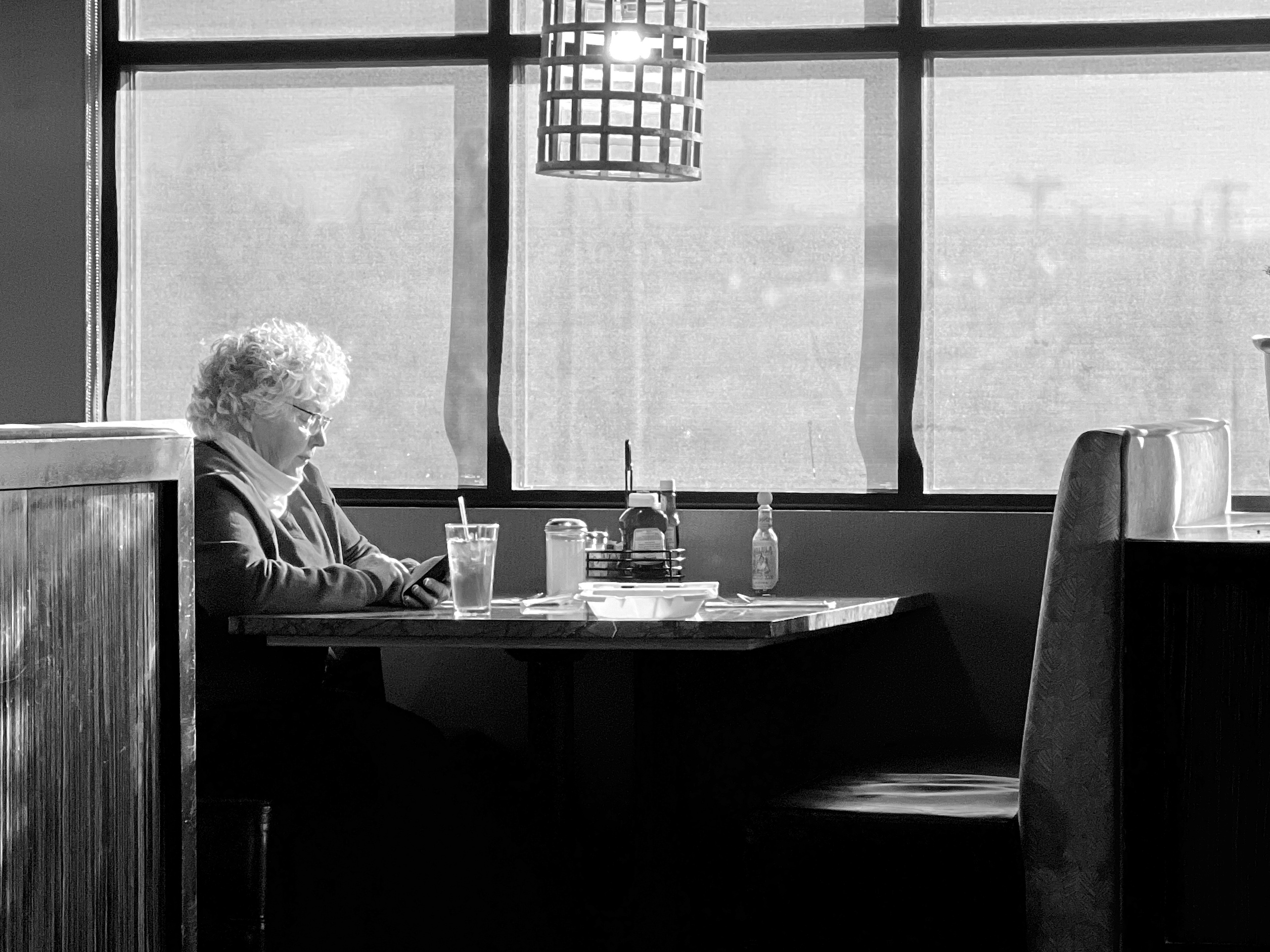
She’s always looking at her phone. Captured with MPro app on the iPhone 13 Pro Max.
I am working my way through Cal Newport’s Digital Minimalism. I picked it up again after I quit reading again a few weeks ago. But it is an important book for me to read. I want to finish it. I want to learn from Newport’s thoughts and experience. I want to spend less time on technology and more time doing things that nourish my soul.
The latter is something that has been in focus for a few weeks/months now. I took a sabbatical from Instagram several months ago, went back, caught myself doomscrolling, and deleted that IG app again. After my first IG sabbatical, I found and started reading Digital Minimalism and got to the point I was convinced that there are certain appetites I should not indulge1. I also deleted the Reuters news app from my iPhone, but left it on my iPad.
I check FB once or twice a day. I want to see if my kids posted anything, commented on one of my postings (I cross-post my weblog entries there), or if I received any DMs that need a response. Then I close the browser window.
This addiction is designed by the tech companies that produce the devices and the software that runs on them. IG, FB, X, and the others are all designed to provide that temptation to keep on scrolling. (Ooohhhhh… a sparkly!)
I now see that I will likely need to limit my YouTube access as well. I do not want to do away with YT; it is too valuable a resource to eliminate entirely. But I need to eliminate my use of it to occupy my mind with a nearly endless supply of fluff. It is not exactly doomscrolling, but it is close enough that I do not want to do it.
I usually check the Reuters news app on my iPad before I sleep. I spend a few minutes scanning the headlines and then reading a little if I want to know more. But I do not spend a lot of time on it.
I started noticing this addiction to our devices a couple-three years ago (maybe a bit more). Everywhere I went, I see people glued to the little glowing screen. They notice nothing of what is going on around them and see none of the beauty in the world. They are looking for that next dopamine hit, that “like” on a post or comment on a FB page.
NB: It probably 2015 when I first noticed actively that my family is often glued to the screen.
When I visit my kids I see them doing the same thing. We sit in the living room, the three of us focused on the little glowing screen. I stopped much of that the last time I was there.
Instead, I got out my Kindle and worked on reading. I have a couple of books going on, usually. One will be a novel and the other something to learn from.
The Kindle has its own issues. There are too many books on my Kindle. I collect lots of samples of books I want (or think I want) to read. I usually push finished titles back to the cloud.
Yet, there are still too many books on my Kindle. I sometimes get stuck in a loop trying to decide what to read.
That is not a good thing.
I might need to go through my Kindle and delete the bulk of the content there. But that is another problem and another topic. At least I do not doomscroll through the Kindle. At least, I do not do that yet.
I made the capture Sunday afternoon at the restaurant in Bodine’s Casino. I went there after The Girl and I had a great hike out at Silver Saddle Ranch. I was hungry and could not decide whether I wanted a bar-burger or a Reuben sandwich.
The Reuben won the decision. Bodine’s has a decent sandwich. So we drove out there. I parked the rig in the sun and cracked the windows for The Girl. I went into the restaurant.
Yes, I had my iPhone with me. I did a quick check of email and then checked my open search lists on fleaBay. I then set my phone down on top of my hat. I decided not to use the phone as a distraction.
I noticed the people around me. There were several of us singletons there for a late lunch or early supper. I watched a couple in a window booth talking to each other. A woman across the aisle from me was working on her meal. Then I noticed the woman sitting alone in a window booth. She was fixated on her smartphone.
She made one of the captures I shot with the MPro app on my iPhone. The MPro app is a black and white camera application that only makes black and white images. It also produces high quality TIFF files as its output.
As I watched her, I thought about my own struggle with the digital black hole. I think I need to start carrying a small kit that has my Kindle, my journal (and a couple of pens), and a camera in it. The iPhone can serve as a decent camera, but I prefer a purpose-built tool for photography. But the iPhone will do in a pinch.
In the end, I believe that such a strong connection to a smartphone is not healthy. It takes us away from being present in the moment and in the place. It denies us the opportunity to appreciate the beauty of our surroundings and the breath of life.
I think there is nothing morally or ethically wrong with use of the devices. But I think they present a risk to intellectual and spiritual health. I have decided to be less connected to my device and spend that time on things that nourish my soul, such as reading, looking around when I am outdoors, interacting with The Girl, and my inner spiritual life.
The iPhone will be there. But it is the servant, not the master.
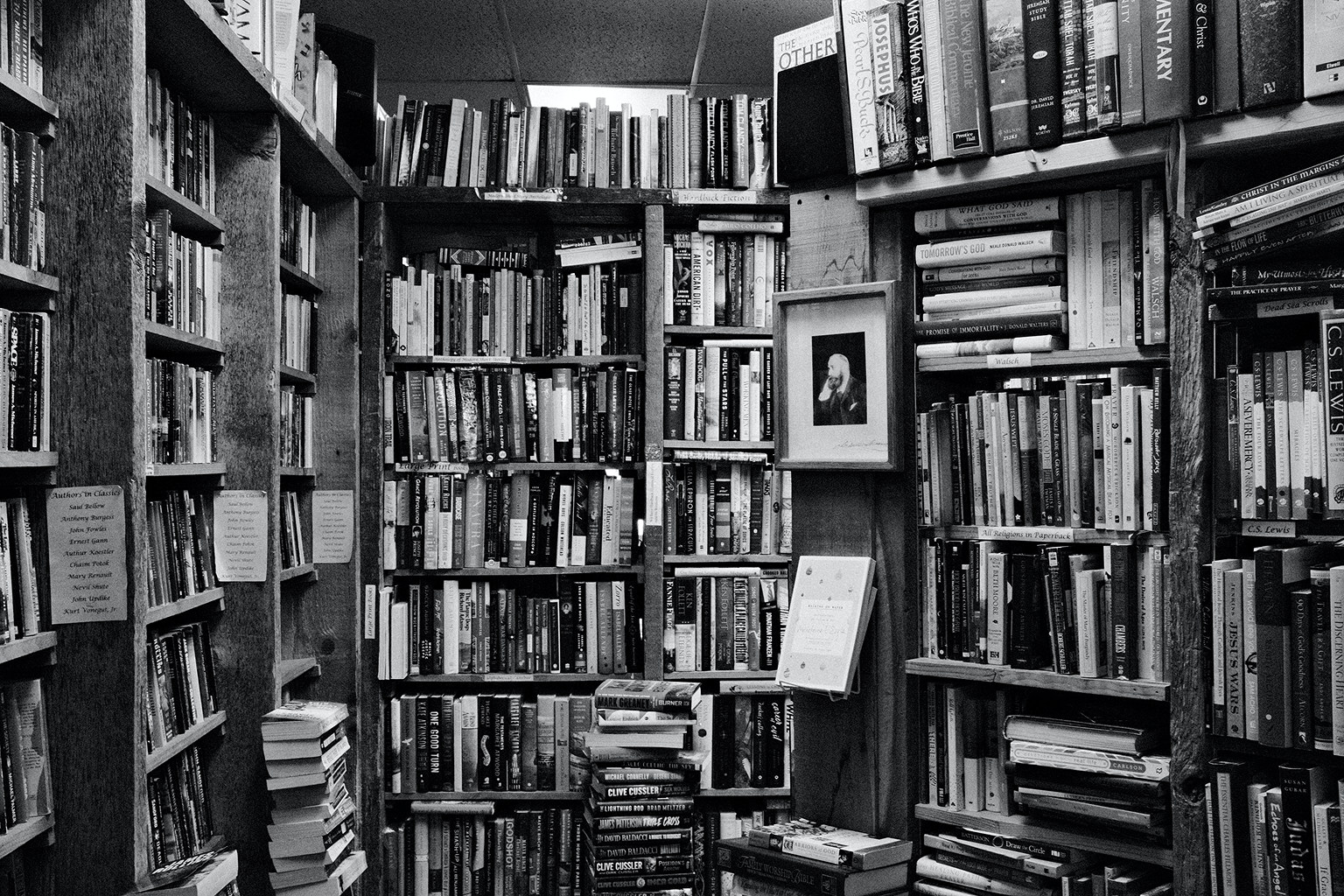
I made this capture in a Placerville, California used bookstore. I love used bookstores and should spend more time in them, and in the books I bring home. Capture with Fujifilm X100V at f/8 using a Tri-X 400 film simulation.
On my way home from testimony in Sacramento, I stopped in Placerville for a walk around and an early lunch. Placerville is an old gold mining town with a rich history. I really enjoyed the few minutes I spent wandering the streets with my Fuji X100V.
I am reminded that Placerville is not far and The Girl and I could drive over for a day to spend walking around and enjoying the history of the place. I might add this to my list of things to do.
I wandered into a used bookstore. I was reminded of how much I enjoy used bookstores, particularly those that are shoehorned into a cubbyhole like this one is. I wandered through the stacks, not looking for anything in particular. But i was drawn to the orderly-disorderliness of the stacks and thought it might make an interesting black and white image.
So, I made several. I think the Fujifilm X100V is nearly the perfect camera for this sort of shooting. At least, I find that I like the workflow that comes with it.
Back to my rumination… There was a nostalgia and a bit of melancholy that crept into my emotions as I wandered through the little store. Wife and I loved to visit these places. She always came away with an armful of books that were on her list, or by favorite authors. We would pay for her new treasures and off we would go, usually with her nose stuck in one of them not long after we exited the door.
Those were good days and I miss them. In writing this, a bit of the sense of loss returns knowing that those days are now my history. That part of my life is closed and now I am in another part of my life.
This part is good, too. But it is also diminished a bit because Wife no longer shares it with me.
Still, I remain grateful — grateful for that shared life and grateful for the life I have. Many good things are in my life. Life is good.
Many years ago I received a book by Robert Foothorap, Independent Photography: A Biased Guide to 35mm Technique and Equipment for the Beginner, the Student, and the Artist. I think it was a gift from Wife, but it has been so long ago that I cannot remember.
The book arrived not long before I received some training from another, more experienced, and serious amateur photographer. I can no longer remember his name, but the interaction occurred at the University of Missouri — Rolla photography club.
Foothorap’s book provided a wonderful background into basic photography, filled with a perfect combination of technical details, lots of photographs, and interesting stories. I read it many times before giving away my copy to a friend.
I later regretted giving away the book and found another copy, which I still have. It remains one of my favorite photography books, even if the technology of film is left behind. Much of what Foothorap taught remains applicable.
I learned that he died a few years ago. I am reminded that I am at a stage of life when my heroes are dying and leaving behind their legacy. I suspect all of us experience the same thing.
I still carry this old (30-years plus) glove-box atlas in my rig. I have navigated between destinations using it and it alone until I got to my destination. I then used my smartphone to find a place to stay or eat and only then used GPS to navigate.
A few days ago a new (to me) book arrived, Dead Reckoning by Ron Doerfler. The book is yet to be read (other than a quick scan), but the title reminded me of the method of navigation by the same name.
Dead Reckoning navigation is the art of estimating one’s position based on the last known position, elapsed time and velocity (or estimated distance) and heading. In other words, given a known position and an estimate of bearing and distance, the current position coordinates can be estimated (or calculated).
In the context of the book, Dead Reckoning refers to methods of calculation (or estimation) of mathematical problems without the use of calculating tools other than one’s brain. It is going to be a fine read and something that will add to my personal toolkit.
But the term reminded me of my wanderings a couple of years ago. As I traveled around the country, I had only a general idea of where I was going. Given that there was no specific destination and no specific schedule, I would stop along the way, retrieve my ancient glovebox atlas, and estimate my location on the very small maps. Using that information I would set a course and make a decision about where I might stay for a night or a few days.
Once near that location, I would open Google maps on my iPhone and look for a place to stay. After identifying a few possible candidates, the reviews would inform whether the place was acceptable. I would then either just drive in or phone ahead for a reservation.
I thought of this as an automotive form of dead reckoning. Given I had no specific destination, I had little need for the precision of GPS and the inherent maps. I just needed a general direction and an estimate of distance so I could decide where to stay for a night or a week.
I was also reminded of how we navigated when I was a young man. There was no GPS system. There were paper maps of various scales. I loved those maps and still have quite a few of them. I would plan a trip with a map and a notepad and I was able to estimate travel times and ETAs without a lot of effort. Sometimes navigation needed a telephone call (from a pay phone) to get to the destination. Often there were signs that provided directions once one was sufficiently close to the target.
There is something deeply satisfying about just using a simple map and about not having a specific itinerary to deal with. There is something satisfying about just going and then being there in that place for a bit.
I think this experience is coming for me again. There is a need in me to just wander for a bit and enjoy the journey. With journal, pen, and camera I can be very happy enjoying the world I live in.
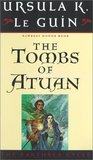
This is the second book in the Earthsea cycle. Instead of looking at Sparrowhawk’s development, this story is a look into the birth and growth of the First Priestess, Arha — the Eaten One. Her truename is Tenar and she was taken from her family at the age of five-years old. She was trained to be the priestess and the priestess life is all she’s ever known.
As guardian over the Tombs, her life exists of ritual and rote. Nothing ever happens… until during one wander in the Tombs she sees light — where there is to be no light.
And thus begins a new phase of Tehar’s life as she interacts with Sparrowhawk and is forced to look deep within herself.
This is another great read from LeGuin, who was a master of her craft when she wrote this story.
Edit: Sadly, Ms. LeGuin died a couple-three years ago. I recall reading about her passing and a bit of sadness rolled over me. She was a master writer. [29 April 2026]
Many years ago, I read a book — A Wizard of Earthsea, by Ursula K. LeGuin. It was partly for fun, for I enjoyed the best works of fantasy and science fiction, and partly a class assignment. For my university literature elective I sat the Science Fiction and Fantasy as Literature class under Eugene Warren. Although the class was for credit, it was for fun that I sat it. In the process, Mr. Warren taught me a few things about literature.
I met Eugene Warren and his wife, Rose, sometime in the early 1970s. I think they were involved with the Intervarsity Fellowship group on the University of Missouri — Rolla (now Missouri University of Science and Technology) campus. But, I cannot recall.
What I do recall is that they were different than anyone else in my experience. On looking back, I think they might have been part of the Hippie Movement from the 1960s. That is what I think, but I am not sure. That they were very different than me was clear. But, they believed God and trusted Jesus and that was all I needed to know.
My interaction with them was episodic, but always pleasant. When I learned that Warren would teach the literature class, I was intrigued. I am so glad that I sat that class. I was introduced to LeGuin and other great authors and still appreciate it.
So, it was a little surprising to me that I noticed an old copy of A Wizard of Earthsea on Daughter’s bookshelf. I had been thinking about the book because Older Son and I watched a Hayao Miyazaki rendition of Tales of Earthsea while I was in Denver a few weeks ago. I pulled the old paperback from the shelf and opened it.
My name was lettered inside the front cover. I had forgotten that these were my books, given to Daughter during one of my recent purges of things. I set the book aside to read it.
Yesterday afternoon I spent some time with Older Grandson. I asked if he had read the book.
“No,” he responded.
“You should.”
“What’s it about?”
“It is the tale of a young wizard learning to be a man. It is a good story and you will like it.”
I began rereading the book, now after nearly 40 years, last night. I woke early this morning, agitated and restless from my dreams and picked it up again. I didn’t want to turn on a light, so I bought a copy for my Kindle. I listened to music and read for a bit.
Then I set it aside and rolled over to return to sleep for a few hours. I remembered Warren and the class I sat so long ago. I decided that the story was worth telling — and the book well worth rereading.