Vivitar 400/5.6 Testing

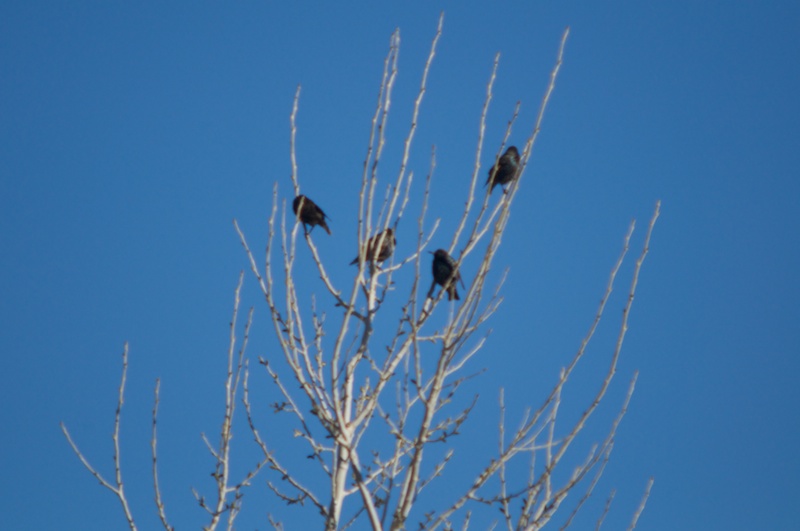
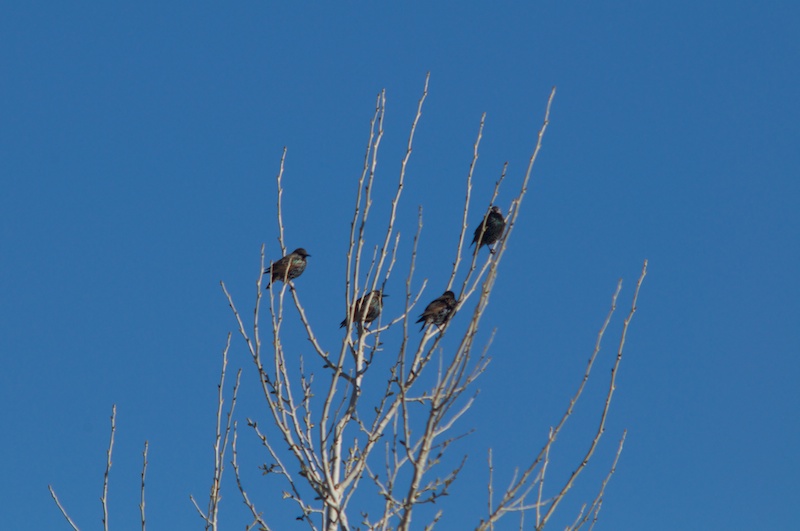
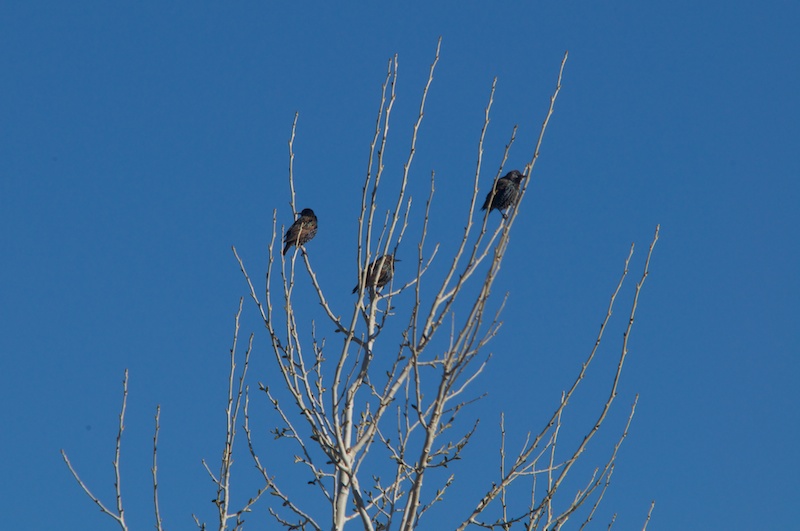
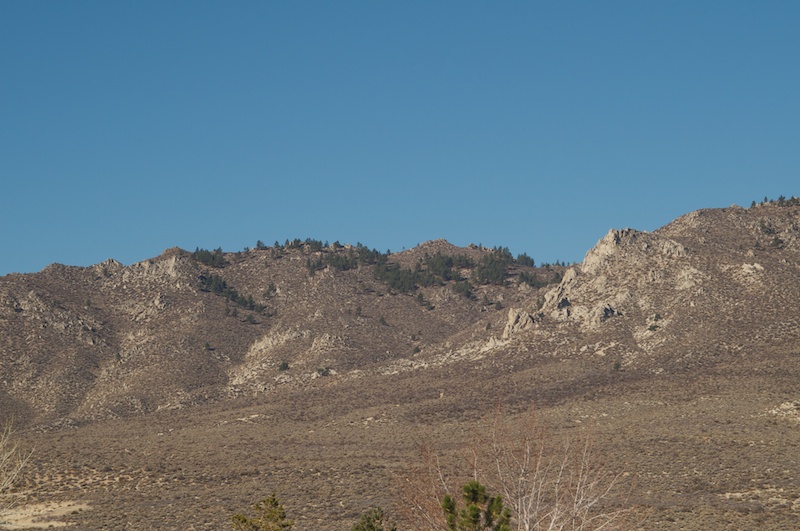
After comments from my friend Griff, I decided to mount the Vivitar 400mm f/5.6 telephoto on a tripod and shoot a few frames with my Nikon D300. The D300 is a crop-sensor dSLR with an APS-C sensor size and a crop factor of about 1.5. So, the 400/5.6 is equivalent to a 600/5.6 on a full-frame camera. I shot the lens wide open, f/5.6 , stopped down one stops, f/8, and stopped down three stops, f/16. The first frame (follows) is at f/5.6 (wide open). It is not very sharp.

Vivitar 400/5.6 Test III

The next frame is the test shot at f/8. It’s better.

Vivitar 400/5.6 Test II

The final frame is the test shot at f/16. It’s reasonably sharp.

Vivitar 400/5.6 Test I

So, here’s my take-home lesson. The Vivitar 400mm f/5.6 telephoto lens is unacceptably soft wide open. It’s better at f/8 and good at f/16. That means if I need a large aperture because the light is failing, this is not the tool to use. If it’s reasonably bright (where Sunny-16 is good), then the lens is useable at f/16 (maybe f/11) and can produce decent images. But, don’t let your friends shoot one of these wide open. It’s irresponsible photography and will frustrate everyone.

Vivitar 400/5.6 Test Shot

Vivitar 400/5.6 Test Shot

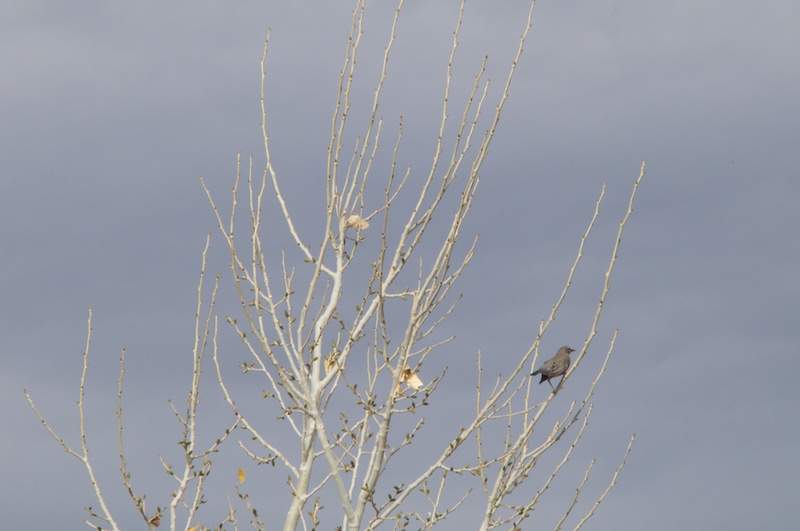
I have a Vivitar 400mm f/5.6 in my stable. The 400mm is not a focal length I use a lot, but it has its place for long shots, particularly of wildlife of both four- and two-footed varieties. The shot was handheld (braced against the door) from my back door. The birds were in a tree about 80–100 feet away. They are sharp enough, but not the kind of razor-sharp image I’d like.

I’ll have to put this lens on a tripod and reshoot. I don’t know if it’s inherent in the design, the focal length, or is a reflection of poor camera technique.

Tokina 28–85/f4 Zoom

Tokina 28-85-4 Test IMy friend Jimmy loaned me a Tokina 28–85mm f/4 zoom lens in Nikon mount a couple of weeks ago. The lens isn’t particularly fast, but it’s the right focal length for both my D300 and my Nikon film cameras. It’s a chunk of glass and the build quality is excellent. Focus is smooth but not too light. The zoom action is internal (it’s a two-touch zoom) and has no creep. It’s a good match for the dSLR although it’s a bit of a chunk on the Sony NEX-5N, but then what isn’t a chunk on that itty-bitty mirrorless body?

The lens has been out and about with me several times on the D300. On the crop-sensor camera, it’s in the range from normal to medium telephoto. It’s a little slow to isolate a subject well, but the optics are quite good. I shot the image on morning walkies a few days ago (with the Girl) at 85mm and about f8. It’s sharp enough, especially for a zoom. Color rendition looks neutral to me.

When I grabbed the lens for a closer look, Jimmy said “That’s the last I’ll see of that lens.” He’s probably right.

Fire in the Sky

Portrait Sunset

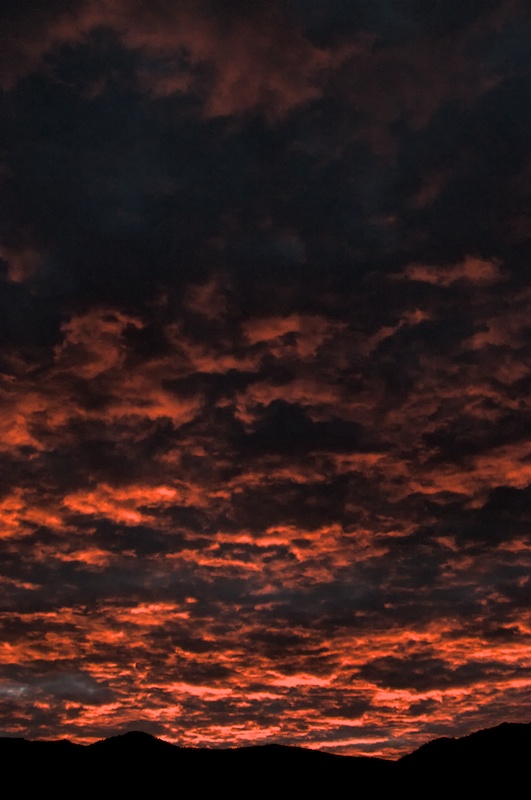
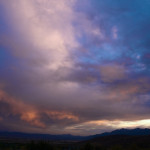
The other evening I took The Girl out on walkies a bit later than I like. It was overcast and as we walked to the end of the cul-de-sac to access public lands (a place we often walk), I noticed the sky brightening like it does before a sunset occurs. Given the nature of the clouds, I thought it might be something special. I worried we would not get clear of obstructions before the peak time. So, I hurried us along just a little.

I was rewarded with a beautiful sunset. We made it clear of the obstructions of human habitation in time to view it. Well, I viewed it — The Girl was too busy doing doggie things. I made a number of captures over the next 15 minutes. This is one of my favorites. The image was made with my Nikon D300 and a Tokina 28–85mm f/4 zoom. There is some post-processing, but it’s mostly limited to a bit of contrast adjustment, denoise, a hint of saturation, and final sharpening.

Sparks Marina Duck

Sparks Marina Sunset Duck

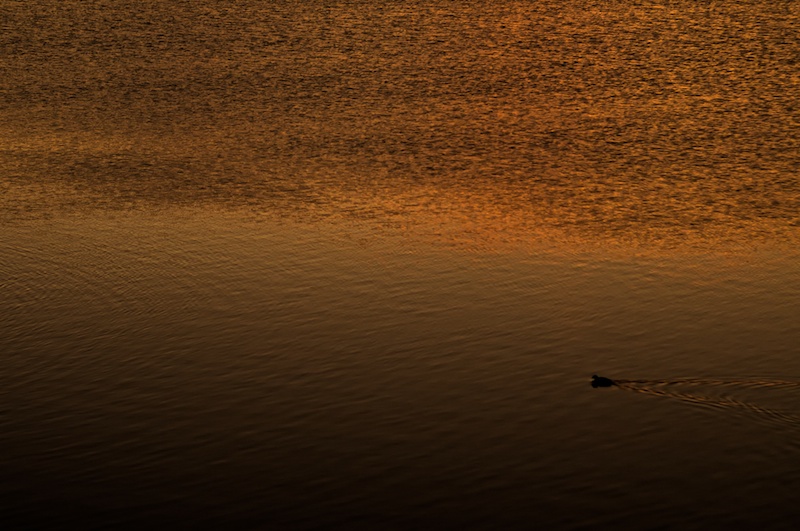
Saturday afternoon The Girl and I drove to Reno to pick up my Nikon D300 (cleaned) and visit with our friend Jimmy. After shooting the bull at the Camera Clinic for a bit (and wasting Steve’s time), we headed over to the Sparks Marina. After a coffee, we walked around the perimeter. The sun was headed west (somewhere) and the light was beautiful on the water. This duck elected to pose for me. So I took the shot.

I almost forgot. The lens is a Tokina 28–85/4 RMC. It’s one of the better builds I’ve handled. The optics aren’t bad either.

Broken I

Broken I

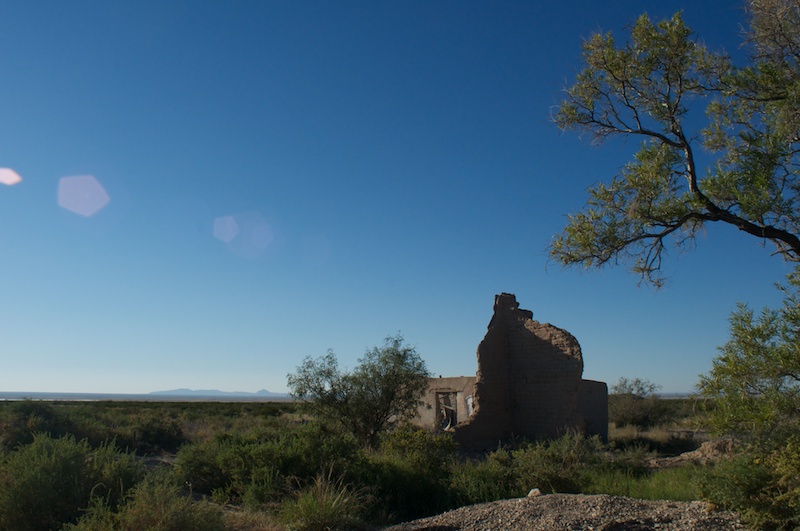
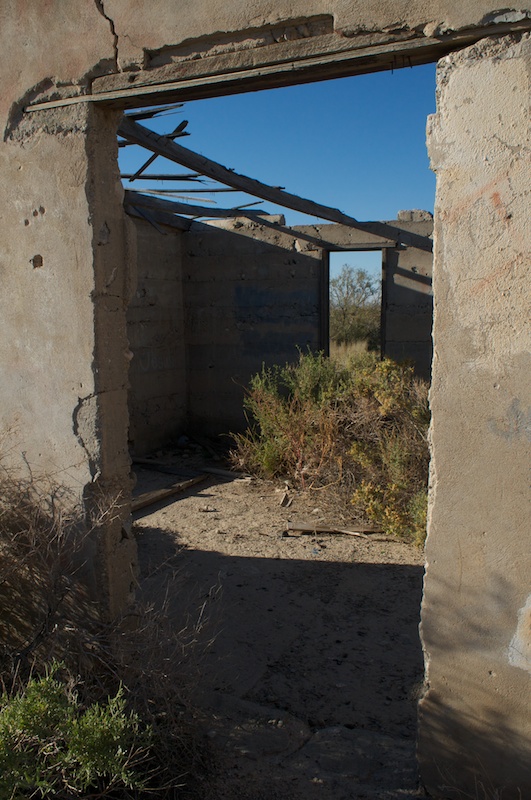
On the long road down from the Guadalupe Mountains, I found an old motel that is in substantial disrepair. I decided that it’s better to stop and make some images than to think “I should have stopped and shot a few frames” another hundred miles down the road.

So, the Girl and I stopped, parked, and wandered around the old structures for a half hour or so. She managed to find a lot of stickers, poor thing. So I had to stop now and again and remove them from her pads. Nonetheless, I think we both enjoyed exploring — each in our own way.

Wilson Canyon

Wilson Canyon 1

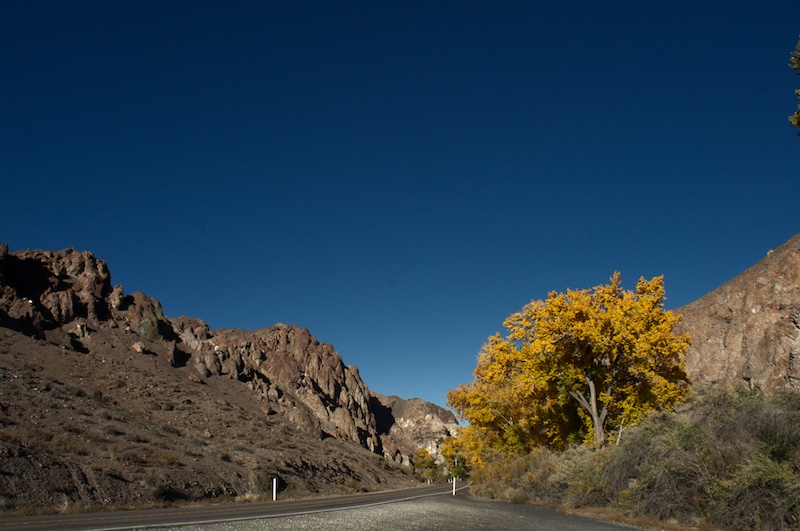
On my way home from Texas last week, I elected to drive through Yerington, Mason Valley, Smith Valley and Wilson Canyon. The colors along the Walker River in Yerington were gorgeous. I could not find a good spot to make the capture, though. I was really bummed by that.

However, when I drove through Wilson Canyon, there were a couple of places where I could pull off and get a decent composition. The leaves won’t last much longer and are really past their prime color. But, it was still worth stopping for a few minutes on a Friday afternoon.

Moody

Moody

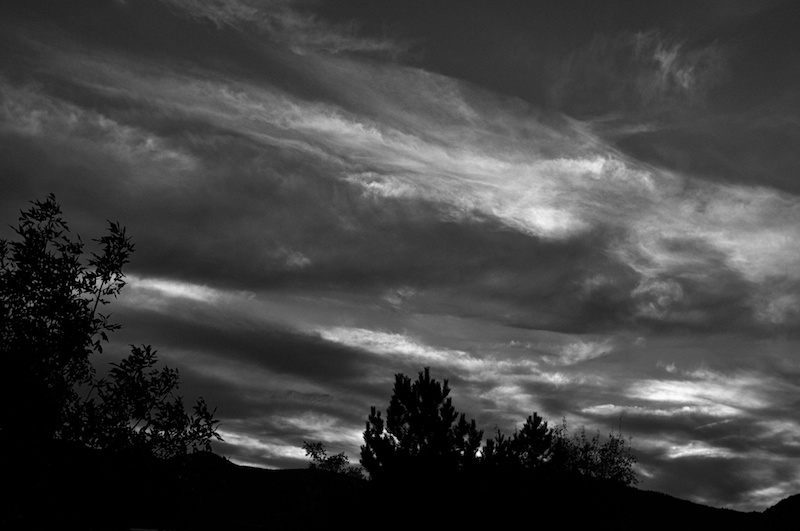
I almost always carry a camera with me. Even if it’s the puny camera in my iPhone, I have something on my person that will permit a capture of an image, should something present itself. There was something about the interplay of the evening light (before sunset colors appeared) on the clouds and the neighbor’s trees. I had the D300 with me and the Nikkor 24/2.8 lens. So, I made the capture.

It didn’t work in color, so I elected to desaturate the image and play with the contrast and exposure curves a bit. I so much prefer working on the digital darkroom than the wet darkroom! I like what I got. I think it conveys the mood of the scene.

The Girl, of course, didn’t care about sun, dark, light, or shadow. She was “hunting wabbits” and doing doggie things. We’re a good pair, me with my nose in the clouds and she with her nose on the ground. I never tire of watching her energy.

Fall, Clouds, and Sunsets

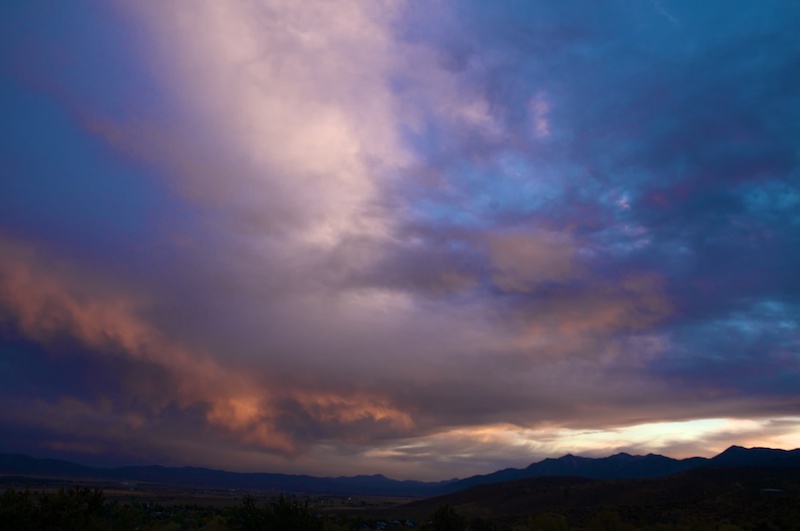
Carson Valley SunsetFall arrived a couple of weeks ago. The warm/hot afternoons abated, suddenly. They were replaced with cool, brisk mornings and pleasant afternoons. As evening comes, it’s cool outside again and if the wind is blowing, it’s cold. A cover is required.

Last night I walked the Girl about 1800 or a bit after. Sunset isn’t really until about 1830 these days, but with the Carson Range, we lose the Sun about 1800. If there are any clouds, there is a chance we’ll see some color about formal sunset. Although I love the big blue skies of Nevada, I’m ready for a few clouds and the sunsets (and sunrises) they bring with them. I also love the promise of winter. I love cold mornings and the feel of the Sun on my body when I’m outside.

There is something wonderful about that sensation of cold/warm. Perhaps it’s the hint of danger of cold weather coupled with the feeling of warmth and safety, a juxtaposition of two extremes. I sometimes wonder if there is a deep gestalt wired into our lizard brains about such primal things as hot and cold, ice and fire. Civilized life comes with our central HVAC. These mighty machines are all powered from somewhere and by some means that is unknown to most of us. We scarcely give it a thought, unless the power is out. Then we revert to the primal, seeking warmth against the cold.

For me, fall hints at the coming winter with those cold, sunny days that I love so much. I put up with, perhaps celebrate the snow and the promise of spring runoff that drives agriculture in my region. The snow never lasts very long and it’s beautiful, particularly on the Carson Range and on the Pine Nut Mountains.

I love the yellow of the aspens against the darker greens of the pines. I can see the aspen groves in the valleys along the eastern slope from my house. One fall morning, I first noticed them. I wondered what the color was that I was seeing from my driveway here in suburbia. I called Wife and we got out my binoculars for a look. The eight magnifications of my Nikons brought the aspen groves into view.

Wife and I marveled at that for a bit, remembering our first experiences with aspens in Colorado nearly 30-years ago.

The aspen groves are visible now. I can see them on my travels to and from work. I planned to get the Girl out this morning and drive up to Hope Valley. I don’t know if the aspens are in fall colors or not, but I think the drive might be good. But, I hear rain as I write this. That probably means snow in the mountains. I might get her out and drive up there anyway.

One evening last week the Girl and I went out for evening walkies. I carried my D300 along with me, with the 18-70mm kit lens attached. The kit lens isn’t the best of Nikons optics, but it’s adequate. Of all the frames I shot that evening, there was only one keeper. The remainder were technically adequate, but artistically deficient. The colors just were not that good.

But that’s OK. It is the nature of nature photography… sometimes you get a shot; sometimes not. Mother Nature is not always cooperative.