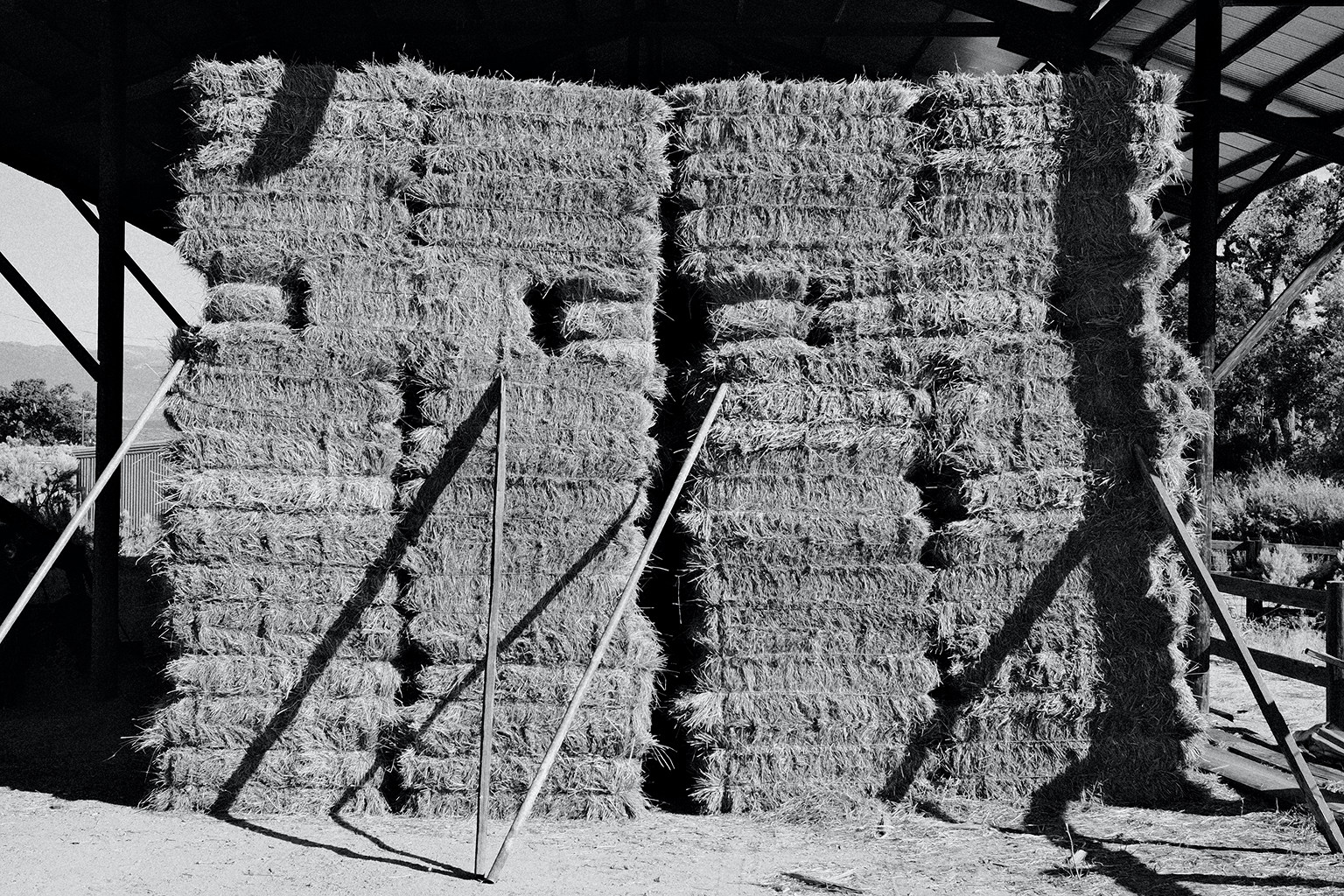
I have been watching this growing haystack the last few weeks. They sure can’t stack hay bales. X100V, Tri-X film simulation, f/8.
We walked past this shed/open barn many times the last few weeks. I watched the hay stack grow as more bales were added.
I was reminded of helping Dad (father-in-law) with the hay as a young man. Having grown up in the city, I knew nothing. But he taught me what I needed to know and I did my best to stack bales on the trailer and wagons. He did most of the work in the barn because of my allergies.
I do not know if the stack is that way because they machine stack it. But the bales are sure not tied together and would readily fall over.
They just can’t stack hay bales.
Nonetheless, I came away with an image and a story. We had a good walk. Life is good.
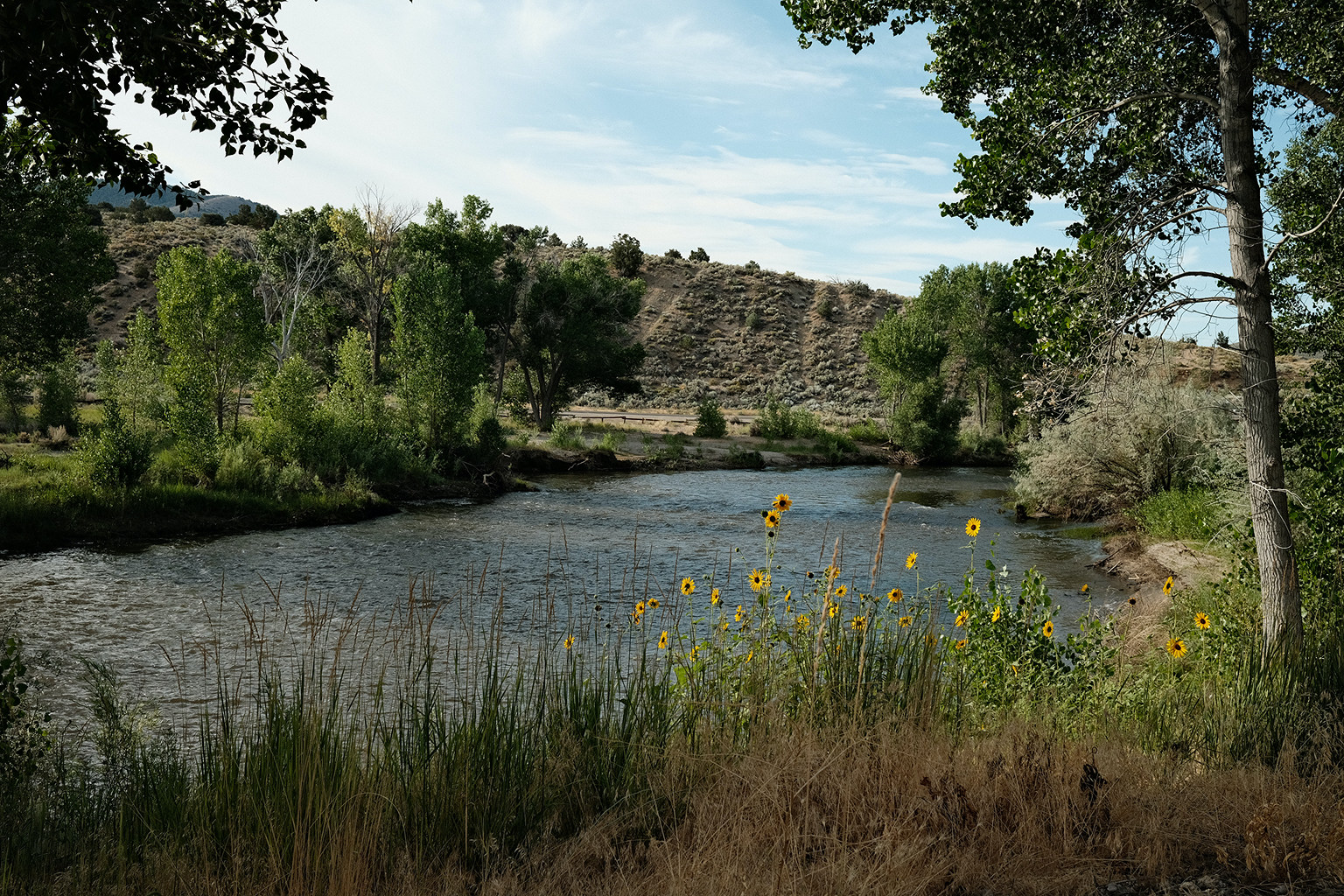
I like the juxtaposition of the river and the flowers.
The last few days The Girl and I walked from the Silver Saddle Ranch gate to the Mexican Dam (and back). This trip is a bit more than four miles, which is good for both of us.
The goal is to get out there not late than 0700h before the sun rises too much. She is sensitive to too much sun (overheats). Plus, the light is better early and there are lots of things that will make photographs.
I carried the Fuji X100V this morning and am still experimenting with the Kodachrome 64 film simulation. I like it and it works for many of the things I want to photograph outdoors.
It was a great hike and a beautiful morning. The capture above is lagniappe. Life is good.
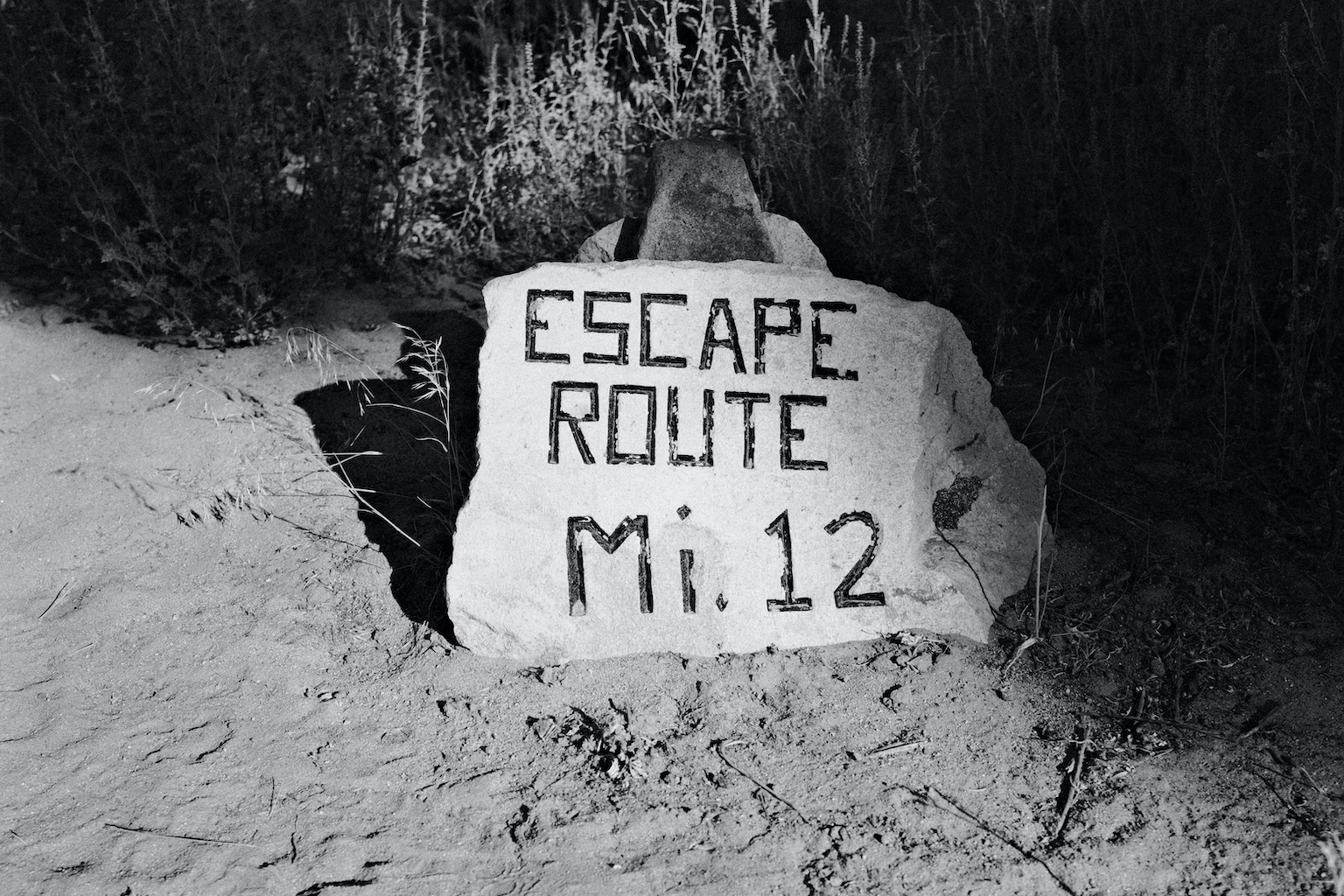
I liked the light, this morning. Capture was Fuji X100V at f/4 with a Tri-X 400 film simulation.
We have walked past this marker a thousand times, I think. But this morning I liked the light, so I paused, while The Girl sniffed about, and made a capture with the Fuji X100V. The capture was at f/4 and I am playing with a Tri-X 400 film simulation.
I shot a lot of Tri-X and developed most of it with D-76, usually the 1:1 dilution. What a great film.
I am really enjoying the Fuji X100V. Life is good.
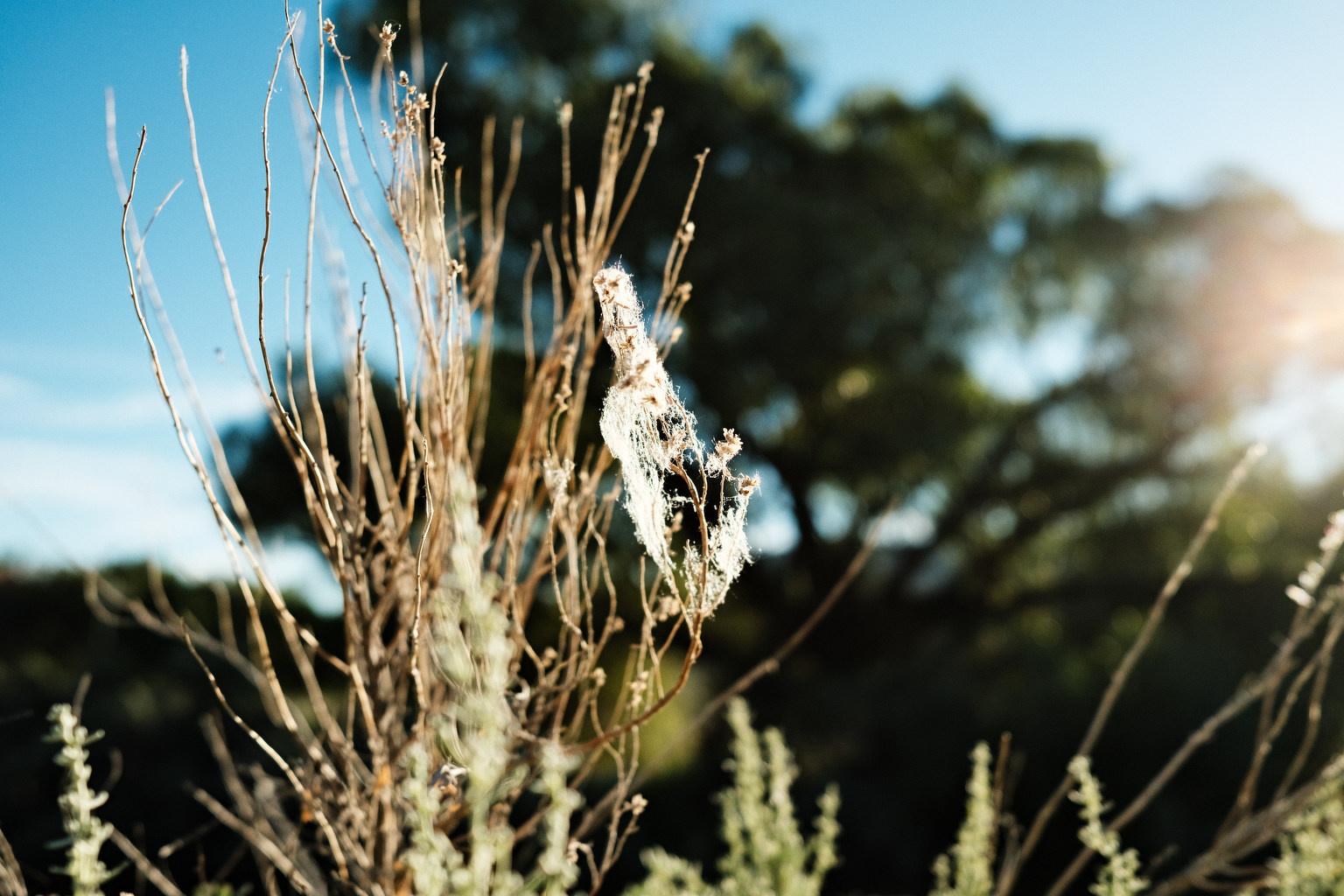
Captured on walkies at Silver Saddle Ranch with the X100V. Exposure was at f/2.8 using the Kodachrome 64 film emulation.
The Girl and I got out early today. The Flight of the Bumblebees contest started at 1000h local and I wanted to get out in the national forest in plenty of time to survey my operating point and decide how to deploy the station.
So we left the house about 0630h, drove my McD’s for another coffee and a breakfast sandwich, then headed out to Silver Saddle Ranch for walkies.
It was a bit more congested than normal, being the weekend. But we cleared the crowd at the gate soon enough and had a nice walk, if a little shorter than the last couple of days. I think that is OK as I pushed pretty hard Friday and Saturday.
I carried the Fuji X100V with me and a new film simulation — one that is supposed to mimic the color response and contrast of the beloved Kodachrome 64. I sure shot a lot of that back in my film days. What a great film.
I came home with a few decent captures, this being one of them. I like the film recipe. I think it is a keeper.
After walkies, we headed back to the house so I could pack the station, then dropped by Raley’s to buy a sandwich, and then up the hill. It was a good place. I think I will go back again as it is also a designated park, so I can do Parks On The Air there too.
Well, this cast iron sausage pan really caught my eye. I like sausage, but do not cook them often. I think this would be great for stove top hot dogs and bratwurst. Hmmmmm…
While working on a project, I came across the R package dplyr. This adds a powerful ability to filter a dataframe.
I still track Fuji Rumors for information about the Fujifilm ecosystem.
For that matter, I sometimes browse Sony Alpha Rumors as well. I got restarted into photography when I bought a Sony NEX-5N more than ten years ago and then wandered into the world of adapting legacy glass.
In my research on the Fuji X100 series cameras, I was directed to a Squarehood, which manufactures (?) and sells square hood for the X100V and similar cameras.
I was also reminded of another vendor of camera accessories, Lensmate, which I remember from back when I was working with the Canon G series of cameras and then the Sony NEX-5N. The 5N remains one of my favorite (and first) mirrorless cameras.
I also discovered Clever Supply, which has some nice leather accessories for camera lovers.
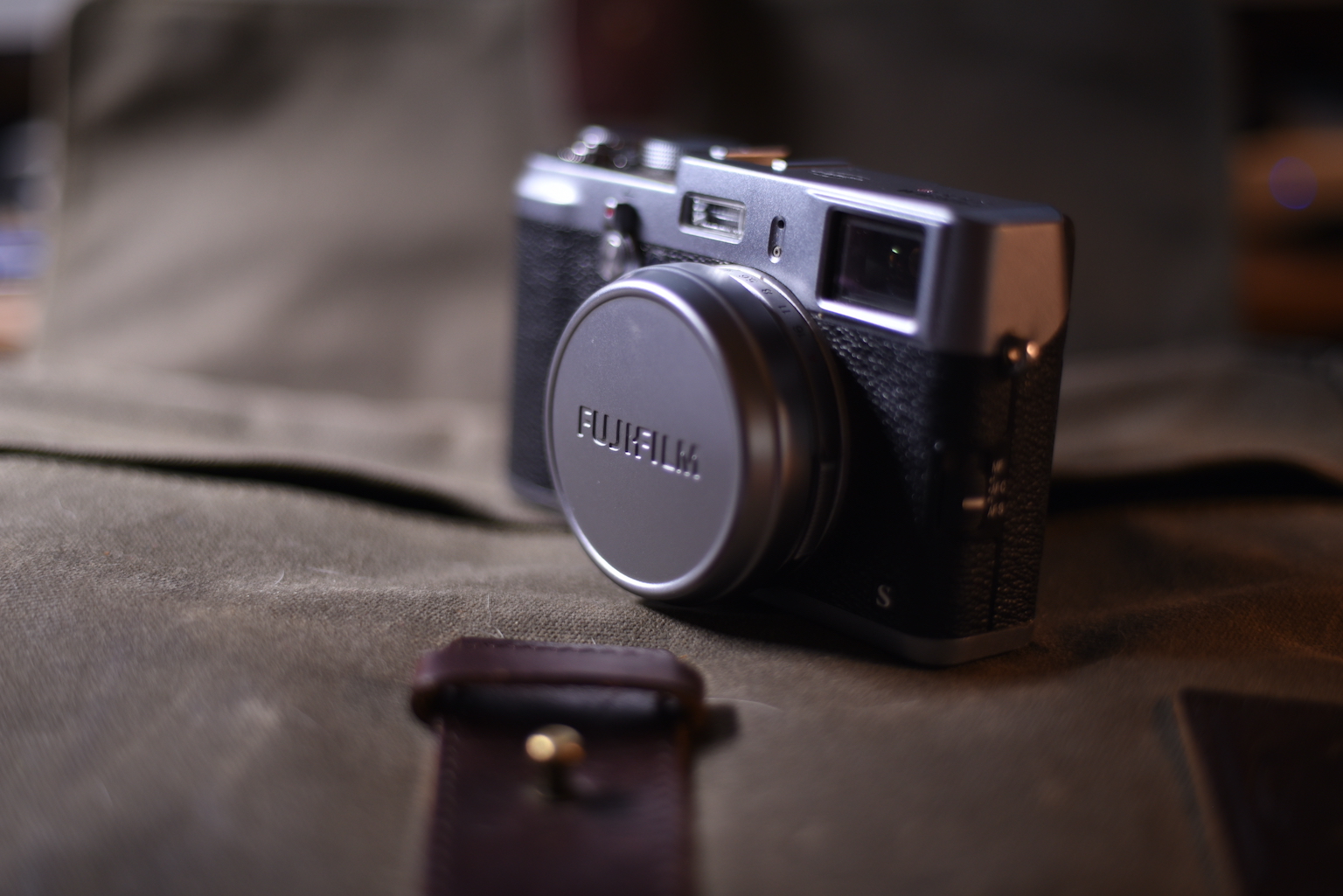
My Fuji X100S, a great little camera. Shot with the Nikon D750 and a Nikkor 50mm f/1.8.
I bought a Fujifilm X100S “point-and-shoot” camera a few years ago. There was a lot of buzz about the X100V (two generations later than mine) at the time, but I did not want to buy new technology if I was not going to use it. I needed some experience with this type of camera.
So I bought a camera a couple of generations older at a lower price. I wanted to get a sense of how it worked and whether it would make images that I like. In part, it had to fit my approach to photography.
I am not a professional photographer. I am a dedicated amateur and make captures that interest me in some way. The subject has to be visually appealing, either because of geometry, or contrast, or even the nature of the subject.
I shot the X100S for a while and then got distracted by other things. One of those was amateur radio. I jumped into that hobby with both feet and my wallet. Hah!
But then work picked up (a lot) and I do not have time to go out in the field and spend several hours setting up a station and playing radio. I need to keep after the project work to meet my deadlines. Now, I know this will not last forever and I will find myself in a period of lighter workload. But, in the meantime, I noted (and have written in this weblog) that I need things in my life that nourish my soul. And so I picked up my cameras again because I can carry a camera when I am out doing something else and spend a few minutes working a subject that I encounter.
So, reenter the Fuji X100S. It is a relatively1 simple camera in the classic rangefinder style. It is reminiscent of the Leica rangefinders that some of the best street photographers used way back before I was a kid. It has a fixed focal length lens that is equivalent to a 35mm focal length (in a full frame camera). The lens is good and fast (f/2). It is sharp enough wide open. The sensor is excellent, even given it is several generations old.
The X100S lacks a couple of things I would really like to have. One is the upgraded sensor. The second is WiFi so I can transfer images directly to my iPhone (for obvious reasons).
However, the X100V is impossible to find. As a result, used cameras sell for several hundred bucks over new price! That is just crazy.
I called the shop where I bought my Fuji X-T5 and asked my salesman about this. His response was “It’s a social media thing. But you don’t want one of those. It will feel plasticky compared to your X-T5.”
He did not know I have an X100S so I have a good idea what the feel is like. It is not at all plasticky. It is a different camera than the X-T5 with a different use case. That is a use case that works me when I do not want to carry a complete kit, but want something better than my iPhone2.
Well, they just lost me as a customer. I do not know why a salesman would say such a thing about a solid piece of equipment.
Fuji Rumors indicates that the announcement of the X100V successor is about a year out. It will probably be nearly two years before we see a new camera. So, I will watch and wait for an X100V to come available at a reasonable price. I decided that I want the upgrade.
Update: I put in a Gixen snipe on a X100V that I won. It has one small ding on the top cap. That does not matter to me; I do not need a perfect camera, particularly one that will be carried in the field. I had to pay more than list for it, but not a king’s ransom, as a friend put it. It is now in my inventory and I am learning to use it.
There will be more about the X100V later. It is quite an evolution from the X100S.
1Simple is a relative term, particularly as applied the the X100 cameras. They can be set to be a point-and-shoot camera by turning all the dials to A and then, well, pointing and shooting. The cameras automation is quite capable. A more knowledgeable photographer will operate the camera by choosing which parts to automate and which to control. That is definitely not simple.
2I know that my iPhone 13 Pro Max has a sophisticated camera. And it does very well for the appropriate use case. But its control over depth of field is limited. And it does not handle like a real camera. I still use it, but there are times I want a real camera.
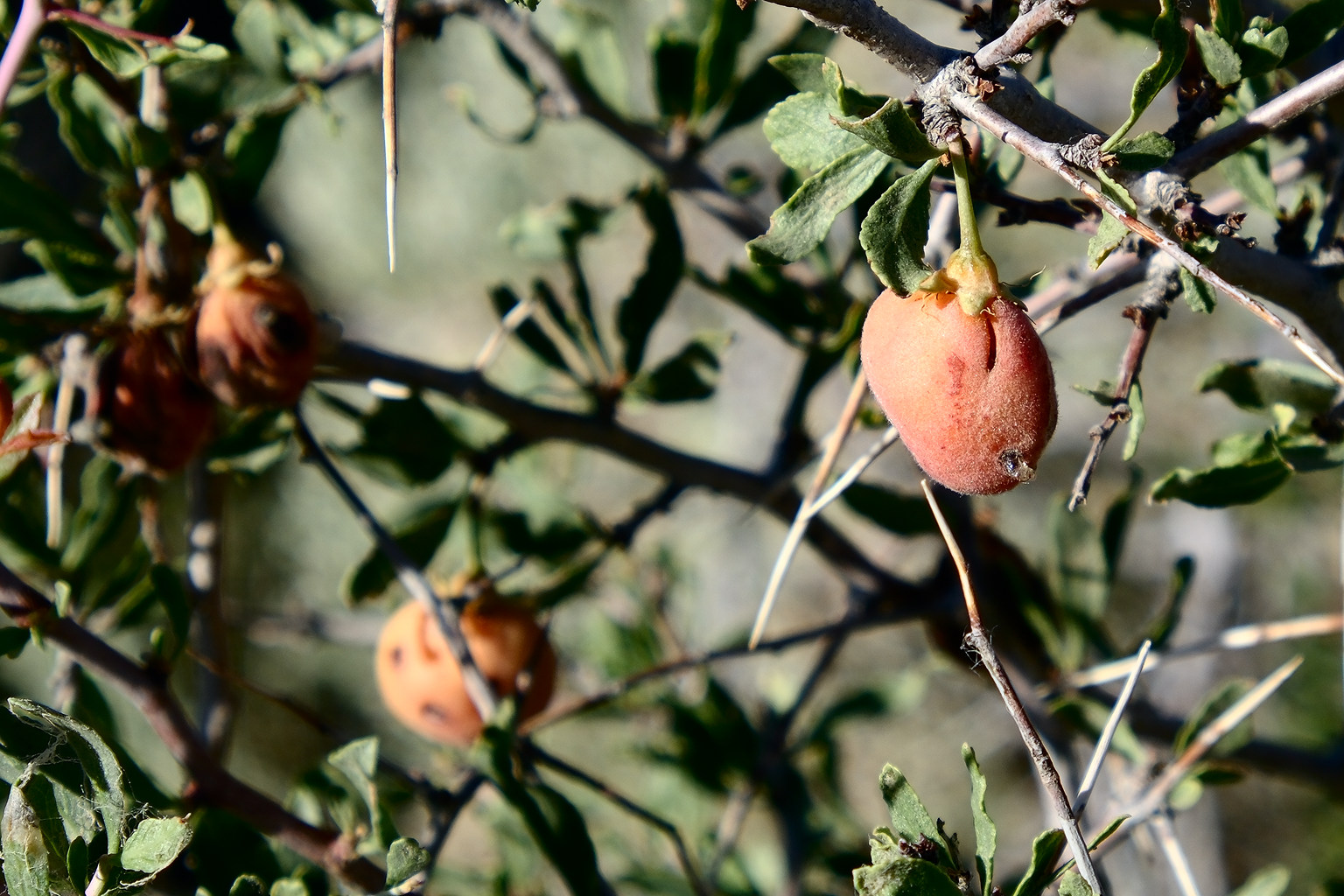
I think this is the first time I saw a desert peach. Image captured with Fuji X-T5 and the Fujinon 18-55mm f/2.8-4 lens.
We were out for walkies about the normal time this morning — a little later than I want but early enough that the heat has not risen. We staged at the entrance to Silver Saddle Ranch, I gathered up my things and started my tracker, and got The Girl out of the rig.
Then we were off.
There was no traffic this morning. So Sera Sue had free rein most of the time. I called her back in now and again, for practice and to check on her. When we neared the choke points where we often encounter other walkers but I cannot see them, I called her in to heel (and also for practice). At the ranch compound there was a horse trailer parked so I put her on leash. That area is often congested anyway, so a leash is a good idea.
Along the way I spotted this desert peach. I saw the fruit on a number of these desert shrubs this year, but this is the first ripe fruit seen. Maybe I should try one.
In any event, it gave me a good image. We also had a good walk. I love walking with The Girl. Really, I just love The Girl.
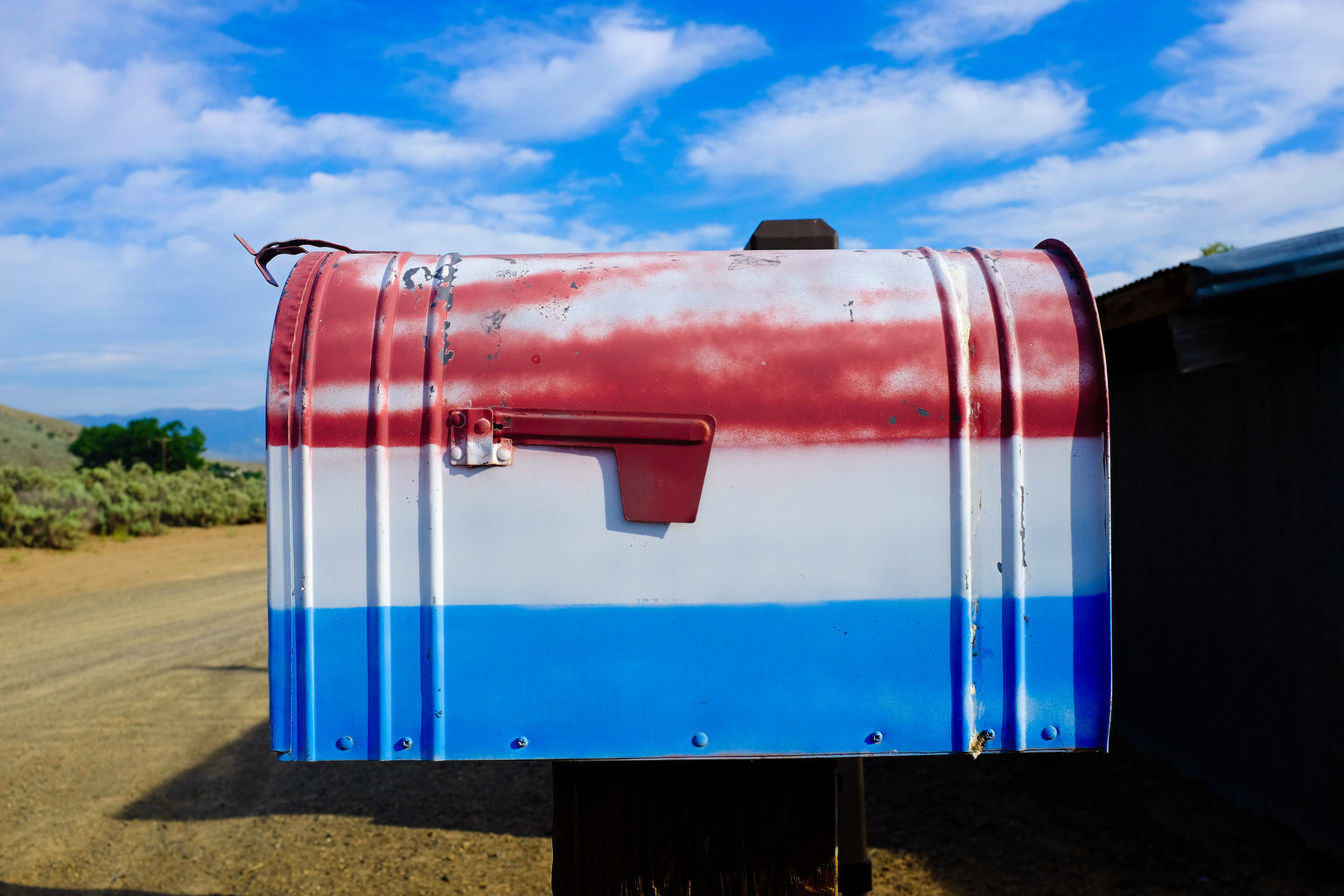
This is the mailbox at the Silver Saddle Ranch compound. Shot with the Fuji X100S at f/4. Post processing in Iridient Developer.
I was up early this morning, about 0500h. After a couple mugs of coffee and some work, it was time to get The Girl out to walk before the heat rose.
The air felt odd out at the ranch this morning… too warm for the given temperature and the wind was from the south. I was glad we got out relatively early because it felt like the day would warm quickly and be hot even if the forecast temperature was nearly ten degrees less than the day before.
I carried the Fuji X100S this morning. It is such a great little camera. The lens is quite good and the X-Trans sensor is still very good for a camera that is more than five-years old technology.
I made a capture of the parking area ahead sign, but it did not work. I will try again because it is geometrically interesting. I did settle on an image of the ranch mailbox. I do not know if mail is still delivered to the ranch, but there is a mailbox.
The shot was captured at f/4. I did not note the ISO and I pay little attention to shutter speed most of the time. I made some adjustments to the capture with Iridient Developer, mostly contrast but I bumped the saturation a bit and added a little sharpness. I spent about five minutes on post processing.
We had to hurry home because I had a meeting. It was still a good outing. Life is good.
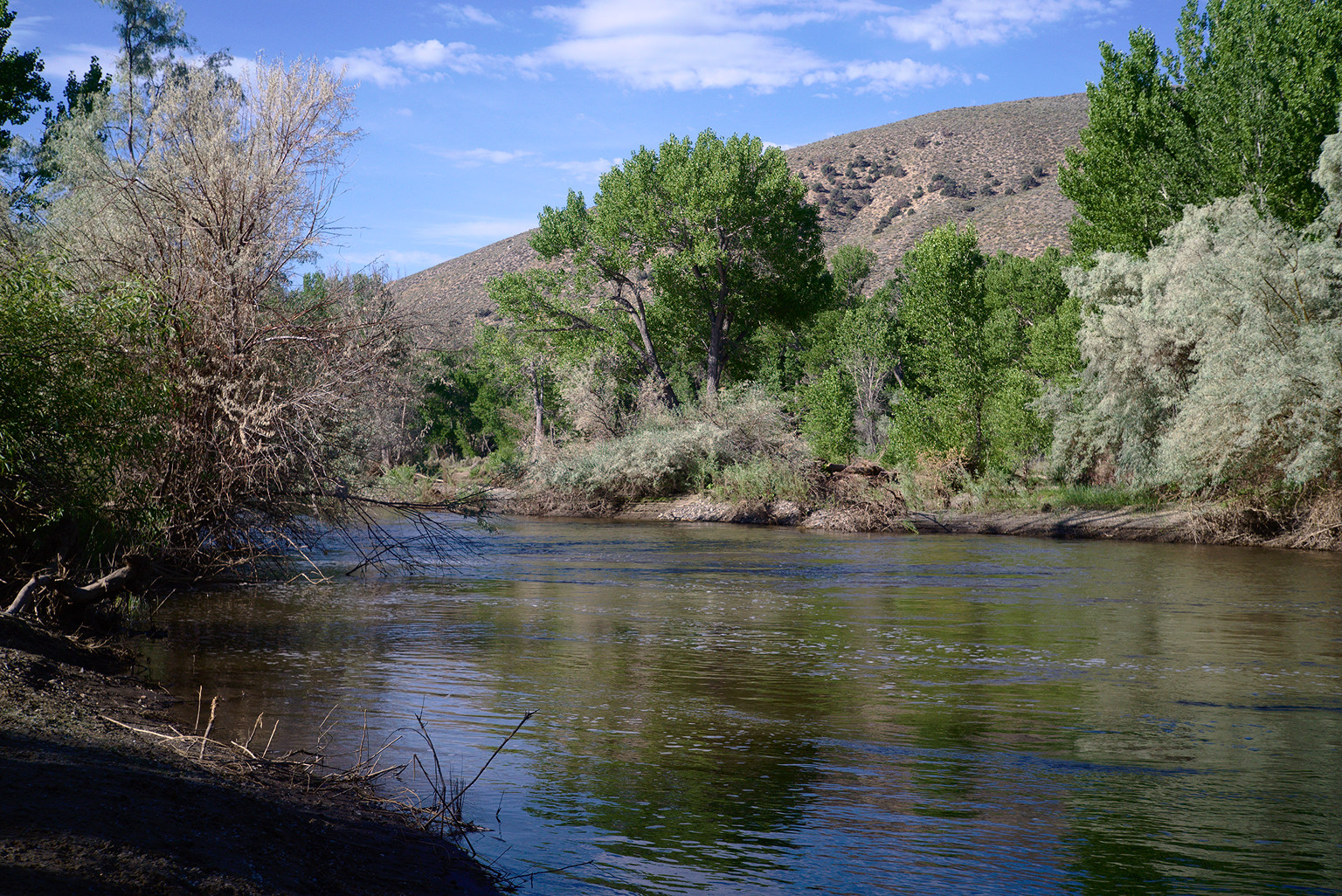
I shot this with the Sony A7S and a Jupiter 8 50mm f/2 lens at f/8.
This morning was my morning to get out the new (to me) Jupiter 8 50mm f/2 lens I recently acquired. I affixed it to the Sony A7S (Mark I) and carried it with me when I got The Girl out for walkies.
I made several shots along the route and there are probably a couple more that are worth looking at a little more. However, after our walk I drove over to the east side of the Carson River and got The Girl out over there for a few minutes. I wanted to see the river.
This capture is alright, I think. It took a little adjustment to bring up the colors a bit. The contrast also needed some adjustment as it was a little flat. But I like the image.
I need to work with the lens more. It seems a little soft wide open, but has interesting bokeh wide open. It sharpens up by f/5.6 although the bokeh is lost.
I have not done a remainders list in a long time. Let me see how this goes.
The Adventure Radio Society is hosting the annual Flight of the Bumblebees (FOBB, https://arsqrp.blogspot.com/) contest the end of this month. I requested (and received) a BB number (NR 35). I plan to drive up to Spooner Lake State Park and activate the park. It should be cooler up there.
That reminds me that the New Jersey QRP club will be hosting the annual NJQRP Skeeter Hunt (https://www.qsl.net/w2lj/) the end of August this summer. That is another fun QRP (low power, five watts for code) contest that I will play in. CQ BZZ CQ BZZ DE AG7TX — Ahahahahahahahaha!
I am enjoying working with my cameras again. A few years ago I bought a Fujifilm X100S to play with. I wrote about it on these pages a few days ago. Well, the X100V has been out for about three years, but the darned things are impossible to find. I expect the main difference to be refinement (as in a tilting screen and WiFi to connect to my iPhone). If I can find one at a reasonable price, I will upgrade. I know that a new version is due out soon, but I do not have to have the latest/greatest.
I work with state plane coordinate systems quite a lot as part of my profession. I found a map of the State Plane Zones that is quite useful (and interesting).
Over the last few years, I’ve taken an interest in knives. Of course I carry a folder every day — they are simply a useful tool and a defense of last resort. But my real love is for fixed blade knives and the Guardian 3.2 from Bradford Knives is a substantial upgrade from the original Guardian 3. The guard on the choil will prevent me from cutting myself on the trailing blade edge when choked up on the grip. The Guardian 4.2 is a beefier version and is also recommended. If you buy one, or any other knife, be sure to work it to learn its strengths and weaknesses. I’m using the Guardian 4.2 quite a lot in the kitchen right now.
I recently took an interest in Automatic Packet Reporting System technology in amateur radio. ARRL has some background here.
While I was in the field last week, Spectrum emailed that my Internet service received a bump (to 300Mbps), but that I would need to replace my modem to take advantage of the extra capability. So, I did. I am not sure it will make a big difference for my operations, but we will see.
Peak Design makes good gear. I use their strap fasteners and straps for my cameras all the time. They offer a clamp-on clip that will hold a camera to a pack strap. I carried my Fuji X-T1 like this quite a lot. The camera shows some body wear as a result. But camera was out of hand and readily accessible.