Remainders: Week of 22 July 2023

I have not done a remainders list in a long time. Let me see how this goes.

  • The Adventure Radio Society is hosting the annual Flight of the Bumblebees (FOBB, https://arsqrp.blogspot.com/) contest the end of this month. I requested (and received) a BB number (NR 35). I plan to drive up to Spooner Lake State Park and activate the park. It should be cooler up there.
  • That reminds me that the New Jersey QRP club will be hosting the annual NJQRP Skeeter Hunt (https://www.qsl.net/w2lj/) the end of August this summer. That is another fun QRP (low power, five watts for code) contest that I will play in. CQ BZZ CQ BZZ DE AG7TX — Ahahahahahahahaha!
  • I am enjoying working with my cameras again. A few years ago I bought a Fujifilm X100S to play with. I wrote about it on these pages a few days ago. Well, the X100V has been out for about three years, but the darned things are impossible to find. I expect the main difference to be refinement (as in a tilting screen and WiFi to connect to my iPhone). If I can find one at a reasonable price, I will upgrade. I know that a new version is due out soon, but I do not have to have the latest/greatest.
  • I work with state plane coordinate systems quite a lot as part of my profession. I found a map of the State Plane Zones that is quite useful (and interesting).
  • Over the last few years, I’ve taken an interest in knives. Of course I carry a folder every day — they are simply a useful tool and a defense of last resort. But my real love is for fixed blade knives and the Guardian 3.2 from Bradford Knives is a substantial upgrade from the original Guardian 3. The guard on the choil will prevent me from cutting myself on the trailing blade edge when choked up on the grip. The Guardian 4.2 is a beefier version and is also recommended. If you buy one, or any other knife, be sure to work it to learn its strengths and weaknesses. I’m using the Guardian 4.2 quite a lot in the kitchen right now.
  • I recently took an interest in Automatic Packet Reporting System technology in amateur radio. ARRL has some background here.
  • While I was in the field last week, Spectrum emailed that my Internet service received a bump (to 300Mbps), but that I would need to replace my modem to take advantage of the extra capability. So, I did. I am not sure it will make a big difference for my operations, but we will see.
  • Peak Design makes good gear. I use their strap fasteners and straps for my cameras all the time. They offer a clamp-on clip that will hold a camera to a pack strap. I carried my Fuji X-T1 like this quite a lot. The camera shows some body wear as a result. But camera was out of hand and readily accessible.
Daily Image — Industar 55mm f/2.8 Zeiss Copy

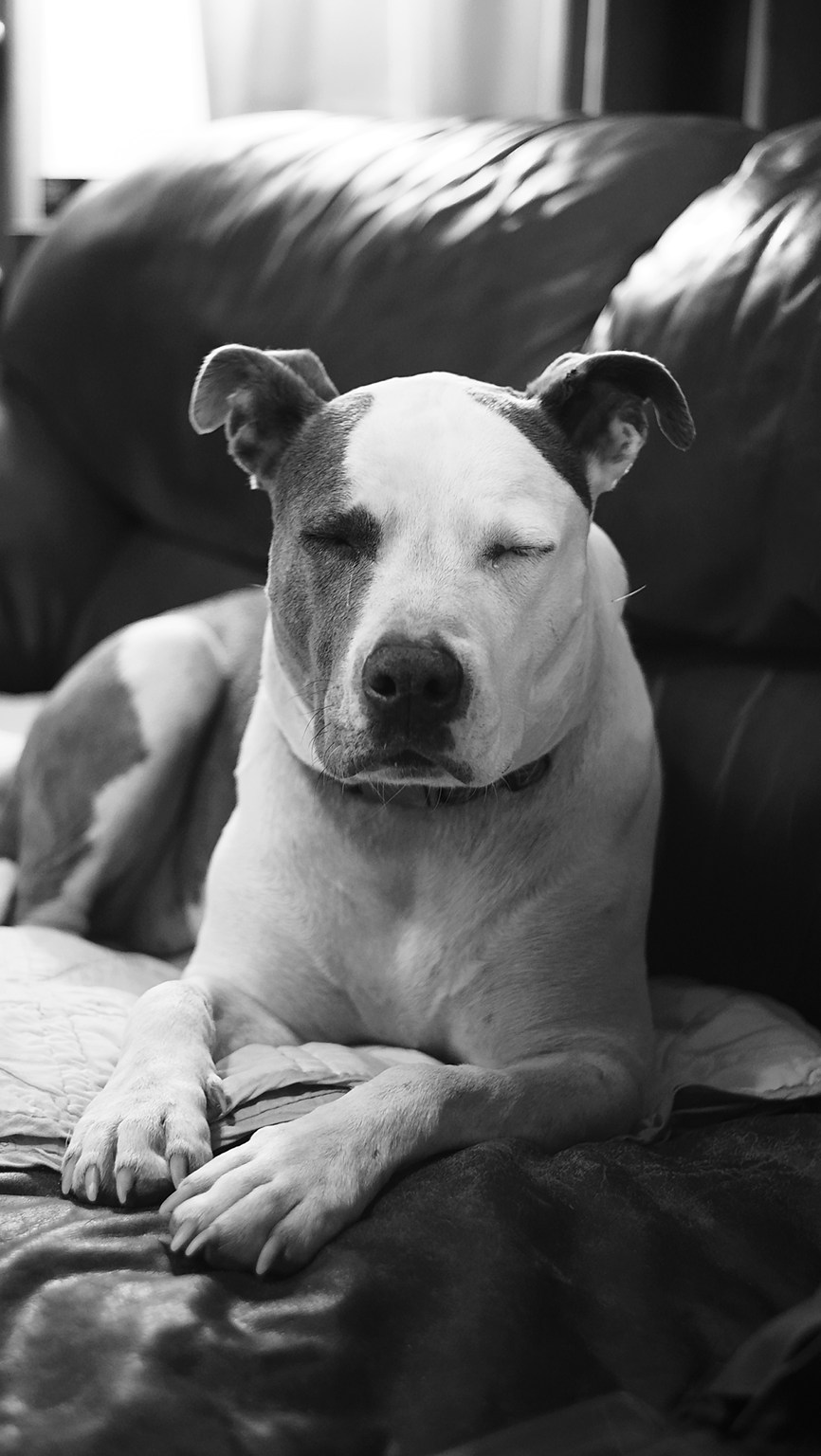
After her breakfast, she kindly posed for me on the sofa while I played around with a new lens. This is the Sony A7S camera with the Russian Industar 55mm f/2.8 Zeiss copy at f/5.6 and an ISO of 1600.

A few weeks ago I bought two lenses, both are Russian copies of Zeiss optical formulas. They came from Ukraine (lots of them there) from a reputable seller. I had to order a pair of Leica mount (39mm) to Sony FE and Fuji FX mounts so I can mount these on my cameras.

This first image is of my Girl after I fed her this morning. She patiently posed for me on the sofa while I played around with the Sony A7S (Mark I) and an Industar 55mm f/2.8. I finally settled on an f-stop of f/5.6 and bumped the ISO up to 6,400 to get the shutter speed up.

I downloaded the images to my iMac and used Iridient Developer to convert the out of camera JPEG to black and white. I made a small contrast adjustment and added a bit of sharpening to the result as well.

I like the image… and not just because of the subject matter. The lens is quite sharp at f/5.6 and has good contrast. I think this lens is a keeper.

Still Searching

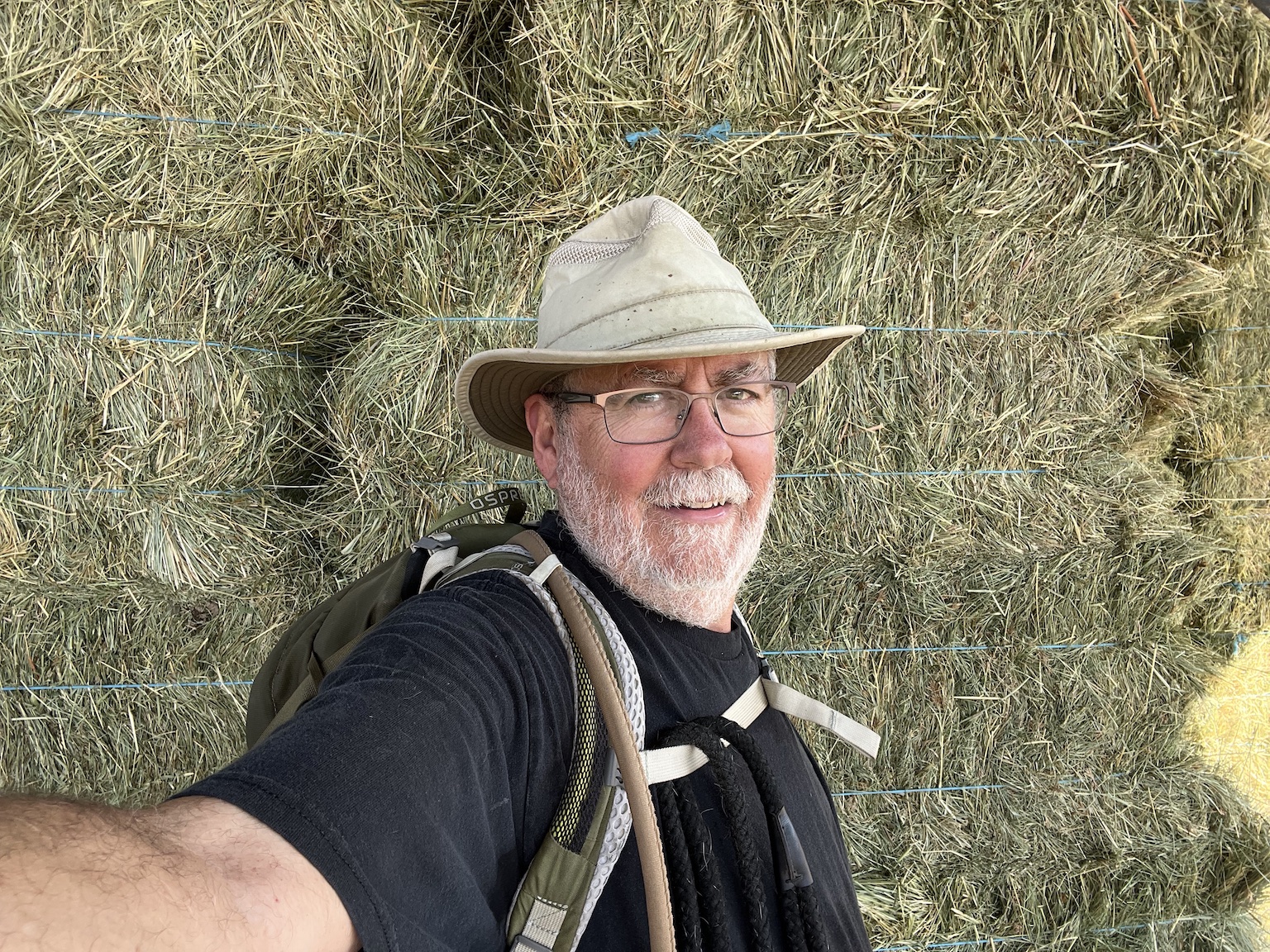
This is an iPhone selfie of me with the Osprey Stratos daypack in front of the Silver Saddle Ranch alfalfa haystack.

Yep, that is me in a rare selfie shot with my iPhone 13 Pro Max. On my back is the Osprey Stratos 24-liter daypack. It has been carried many times in the field, both on my daily hikes and when working.

There is much to like about this pack. It is well constructed. It is suspended off my back. Although that does not eliminate a sweaty back on warm days, it does permit significant air flow over my back and the suspensions system prevents chafing, which has been a problem with some packs I have worn.

It carries a 2-liter Camelbak easily in a pouch inside the rucksack. There is space for a couple of water bottles on the sides as well. Each will hold a one-liter Nalgene bottle.

But, it is not my perfect pack. The ruck has a bit of an odd shape and does not permit carry of much beyond the Camelbak. There is some room in the flat pocket on the front the pack and a small pouch on top for a few items.

It is plagued by my common issue with most civilian packs — there is no place to hang stuff on the outside of the pack. Military packs all have webbing and that provides space to hang some of the things I want to carry in the field, but do not want inside the pack. I want a place to hang Sera’s lead (other than the sternum strap). I want a place to hang a small pair of binoculars. I want to hang a camera sometimes, when I do not want it in hand.

So, as much as there is to like about the Stratos, it is not the solution I want.

Enter the Eberlestock FAC pack. It has webbing, is a little larger (with room for a radio inside), and has a good waistbelt. It does not have the suspension of the Osprey, but has a lot of padding on the pack and straps.

I just need to take time to outfit it and work out where I want to put things. Maybe I can get to it this weekend. Then I can carry it in the field a few times and test it.

In any event, I am still looking for the perfect pack.

Daily Image — Bales

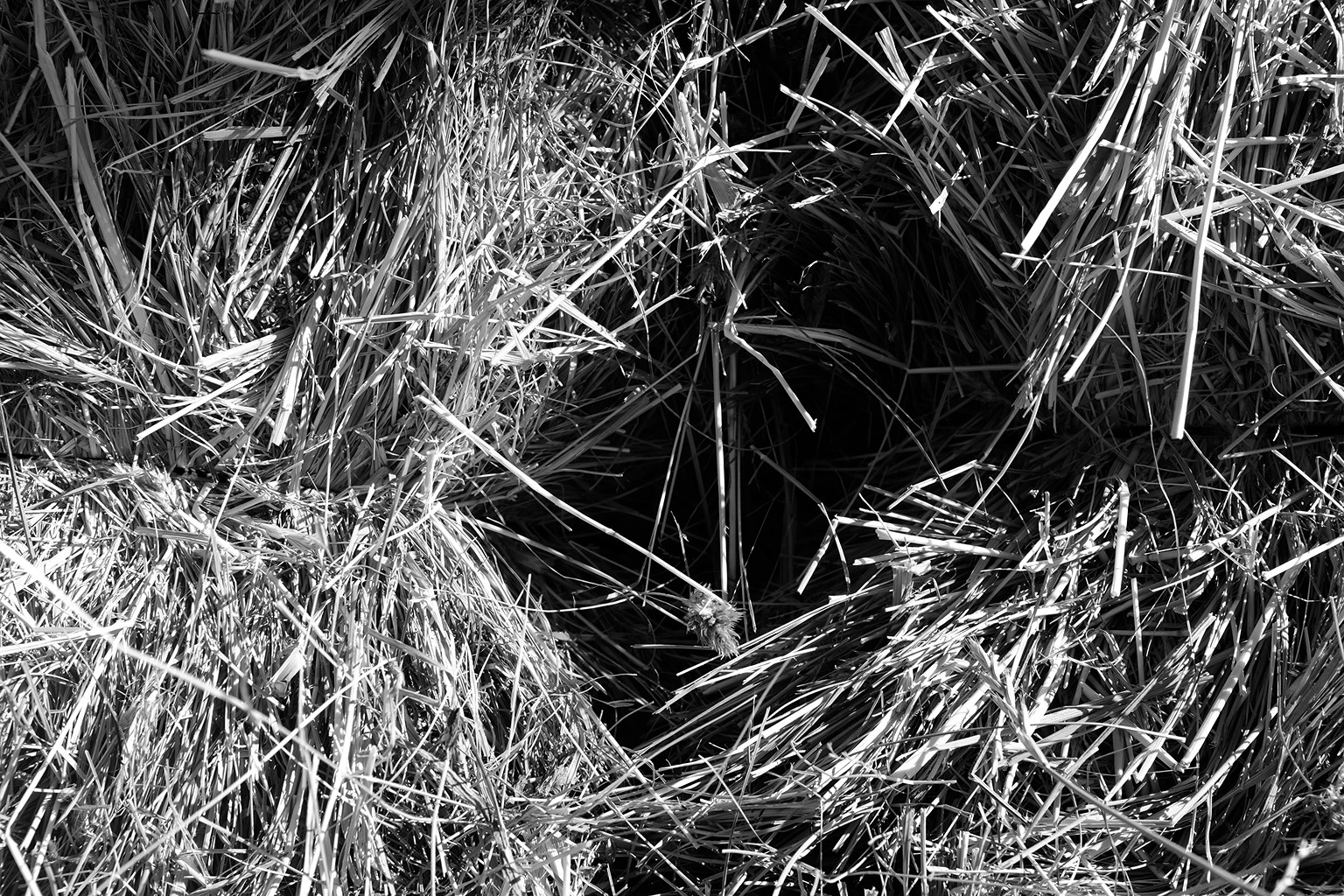
Alfalfa bales. Fujifilm X100S, f/4, processed to black and white in Iridient Developer.

On walkies this morning, I pulled myself out of my head many times. There is so much work at the moment that I keep being drawn back in to thinking instead of being. One of the reasons I love walking The Girl and carrying a camera is that both help me get out of my head and into my space.

The Girl does so because she requires attention to keep her from being so distracted she gets into trouble or roams too far out. I do not mind her hunt for critters in the sagelands… provided I keep sight of her and she does not get involved with Jacob-no-shoulders.

The camera helps me by directing my attention to things that might make an interesting photograph. This requires a different kind of attention that The Girl. It is also something that nourishes my soul. Actually, so does minding The Girl, but in different ways.

The work here is to stay out of my head. I have a tendency, some might say a proclivity, to overthink problems I am working on. It is particularly true when I have multiple projects active and there are problems that need solutions.

But, I do not want to spend all of my energy working. There are other things in life that are important too and The Girl is up near the top of that list.

This morning, in particular, I had a great struggle pushing the engineering problems out of my head and bringing my attention to my surroundings while out on our walk. Although I got out late (for this time of year) and the sun was quite warm, it was still a beautiful morning to walk and The Girl is so entertaining to watch.

The result was a partial success. I found myself lost in thought several times (too many) and consciously brought my attention back to the here and now1. It was difficult and each time I noticed I was looking at my feet (or the trail directly in front of my feet) and was oblivious to my surroundings I had to look up, shake my head (to clear the cobwebs), and pay attention.

We paused at the ranch compound and I noticed the ranch hands are moving alfalfa bales from the field to the hay bin. So we stepped into the yard, which made The Girl quite happy for new hunting grounds, and I paused at the haystack. There I found some possibles that I liked and made a few captures.

In the end, I chose this one. The image was made with the Fuji X100S at f/4. I did a little more post-processing on this one in Iridient Developer, converting it to black and white and making a small adjustment to the contrast.

1There is only here… there is only now.

Daily Image — First in Line

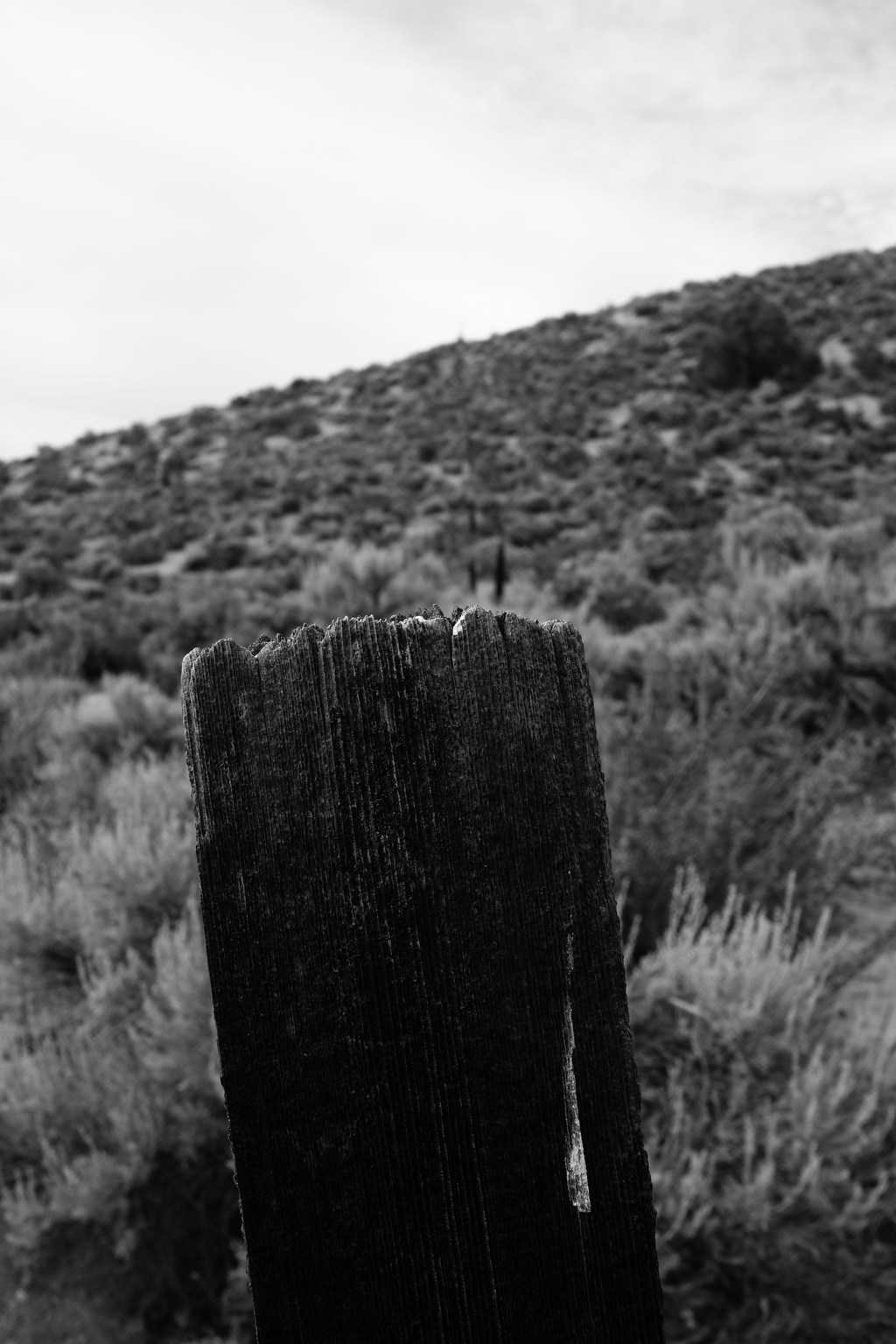
The first in a long line of railroad tie posts. Captured with the Fuji X100S using the in-camera black and white conversion.

The Girl and I got out for walkies a little later than I like, now that the weather is truly summer. But there was an overcast, so we did not suffer the direct sun.

But that also meant that the light was not as nice. So I had a little trouble finding something that I liked.

Maybe I settled for this capture of a long gone fenceline. There is only a line of (more or less) vertical railroad ties that remain. The subject is the first (or the last) in that line.

Daily Image — Seen Better Days

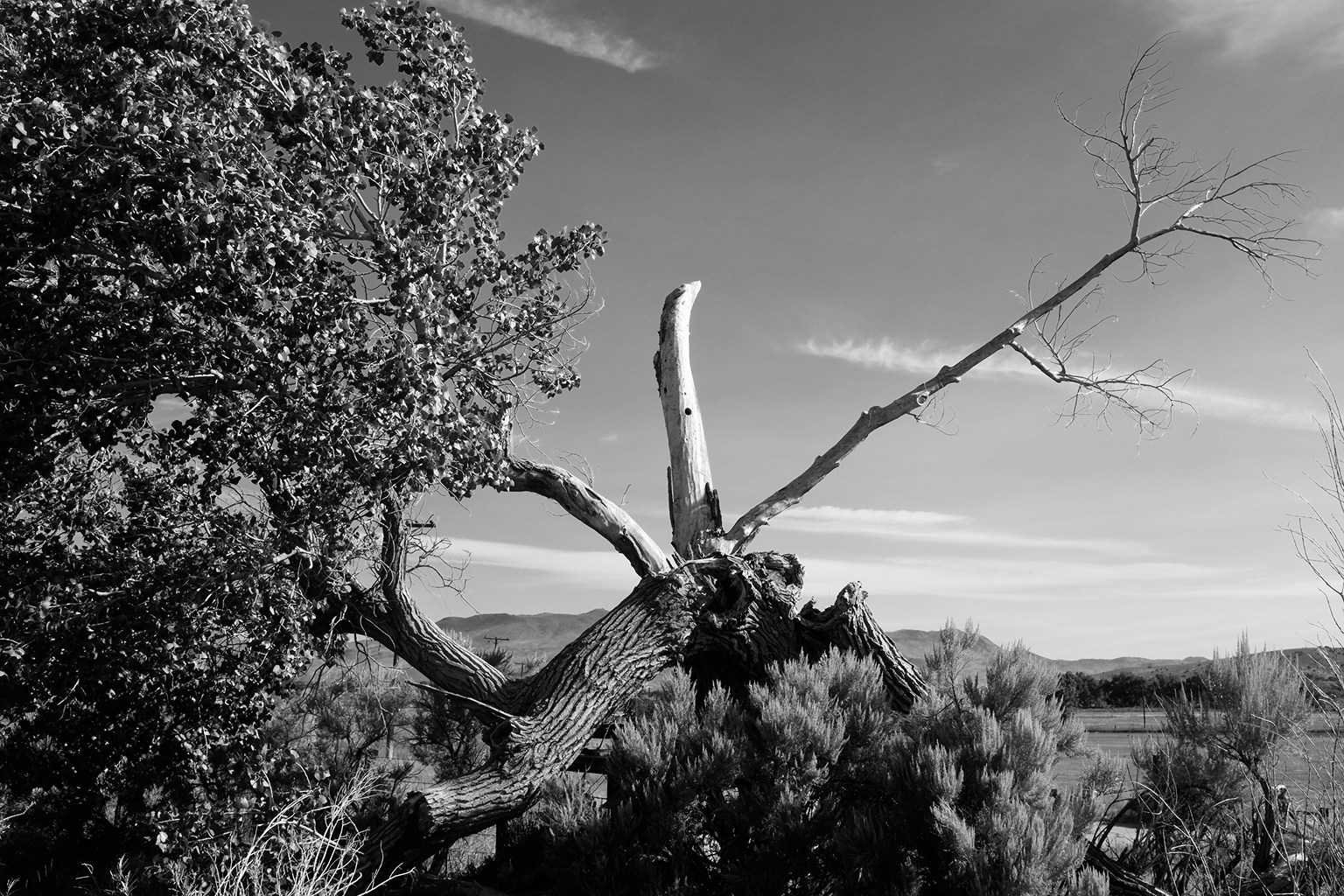
This poor cottonwood is hanging on, but it sure has seen better days. Capture with Fuji X100S, 23mm/2 at f/8.

On walkies out at Silver Saddle Ranch this morning, The Girl and I paused for me to make an image. I have been looking at this old cottonwood tree for a while now. This morning I thought that a black and white image with some red filtration might make an interesting capture.

So, while The Girl sniffed around looking for a lizard, I made a few captures with the Fuji X100S. After getting home and reviewing the lot from today’s outing, I like this one the best.

Post processing was simple. I used Iridient Developer to make a small adjustment to the contrast of the image and then exported it. That was all I did. The black and white conversion was done in-camera.

I bought the Fujifilm X100S a couple of years ago as an experiment. I wanted to know if I would like carrying this kind of camera in lieu of a more substantial kit. In many respects, this is a continuation of the street photographer’s kit started long ago by some excellent 35mm film photographers. The preferred camera of the time was a Leica rangefinder with a 35mm lens and black and white film.

The Fuji X100 series of cameras continues this tradition in a digital format. For the right subject (and mindset), this is an excellent approach and quite simple.

Down the (NVIS) Rabbit Hole

Here is another short entry I wrote some time ago. I am not sure when I wrote it nor why I never posted it. But it turned up when i did a search for draft articles. It is complete, so here it is.

It all started so innocuously. The May edition of the SNARS Crackin’ Static arrived in my email inbox. I started reading it and came across an article about Near Vertical Incident Skywave (NVIS) antennas.

NVIS is very useful for short range high-frequency radio communications. The military uses it for their communications and the Amateur Radio Emergency Service (ARES) uses it for emergency auxiliary communications for their served agencies.

It is also useful for contacting close stations when activating a park (POTA) or a summit (SOTA) when the stations have intervening topography or are beyond ground wave propagation. Ground wave works out to about 50 miles or so (depending on frequency). The first skip is out somewhere over 500 miles or so (depending on both frequency and ionospheric conditions). So there is a gap in between the 50–500-mile range.

This is where NVIS comes into play. The trick is to choose an operating frequency such that the ionosphere will refract near vertical radio waves back to ground. If the frequency is too low, then it is absorbed by the ionosphere. If it is too high, no refraction occurs.

So, the Goldilocks principle applies — the just right frequency is needed.

And so off I go down the rabbit hole, reading about ionosondes (radio stations that test the ionospheric conditions) and the data they produce.

And here I go learning about Lowest Usable Frequency, Critical Frequency, and Maximum Usable Frequency plus a host of associated data and technology.

I love looking at graphs of data as well and learning how to interpret what I see.

This research will probably result in a short note on how to read the data and the charts. If one is a radio operator, then this is important material… provided you want your signal to get through.

A SOTA Weekend

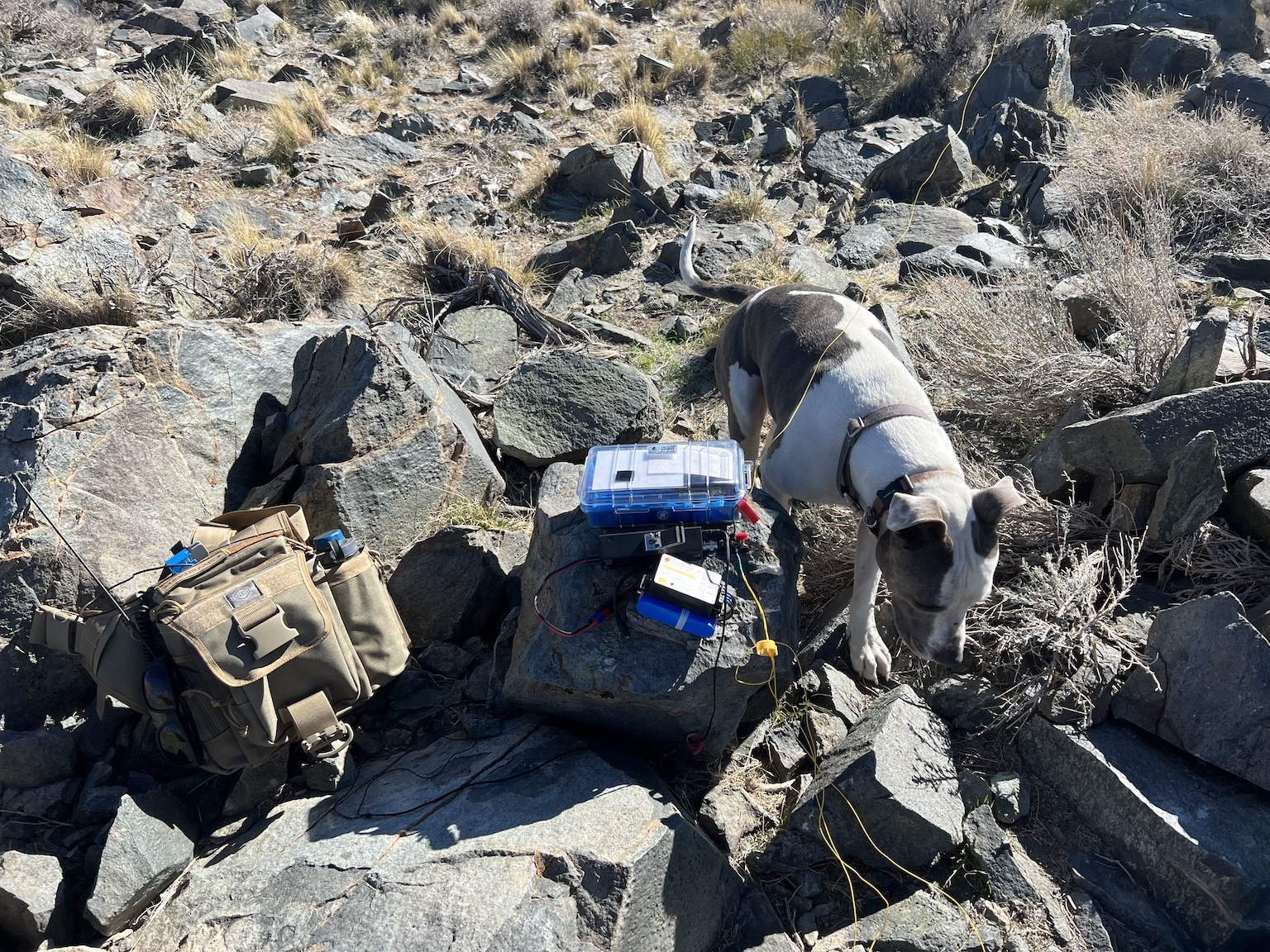
The Girl passing by my KX1 station while we were on Hot Springs Mountain for a SOTA activation.

I wrote this over a year ago, but never got around to posting it. I am not sure why. Perhaps I set it aside to look for a photograph for the header. Or, perhaps I simply forgot about it. Nonetheless, it is not a bad story so I think I will tell it.

This weekend was a study in contrasts. Saturday, a friend and I drove up to the activation zone of Prison Hill, at the south side of Carson City. The trail to the top is no challenge for the 4Runner and I’m not a hard driver.

So I had the luxury of computer logging, full output power from the KX3, a table to work from, and a nice chair. The antenna was a kit-built EFHW in inverted-L using a SOTAbeams 10m travel mast. It was a fun afternoon with a friend and my dog, although neither of them participated in the radio fun (the friend is licensed; the dog is not).

This morning I decided I had so much fun yesterday that I would do it again, this time Hot Springs Mountain. It was just doggo and me. I attempted an approach from the west side, but the last half-mile was a rough trail of scrabble and I did not think the 4Runner would traverse it.

So I drove around to the south side and up a sand wash. The sand had a little moisture from the last snow and I was able to stay on top of the sand by keeping up my speed.

I expected the sand ravine near the top and there it was. I was sure I could get down to the bottom of the ravine, but figured that’s where I would stay.

So, I got out my KX1 kit (shack in a small Pelican box), a bottle of water, a 3Ah LFP battery (gives just a little more output power from the little KX1 and will run forever), and the SOTAbeams mast.

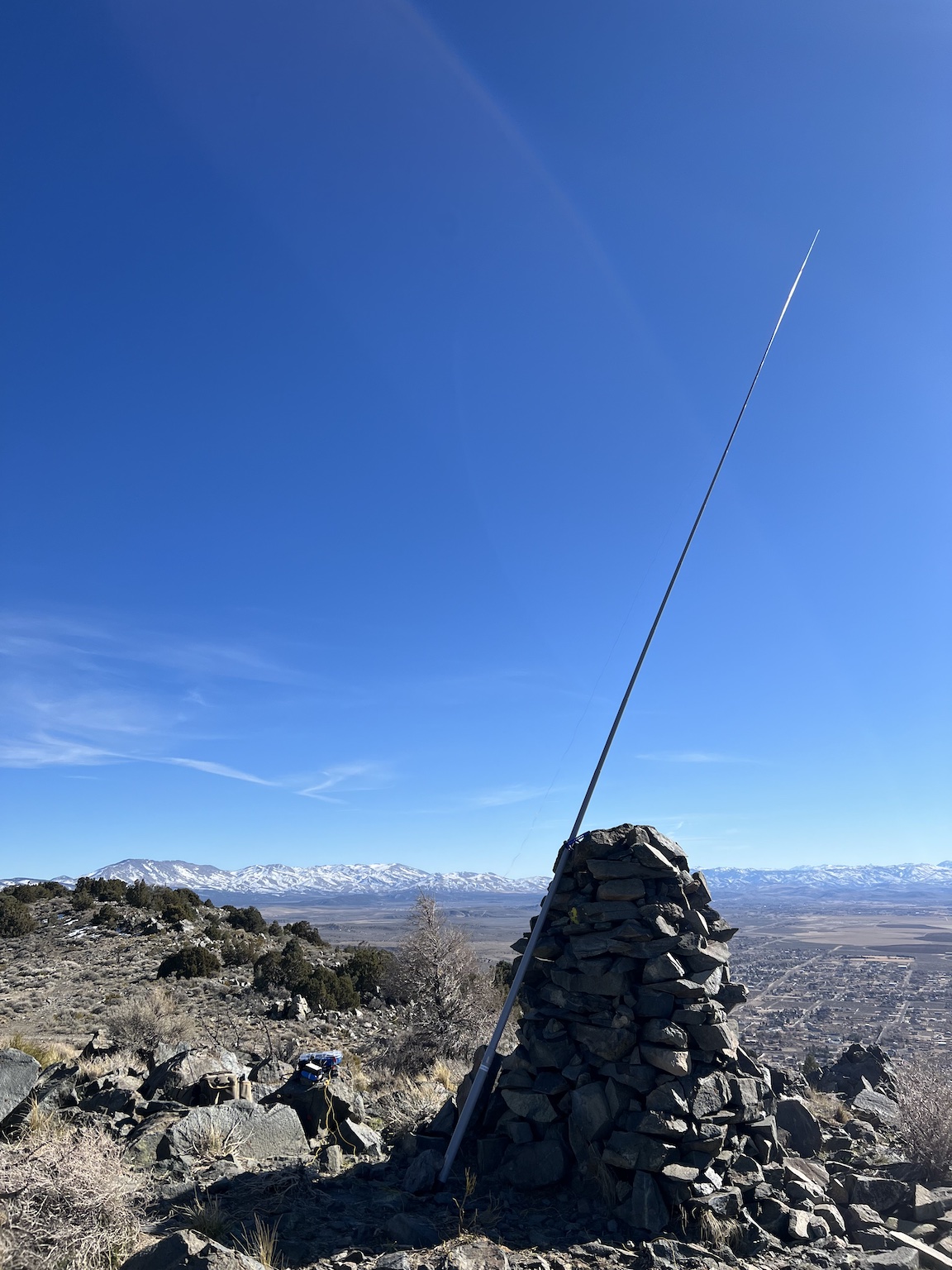
The SOTAbeams travel mast leaned up against a rock cairn atop Hot Springs Mountain. An end fed random wire is affixed to the top of the antenna for the activation.
Doggo has four-paw drive, but not so this old man. She sprinted back and forth urging me on while I trudged up the remaining quartile mile of trail, pausing now and again to catch my breath.

There was a cairn in the activation zone and I found a way to stabilize the mast against the cairn with a Voile strap I brought along, just in case. I stretched the wire I carry in the kit along the mast and threw the second bundle of wires I use for a counterpoise on the rocks.

The radio matched the antenna readily and the 40m noon net (7.2835MHz) NCO heard me. So I knew I had a working station.

Over the next hour and a half I worked 17 stations on 40m, 30m, and 20m, including a couple of summit-to-summit operators. Doggo sat patiently next to me, enjoying the sun and the view.

I was on 20m when the antenna was blown over by the wind a second time. It had come up near the end of my operation.

I finished landing the fish I had on the line and announced my QRT, followed by a post to the SOTAwatch portal. It only took me a few minutes to tear down and head back down the hill.

I should mention that I used the backup key for this activation. The key I had been using failed during the first part of my activation. Fortunately, I keep the factory key in the kit as a backup. It’s not my favorite key, but it is a working key.

The contrast in the two ops is striking. Saturday was what I’ll GLOTA (glam-SOTA), with all the luxuries one could want in the field. Today I earned my contacts the hard way — by humping up the last, steepest, part of the hill.

Both days were good. Today was better. I’m whupped!

Daily Image — NDOT

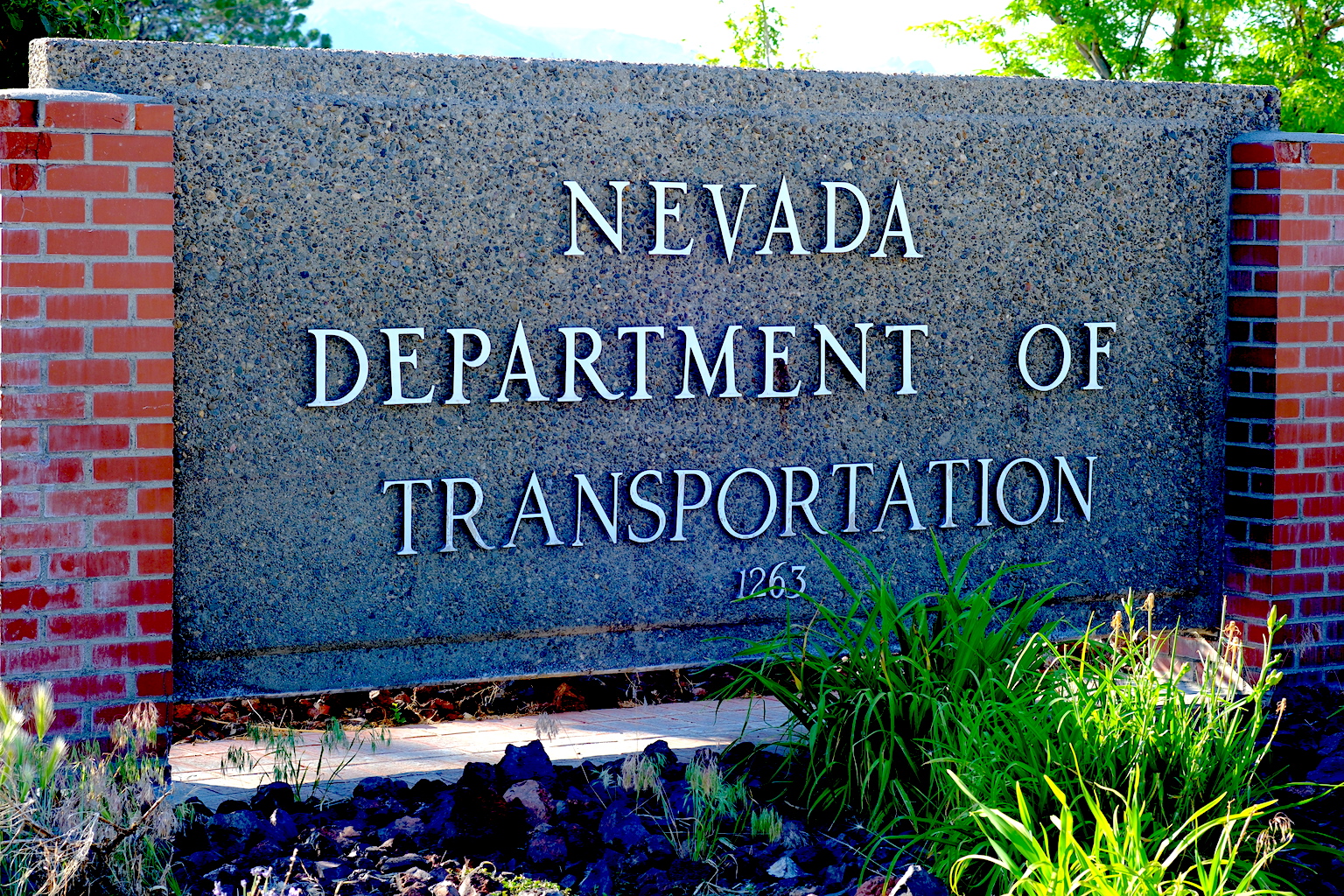
The sign at the main entrance. I have walked past this sign many, many times.

Over the last eight years, there is no telling how many times I walked past this sign for the Nevada Department of Transportation. I know Ki and I walked past it many times on our daily sojourns. Now Sera and I are walking past it as I give her foot a rest from the rough sand and sharp brush of the sagelands.

A couple of weeks ago I started carrying a camera (other than my iPhone) on a daily basis. This was written about before. So long as the carrying of said camera nourishes me, I will continue to do it.

I am sure that not every outing will be fruitful. My Instagram feed is full of these images from daily outings. Much of it is not very good work, but it represents a substantial body of work. There are years’ worth of images on my IG feed. It is a pity that FB ruined IG so.

I started posting on VERO again a few days ago. VERO is much like IG was before FB bought it. Then (and there) I followed a double-handful of other photographers and creative types. Every morning there was some joy at seeing what other interesting people were creating.

Now I find it a doomscroll — looking for the dopamine hit from finding something interesting or amusing or odd. I do not really want to leave IG, because there are people there I follow that are doing interesting things. But the signal-to-noise ratio is poor and I am wasting part of my day every day looking at things I do not really care to see in order to find the very few I want to see.

I do not know if it is possible to offload my images in a stream. If I could, I would be very tempted to reclaim my work from IG and close my account.

But, I ruminate. Today’s image is a reflection on the many times my companions and I walked past the NDOT entry sign. The lot is nearly empty on weekends, when the workers are off doing their own thing. It gives Sera and I a chance to take in the space and for me to be aware of anything interesting to capture with my camera.

This morning’s walk was a good walk, if a little late and a little warm. The Girl enjoyed the hunt for ground squirrels and the wet grass. I enjoyed the chance to ruminate on all those times Ki and I walked a good part of this route.

Tomorrow we head out to Summit Lake, Nevada for field work. I will be in the field most of the week collecting supplemental topographic data. There will be some different things to photograph and I will have Internet service in the evenings at the research station. I hope to post a few images while out there.

It was a good day. Life is good.

Daily Image — C Hill

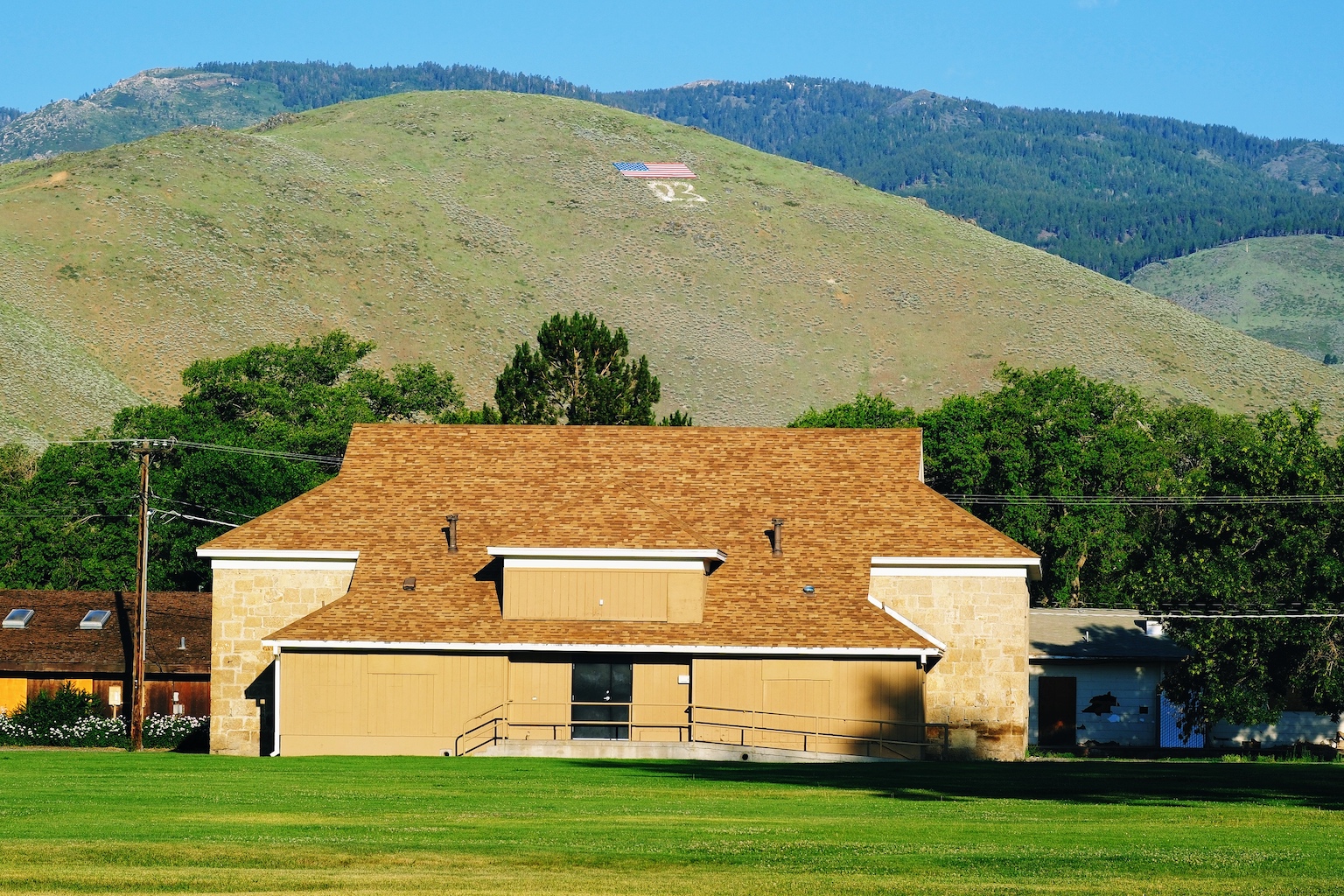
This is one of my favorite places in Carson City. There are so many memories of playing with Ki here.

The Station 51 park is one of my favorite places in Carson City. The structure looks like it was a gathering place when the site was the state school. Maybe it was a mess hall. I am not sure. But I always enjoy the sight of it in the morning with C Hill in the background.

It is a tradition that every year the graduating high school class “converts” the C into the last two digits of the year. At some point it will be changed back to “C”.

When Ki and I returned to Carson City late in 2015, I rented long term at the Plaza Hotel. Our walks took us the couple of blocks east to the Station 51 park, where we interacted with human and canine friends almost every day. When Older Son and DiL came to visit, we would take Ki over there for her daily outing. I have some cherished photographs of those family times.

Later, in 2016 I rented my place here in Carson. Ki and I continued walking the few blocks to the Station 51 park, as well as walking out at Riverview Park and Silver Saddle Ranch. We walked many circuits around the perimeter of the park.

After Ki died and Sera came to live with me, I continued the tradition for a while. But Sera is a different dog and is mildly reactive. Her reaction always depends on the confidence of the other dog. After a number of encounters that I did not like, we began walking the Silver Saddle trails more because there is less traffic.

She loves to walk along the river where she can get in the water. But as time went on there was more traffic there and more of the other walkers we did not know and their dogs were not always the best behaved. So I started walking the upper trails more, where Sera can be off lead and the probability of running into another dog is reduced.

Sera injured one of her feet a week ago, probably by jumping on the brush chasing lizards. She has a small cut between her pads and the loose sand irritates it. Several times she would race past me and then drop on the trail to lick her paw.

I decided to walk her in town for a few days. There is less sand and more grass. That is good because it reduces the pressure on her paw and she loves grass. We walk early before the traffic rises. The grass is often wet from irrigation. She will roll around crazy or dive onto the wet grass as we walk. She loves it and that makes me happy.

So we are revisiting our walks to the Station 51 park and I am seeing things that remind me of the times there with Ki. Those were good times. Now I have memories of spending time there with Sera. Those are good memories too.

I am grateful. Life is good.

N.B. The photograph was made with the Fuji X-T5 and the Fujinon 60mm f/2.4 macro lens at f/8. It is a very good lens and the right focal length for the shot.